+
The US halts leasing in its largest coal-producing area and tightens rules.
COAL & MINING

The US halts leasing in its largest coal-producing area and tightens rules.

The nation's largest coal-producing region, the Powder River Basin, saw its coal leases terminated by President Joe Biden's administration, a move that was praised by environmentalists and denounced by the mining industry. It occurs as the second-biggest economy in the world continues to move away from coal, the fossil fuel with the highest carbon footprint. Since 2017, coal's output has decreased by more than 25% as it battles to compete with renewable energy and natural gas, which is more affordable. In addition, Biden has imposed strict new regulations on coal-fired power facilities, mandating that they either completely close down or use carbon capture technology to virtually completely remove their carbon dioxide emissions by the 2030s. A technical statement from the Bureau of Land Management (BLM) clarified that the decision will not impact existing coal leases in the region, covering southeast Montana and northeast Wyoming. Rich Nolan, president and CEO of the National Mining Association, criticised the plan, labelling it "outrageous" and warning of its detrimental effects on American energy security, affordability, and mining states and communities. However, green groups celebrated the move. Drew Caputo from Earthjustice described it as "a monumental decision" that will save lives, protect the environment, and significantly reduce carbon emissions in the United States. Caputo emphasised that conservation groups have long argued against leasing public lands to coal companies without considering the impacts on public health through litigation efforts. In November, Democratic incumbent Joe Biden will face off against Republican contender Donald Trump in a tight reelection, and progressive and millennial voters are expected to be particularly motivated by climate action. A win for Trump, who denies climate change, would virtually guarantee a complete reversal of green regulations, from lifting the ban on new imports of liquefied natural gas licenses to lifting the ban on drilling in Alaska's Arctic.

The nation's largest coal-producing region, the Powder River Basin, saw its coal leases terminated by President Joe Biden's administration, a move that was praised by environmentalists and denounced by the mining industry. It occurs as the second-biggest economy in the world continues to move away from coal, the fossil fuel with the highest carbon footprint. Since 2017, coal's output has decreased by more than 25% as it battles to compete with renewable energy and natural gas, which is more affordable. In addition, Biden has imposed strict new regulations on coal-fired power facilities, mandating that they either completely close down or use carbon capture technology to virtually completely remove their carbon dioxide emissions by the 2030s. A technical statement from the Bureau of Land Management (BLM) clarified that the decision will not impact existing coal leases in the region, covering southeast Montana and northeast Wyoming. Rich Nolan, president and CEO of the National Mining Association, criticised the plan, labelling it outrageous and warning of its detrimental effects on American energy security, affordability, and mining states and communities. However, green groups celebrated the move. Drew Caputo from Earthjustice described it as a monumental decision that will save lives, protect the environment, and significantly reduce carbon emissions in the United States. Caputo emphasised that conservation groups have long argued against leasing public lands to coal companies without considering the impacts on public health through litigation efforts. In November, Democratic incumbent Joe Biden will face off against Republican contender Donald Trump in a tight reelection, and progressive and millennial voters are expected to be particularly motivated by climate action. A win for Trump, who denies climate change, would virtually guarantee a complete reversal of green regulations, from lifting the ban on new imports of liquefied natural gas licenses to lifting the ban on drilling in Alaska's Arctic.

Related Stories

Gold Stories
Next Story
Infrastructure Transport

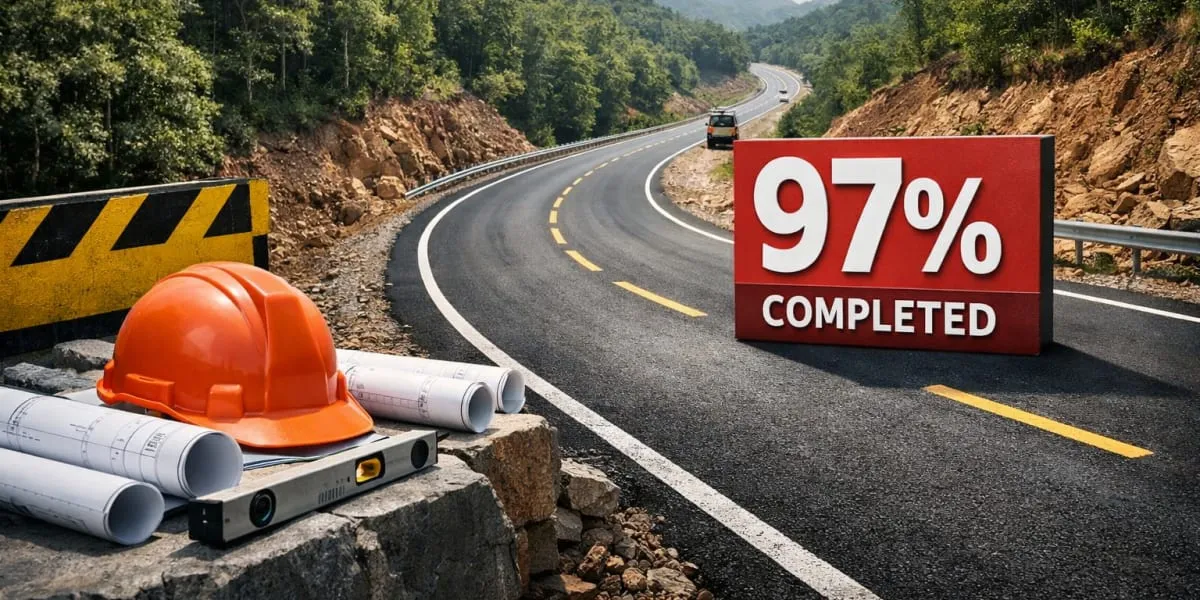
97 Per Cent Of Rongjeng-Mangsang-Adokgre Road Nears Completion

Deputy Chief Minister in-charge of public works Prestone Tynsong said in Shillong on 26 August that 97 per cent physical progress had been achieved on the ongoing Rongjeng-Mangsang-Adokgre road being constructed under the Non-Lapsable Central Pool of Resources (NLCPR). He noted the project was sanctioned in 2017 and that the stipulated time for completion had been 24 months from issue of the final work order. The deputy chief minister informed the assembly that the government had decided to include the remaining work under a World Bank project. In reply to a query from Rongjeng MLA Jim M Sangm..

Next Story
Infrastructure Transport

First TBM Starts Digging Five Point Three Kilometre Tunnel Under SGNP

The Goregaon-Mulund Link Road (GMLR) Phase three (B) project has reached a key milestone as the first tunnel boring machine (TBM) began excavation of the first of two tunnels beneath the Sanjay Gandhi National Park (SGNP). The machine, named Tulsi, started cutting a five point three kilometre bore that will link Dadasaheb Phalke Chitranagari in Goregaon East with Amar Nagar in Mulund West. Officials issued a statement noting the commencement of tunnelling work under the protected green belt. The twin tunnels are being constructed using mechanised tunnelling methods that aim to limit surface di..

Next Story
Infrastructure Transport

UP Approves Two Expressways And Rs 240 bn Infrastructure Push

The Uttar Pradesh Cabinet approved a series of infrastructure and industrial investment proposals totalling Rs 240 billion (Rs 240 bn), including two major expressway projects, a manufacturing and logistics cluster in Sultanpur and incentives for 11 industrial projects across the state. The decisions, taken at a meeting chaired by Chief Minister Yogi Adityanath, underline the state government’s focus on expanding road connectivity around emerging industrial hubs while attracting manufacturing investment to districts beyond major urban centres. The approvals cover both greenfield expressway c..

Advertisement

Subscribe to Our Newsletter

Get daily newsletters around different themes from Construction world.

STAY CONNECTED

Advertisement

SPECIAL OFFER
QR Code