


Thermal Power Coal Imports Drop 27 Per Cent In FY26
COAL & MINING

Thermal Power Coal Imports Drop 27 Per Cent In FY26

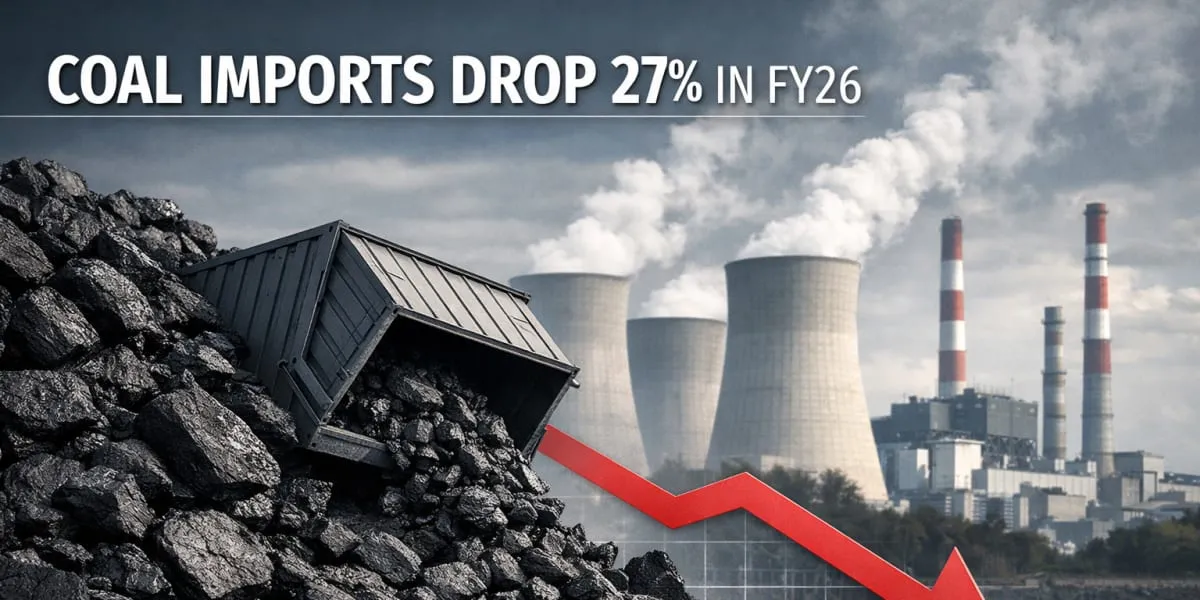
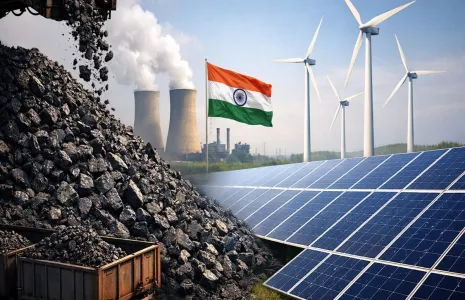
India's thermal power sector cut imports in fiscal 2025-26, with coal imports by thermal plants falling to 45.4 million tonnes (mn t) from 62.5 mn t in the prior year, a decline of around 27.4 per cent. Imports by plants designed to run on imported coal fell nearly 27.45 per cent year-on-year in April 2026, data placed in Parliament showed. The information was supplied by the Minister of State for Coal and Mines, Satish Chandra Dubey, in a written reply to the Rajya Sabha on 27 July 2026.

The decline followed government measures to bolster domestic supply and fuel security for the power sector. These steps included raising the Annual Contracted Quantity (ACQ) to 100 per cent of normative needs for eligible plants and ensuring coal supplies to meet Power Purchase Agreement (PPA) obligations. The Revised Scheme for Harnessing and Allocating Koyala Transparently in India (SHAKTI) Policy, 2025 enabled Imported Coal-Based (ICB) plants to source domestic coal and allowed Fuel Supply Agreement (FSA) holders to obtain coal beyond contracted volumes under specified terms.

Authorities have also advanced logistics under an Integrated Coal Logistics Plan that targets 33 critical railway projects and expanded First Mile Connectivity (FMC). A total of 139 FMC projects with planned capacity of 1,319 million tonnes (mn t) are targeted by fiscal 2029-30, while coal public sector undertakings are pursuing eight railway projects to improve evacuation from mining regions. The ministry said enhanced rail links and multimodal routes will help ease bottlenecks and support higher domestic coal consumption.

Imports remain permitted under the Open General Licence (OGL) regime, but the policy aim is to eliminate non-essential imports via greater domestic production. The ministry noted that removal of the GST compensation cess has enhanced the competitiveness of domestic coal, and Coal India Limited (CIL) has kept notified prices largely stable, with most grades recording only a marginal rise of Rs 20 per t over eight years. Recent auction rounds under Window-II of the Revised SHAKTI Policy allowed power producers to secure supplies at near-zero premiums, lowering fuel costs across time horizons.

India's thermal power sector cut imports in fiscal 2025-26, with coal imports by thermal plants falling to 45.4 million tonnes (mn t) from 62.5 mn t in the prior year, a decline of around 27.4 per cent. Imports by plants designed to run on imported coal fell nearly 27.45 per cent year-on-year in April 2026, data placed in Parliament showed. The information was supplied by the Minister of State for Coal and Mines, Satish Chandra Dubey, in a written reply to the Rajya Sabha on 27 July 2026. The decline followed government measures to bolster domestic supply and fuel security for the power sector. These steps included raising the Annual Contracted Quantity (ACQ) to 100 per cent of normative needs for eligible plants and ensuring coal supplies to meet Power Purchase Agreement (PPA) obligations. The Revised Scheme for Harnessing and Allocating Koyala Transparently in India (SHAKTI) Policy, 2025 enabled Imported Coal-Based (ICB) plants to source domestic coal and allowed Fuel Supply Agreement (FSA) holders to obtain coal beyond contracted volumes under specified terms. Authorities have also advanced logistics under an Integrated Coal Logistics Plan that targets 33 critical railway projects and expanded First Mile Connectivity (FMC). A total of 139 FMC projects with planned capacity of 1,319 million tonnes (mn t) are targeted by fiscal 2029-30, while coal public sector undertakings are pursuing eight railway projects to improve evacuation from mining regions. The ministry said enhanced rail links and multimodal routes will help ease bottlenecks and support higher domestic coal consumption. Imports remain permitted under the Open General Licence (OGL) regime, but the policy aim is to eliminate non-essential imports via greater domestic production. The ministry noted that removal of the GST compensation cess has enhanced the competitiveness of domestic coal, and Coal India Limited (CIL) has kept notified prices largely stable, with most grades recording only a marginal rise of Rs 20 per t over eight years. Recent auction rounds under Window-II of the Revised SHAKTI Policy allowed power producers to secure supplies at near-zero premiums, lowering fuel costs across time horizons.

Related Stories

Gold Stories
Next Story
Infrastructure Urban

PMC Approves Rs 5.78 bn Waste Processing Contract

The Pune Municipal Corporation approved a Rs 5.7796 billion (bn) fifteen-year contract to process 500 metric tonnes (t) of waste daily at the Devachi Uruli depot and allowed unauthorised overhead cables to remain temporarily for one year subject to a fee. The decision was taken by the civic body to appoint a private operator for an integrated waste facility covering about 12 acres. The approval frames the contract as an operational arrangement with a fixed base rate and annual adjustments. The contract was awarded to Bhoomi Green Energy Envirocare LLP, which quoted Rs 772 per t, compared with ..

Next Story
Infrastructure Urban

Kerala High Court to Inspect Brahmapuram Waste Plant

Two judges of the Kerala High Court, Justice Bechu Kurian Thomas and Justice Gopinath P, will inspect the Brahmapuram waste management plant on 11 September as part of the suo motu proceeding on the plant's maintenance. The inspection was scheduled to allow the bench to assess conditions on site and to verify representations made by municipal and state authorities. The court listed the site visit during a hearing and directed officials to prepare for an on-site review. The bench instructed authorities to file a detailed report on the plant's present functioning ahead of the visit. It said the ..

Next Story
Infrastructure Transport

Ahmedabad Geetamandir Bus Port Terminal Two Ready with Airport Facilities

Ahmedabad’s Geetamandir Bus Port has completed a separate Terminal Two, which is ready to serve passengers travelling to Saurashtra-Kutch and North Gujarat. The facility has been developed with airport like facilities to improve passenger comfort and ease of travel. Deputy Chief Minister Harsh Sanghvi is scheduled to inaugurate the new terminal today. Authorities say the design focuses on smoother boarding and reduced congestion. Terminal Two will become operational from 13 August and is expected to handle 1,091 buses daily servicing routes to Saurashtra-Kutch and North Gujarat. The new arra..

Advertisement

Subscribe to Our Newsletter

Get daily newsletters around different themes from Construction world.

STAY CONNECTED

Advertisement