


India's Russian Oil Imports Reach Record Levels In June
OIL & GAS

India's Russian Oil Imports Reach Record Levels In June

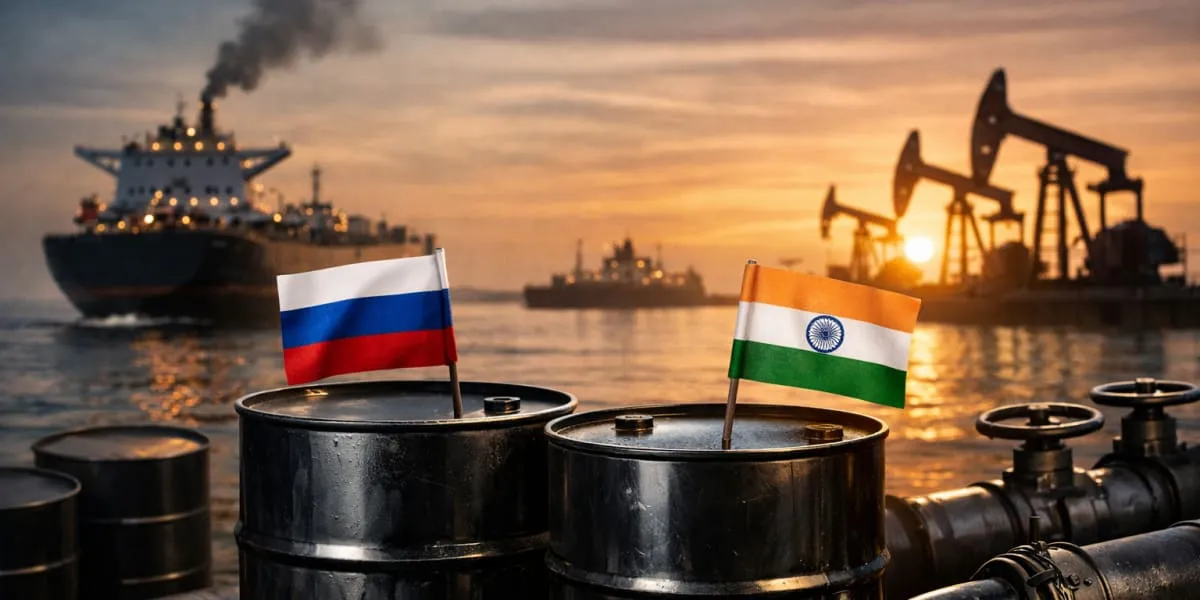
Preliminary vessel-tracking data from commodity analytics firm Kpler showed India imported an average of two point six million (mn) barrels per day of Russian crude in June so far, equal to 53.5 per cent of the country's crude imports during the period. For the month Russian inflows were expected to top two point three five mn barrels per day, which would exceed the previous record of two point two mn in May 2023. Kpler linked the rise to persistent discounts on Russian grades and steady refinery demand.

The surge followed disruptions to shipments through the Strait of Hormuz after conflict in West Asia, with the region historically supplying around sixty to seventy per cent of India's crude. Slowed vessel movements reduced flows from several Gulf producers and hit shipments from Iraq, while Saudi and UAE exports were partly sustained by pipelines such as ADNOC's Habshan-Fujairah link. Faced with higher freight risks and uncertain Gulf volumes, Indian refiners increased purchases from North America and Venezuela to offset shortfalls.

Russian barrels have filled the gap created after Western sanctions reshaped global energy flows in 2022. Imports averaged about one point nine one mn barrels per day in May, fell to nearly one point zero four mn in February and rebounded to around two mn in March before June's jump. Analysts said Asian refiners were increasingly treating Russian crude as base-load supply rather than solely discounted opportunistic cargo.

An initial US-Iran agreement could eventually restore Gulf flows, but the US sanctions waiver that made Russian purchases easier recently expired and its renewal remains unclear. Analysts suggested a rapid reduction in Russian deliveries to India would be difficult given the large volumes involved and the months needed to normalise Gulf exports. Industry estimates indicated that each one dollar rise in the oil price could add roughly Rs 180 bn to the annual import bill, and noted Russia had supplied more than 270 mn barrels to India since the Iran conflict began.

"Join industry leaders at RAHSTA Expo, India's premier platform for roads, highways and traffic infrastructure. Register now to explore innovations, network with experts and shape the future of mobility."

Preliminary vessel-tracking data from commodity analytics firm Kpler showed India imported an average of two point six million (mn) barrels per day of Russian crude in June so far, equal to 53.5 per cent of the country's crude imports during the period. For the month Russian inflows were expected to top two point three five mn barrels per day, which would exceed the previous record of two point two mn in May 2023. Kpler linked the rise to persistent discounts on Russian grades and steady refinery demand. The surge followed disruptions to shipments through the Strait of Hormuz after conflict in West Asia, with the region historically supplying around sixty to seventy per cent of India's crude. Slowed vessel movements reduced flows from several Gulf producers and hit shipments from Iraq, while Saudi and UAE exports were partly sustained by pipelines such as ADNOC's Habshan-Fujairah link. Faced with higher freight risks and uncertain Gulf volumes, Indian refiners increased purchases from North America and Venezuela to offset shortfalls. Russian barrels have filled the gap created after Western sanctions reshaped global energy flows in 2022. Imports averaged about one point nine one mn barrels per day in May, fell to nearly one point zero four mn in February and rebounded to around two mn in March before June's jump. Analysts said Asian refiners were increasingly treating Russian crude as base-load supply rather than solely discounted opportunistic cargo. An initial US-Iran agreement could eventually restore Gulf flows, but the US sanctions waiver that made Russian purchases easier recently expired and its renewal remains unclear. Analysts suggested a rapid reduction in Russian deliveries to India would be difficult given the large volumes involved and the months needed to normalise Gulf exports. Industry estimates indicated that each one dollar rise in the oil price could add roughly Rs 180 bn to the annual import bill, and noted Russia had supplied more than 270 mn barrels to India since the Iran conflict began.

Next Story
Infrastructure Energy

Centre Prioritising Energy Security With Coal Gasification

Union minister for Coal and Mines G Kishan Reddy said the Centre is prioritising energy security through a strategic shift to coal gasification and has announced incentives totalling Rs 460 billion (bn) to support the effort. He said more than 35 companies will start coal gasification activities in India within two months and that the government is encouraging firms that bring technology to close the domestic technology gap. The minister described the initiative as aimed at reducing import dependence and developing indigenous capacity. India has the fifth-largest coal reserve in the world, and..

Next Story
Infrastructure Urban

BHEL and Coal India Invest Rs 250 bn in Odisha Gasification

Bharat Heavy Electricals (BHEL) and Coal India (CIL) are jointly investing Rs 250 billion in a coal gasification project in Odisha, with the Prime Minister laying the foundation stone in Jharsuguda. Union Coal and Mines Minister G Kishan Reddy described the initiative as a transformative shift in coal utilisation that will open industrial avenues for the state. The project moves coal beyond conventional power generation to industrial feedstocks. Coal gasification will convert coal into synthesis gas, a versatile feedstock for chemicals, fertilisers and synthetic fuels, and the technology is ex..

Next Story
Infrastructure Energy

BCCL Hands Over Dugdha Coal Washery To JSW Steel

Bharat Coking Coal has handed over the Dugdha Coal Washery to JSW Steel, marking the first coal washery asset monetisation under the Ministry of Coal's asset monetisation programme. The handover took place in the presence of senior officials from Bharat Coking Coal Ltd, JSW Steel and JSW Energy. The washery has a capacity of two million tonnes per annum (mn t per annum), and its transfer is intended to introduce private sector practices into coal beneficiation operations. The monetisation is aimed at modernising coal sector assets, improving operational efficiency and enhancing resource utilis..

Advertisement

Subscribe to Our Newsletter

Get daily newsletters around different themes from Construction world.

STAY CONNECTED

Advertisement

Advertisement

Advertisement