LPG To PNG Shift Picks Up Momentum In Rajasthan
OIL & GAS

LPG To PNG Shift Picks Up Momentum In Rajasthan

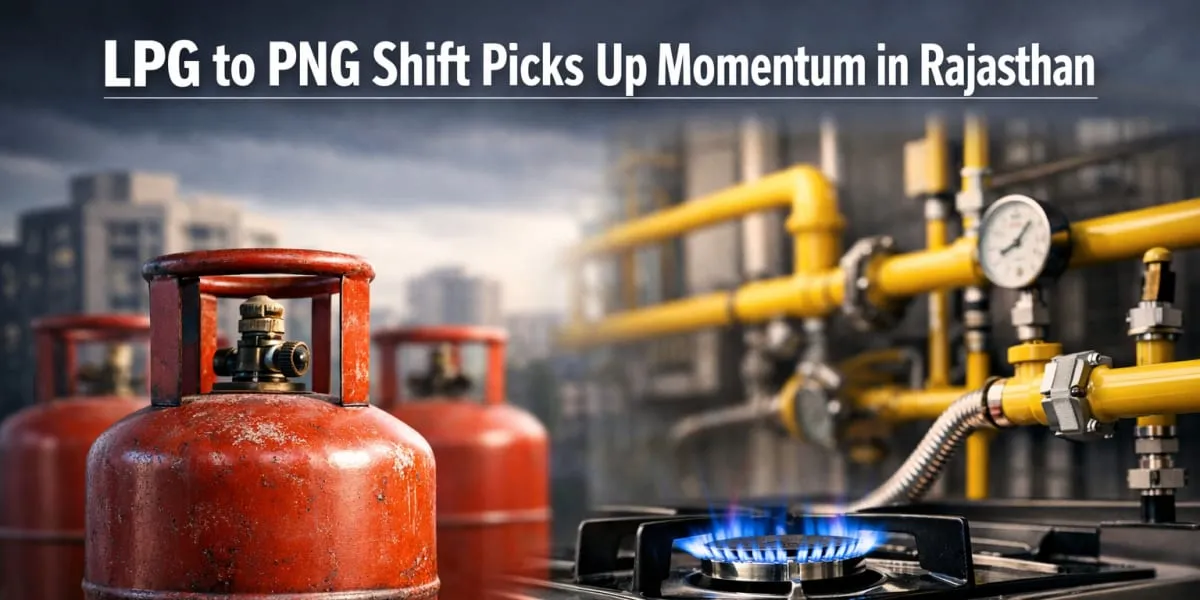
The shift from liquefied petroleum gas (LPG) to piped natural gas (PNG) has gathered pace in Rajasthan as state authorities and gas distributors accelerate pipeline extensions to urban and peri urban areas. Consumers are reported to prefer PNG for convenience, continuous supply and reduced refill logistics compared with cylinder based LPG. Officials and industry sources attribute the momentum to targeted infrastructure investment and streamlined connection processes.

Distribution companies have focused on expanding city gas networks and completing last mile connections in several municipal areas, with new pipelines laid along major residential corridors. The rollout has involved coordination with local administrations to map supply lines and issue safety clearances, and companies have reported improved application to connection turnaround times. Households and small businesses have been able to switch without major alterations to cooking appliances, given the availability of compatible regulators and conversion fittings.

The transition is expected to reduce dependence on cylinder logistics and improve energy affordability for consumers in the medium term while lowering emissions from household cooking compared with some alternate fuels. Authorities have highlighted the role of state and central schemes in subsidising connection charges and facilitating finance for conversion where required. Industry analysts said continued investment in network capacity and compression facilities will be essential to meet peak demand and prevent supply bottlenecks. Safety training and public awareness campaigns have been intensified to ensure compliance with installation standards.

Officials indicated further expansion plans covering smaller towns and industrial pockets to broaden PNG access beyond large cities, while monitoring system pressure and supply economics. The move is likely to alter the domestic fuel mix in Rajasthan over the coming years and may influence regional gas infrastructure planning. Consumers were advised to engage authorised distributors for connections and to follow prescribed safety guidance.

The shift from liquefied petroleum gas (LPG) to piped natural gas (PNG) has gathered pace in Rajasthan as state authorities and gas distributors accelerate pipeline extensions to urban and peri urban areas. Consumers are reported to prefer PNG for convenience, continuous supply and reduced refill logistics compared with cylinder based LPG. Officials and industry sources attribute the momentum to targeted infrastructure investment and streamlined connection processes. Distribution companies have focused on expanding city gas networks and completing last mile connections in several municipal areas, with new pipelines laid along major residential corridors. The rollout has involved coordination with local administrations to map supply lines and issue safety clearances, and companies have reported improved application to connection turnaround times. Households and small businesses have been able to switch without major alterations to cooking appliances, given the availability of compatible regulators and conversion fittings. The transition is expected to reduce dependence on cylinder logistics and improve energy affordability for consumers in the medium term while lowering emissions from household cooking compared with some alternate fuels. Authorities have highlighted the role of state and central schemes in subsidising connection charges and facilitating finance for conversion where required. Industry analysts said continued investment in network capacity and compression facilities will be essential to meet peak demand and prevent supply bottlenecks. Safety training and public awareness campaigns have been intensified to ensure compliance with installation standards. Officials indicated further expansion plans covering smaller towns and industrial pockets to broaden PNG access beyond large cities, while monitoring system pressure and supply economics. The move is likely to alter the domestic fuel mix in Rajasthan over the coming years and may influence regional gas infrastructure planning. Consumers were advised to engage authorised distributors for connections and to follow prescribed safety guidance.

Next Story
Equipment

MYCRANE Crosses 1,000 Customers in India

MYCRANE, the global platform for crane rental and purchase, has achieved major commercial milestones in India, reinforcing the country’s position as one of its fastest-growing strategic markets. The company has surpassed 1,000 registered customers and 1,000 crane suppliers nationwide, while completing more than 100 paid orders.The growth reflects rising adoption of digital procurement solutions across India’s construction, infrastructure, energy and industrial sectors. Equipment sourced through the platform is supporting projects across the country, with several leading contractors and EPC..

Next Story
Infrastructure Urban

AMTOE 2026 Opens Global Machine Tool Sourcing Hub

The Asian Machine Tool Online Exhibition 2026 (AMTOE 2026) has officially opened as a B2B sourcing platform connecting global buyers with verified Asian suppliers across the machine tool and manufacturing sector. The exhibition will run until 31 October 2026 through a hybrid online and offline model, offering extended sourcing and business networking opportunities.Co-organised by AsianNet and TradeAsia, the event aims to strengthen links between Asian manufacturers and international importers while improving cross-border procurement efficiency and supplier matching.Since launching in 2022, AMT..

Next Story
Infrastructure Energy

Vedanta Lifts Renewable Energy Use by Over 50%

On World Earth Day, Vedanta Limited announced that its renewable energy usage rose by over 50 per cent year on year to 3.97 billion units in FY26, helping avoid 3 million tonnes of carbon dioxide emissions.The company said its portfolio of metals, minerals, power, and oil & gas continues to support advanced manufacturing, electrification, energy transition and clean technology. Aluminium, copper and silver remain critical for applications such as mobility, power transmission, renewable infrastructure and solar photovoltaics, while iron, steel and zinc continue to support energy infrastruct..

Advertisement

Subscribe to Our Newsletter

Get daily newsletters around different themes from Construction world.

STAY CONNECTED

Advertisement

Advertisement

Advertisement