

Mercedes And BMW Say Latest Petrol Vehicles Ready For E25
OIL & GAS

Mercedes And BMW Say Latest Petrol Vehicles Ready For E25

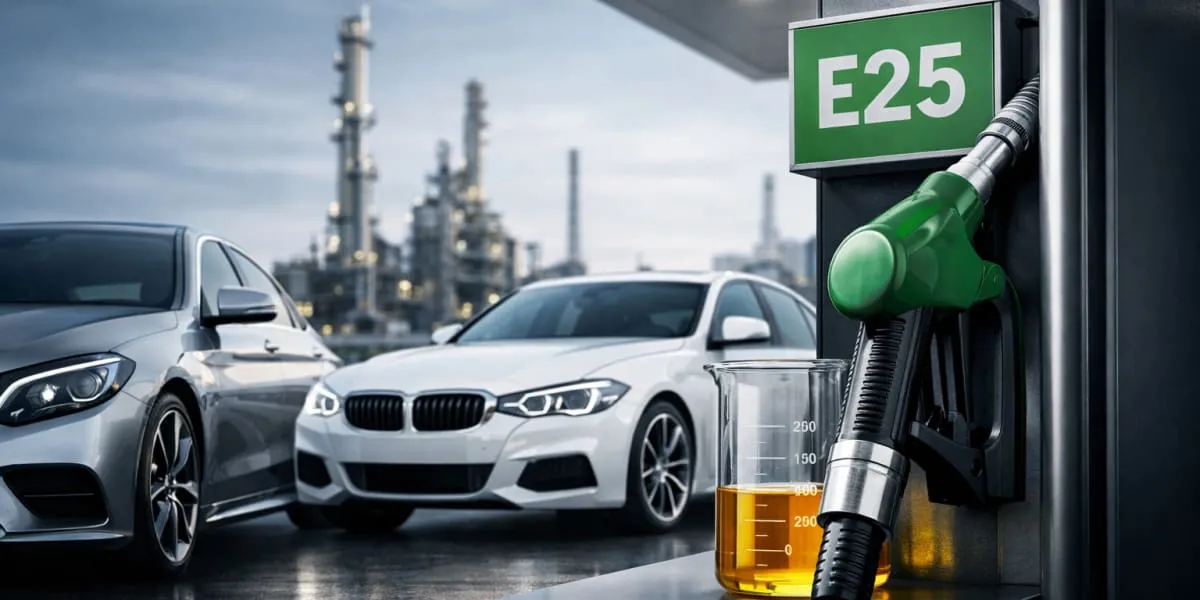
Mercedes-Benz India and BMW Group India have said their latest petrol vehicles are engineered to run on ethanol blends beyond the current E20 standard, indicating readiness for higher ethanol-blended fuels as the government evaluates a rollout of E25.

The manufacturers together account for more than 70 per cent of India's luxury passenger vehicle (PV) market. The Centre is assessing the impact of E20 petrol on vehicle performance and fuel efficiency before deciding on E25, reflecting a cautious regulatory approach.

The luxury PV segment grew around four per cent to nearly 53,400 units in FY26 from about 51,500 units in FY25, with Mercedes-Benz India selling 19,363 vehicles in FY26 while BMW Group India retailed 18,655 units. Mercedes commenced FY27 with its highest-ever April–June sales, volumes rising over nine per cent year on year to 4,637 from 4,238, while BMW is yet to announce Q1 FY27 numbers.

Mercedes-Benz India managing director and chief executive Santosh Iyer said the company's current petrol range is fully compatible with E20 and that some model lines have been engineered to support higher ethanol blends, with no observed increase in service cases attributable to E20. He indicated no special maintenance is required for customers using E20 and that fuel system components have been designed to handle such blends since the introduction of BS?VI emission norms. Iyer drew a distinction between ethanol blending and fuel adulteration and urged greater awareness of fuel quality, storage and dispensing standards.

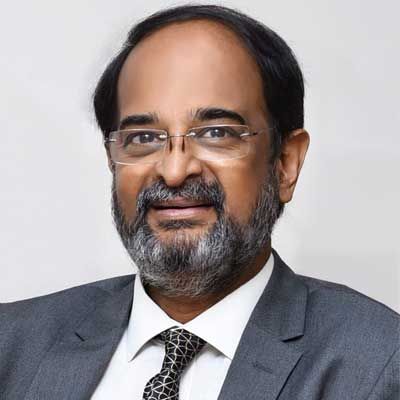
BMW Group India president and chief executive Hardeep Singh Brar said the company's petrol vehicles have been prepared to use up to 25 per cent ethanol for several years and are positioned for future regulatory change. He added that BMW's petrol and diesel models comply with existing fuel standards and that the company pursues a technology?open strategy, investing in battery electric vehicles, highly efficient internal combustion engines and hydrogen fuel?cell technology. Audi India and Volvo Car India did not respond to queries.

"Join industry leaders at RAHSTA Expo, India's premier platform for roads, highways and traffic infrastructure. Register now to explore innovations, network with experts and shape the future of mobility."

Mercedes-Benz India and BMW Group India have said their latest petrol vehicles are engineered to run on ethanol blends beyond the current E20 standard, indicating readiness for higher ethanol-blended fuels as the government evaluates a rollout of E25. The manufacturers together account for more than 70 per cent of India's luxury passenger vehicle (PV) market. The Centre is assessing the impact of E20 petrol on vehicle performance and fuel efficiency before deciding on E25, reflecting a cautious regulatory approach. The luxury PV segment grew around four per cent to nearly 53,400 units in FY26 from about 51,500 units in FY25, with Mercedes-Benz India selling 19,363 vehicles in FY26 while BMW Group India retailed 18,655 units. Mercedes commenced FY27 with its highest-ever April–June sales, volumes rising over nine per cent year on year to 4,637 from 4,238, while BMW is yet to announce Q1 FY27 numbers. Mercedes-Benz India managing director and chief executive Santosh Iyer said the company's current petrol range is fully compatible with E20 and that some model lines have been engineered to support higher ethanol blends, with no observed increase in service cases attributable to E20. He indicated no special maintenance is required for customers using E20 and that fuel system components have been designed to handle such blends since the introduction of BS?VI emission norms. Iyer drew a distinction between ethanol blending and fuel adulteration and urged greater awareness of fuel quality, storage and dispensing standards. BMW Group India president and chief executive Hardeep Singh Brar said the company's petrol vehicles have been prepared to use up to 25 per cent ethanol for several years and are positioned for future regulatory change. He added that BMW's petrol and diesel models comply with existing fuel standards and that the company pursues a technology?open strategy, investing in battery electric vehicles, highly efficient internal combustion engines and hydrogen fuel?cell technology. Audi India and Volvo Car India did not respond to queries.

Next Story
Infrastructure Transport

Bhogapuram Airport Set For Take Off After Licence Issued

Union Civil Aviation Minister Kinjarapu Ram Mohan Naidu announced that Alluri Sitharama Raju Bhogapuram International Airport has achieved 100 per cent completion following issuance of its aerodrome licence by the Ministry of Civil Aviation after an inspection with public representatives, district officials and GMR Group representatives. The licence was granted after extensive verification over the past month to ensure that safety and operational standards were met. The Chief Minister's Office has already contacted the Prime Minister's Office to finalise an inauguration date and commercial fli..

Next Story
Infrastructure Urban

Auto Sector To Grow 22-24 Per Cent In Q1 FY27

Credit Rating Information Services of India (Crisil) estimated that India's automobile sector is expected to report revenue growth of 22-24 per cent year-on-year in the first quarter of FY27 and to be among the largest contributors to corporate revenue growth in the quarter. The agency estimated overall corporate revenue to have grown 11-11.5 per cent year-on-year in the quarter ended 30 June 2026, the fastest pace in two years despite supply chain disruptions and higher input costs from the West Asia conflict. This compared with growth of 9.6 per cent in the preceding quarter. Crisil said the..

Next Story
Infrastructure Urban

Nomura Sees Q1 Pressure On Cement Margins; Backs Major Players

Nomura said cement margins will be under pressure in the June quarter as fuel and packaging costs rose, although volume growth is expected to remain healthy. The brokerage forecast six to seven per cent year-on-year organic volume growth for the Indian cement industry in the period, with Shree Cement identified as likely to post the highest growth at 15 per cent year-on-year. It noted that the West and North regions outperformed on pricing, aiding companies with greater exposure in those markets. Average trade prices improved three per cent sequentially to around Rs 326 per bag after price inc..

Advertisement

Subscribe to Our Newsletter

Get daily newsletters around different themes from Construction world.

STAY CONNECTED

Advertisement

Advertisement

Advertisement