ONGC To Set Up One Point Seven Five Million Tonne Storage In Mangaluru
OIL & GAS

ONGC To Set Up One Point Seven Five Million Tonne Storage In Mangaluru

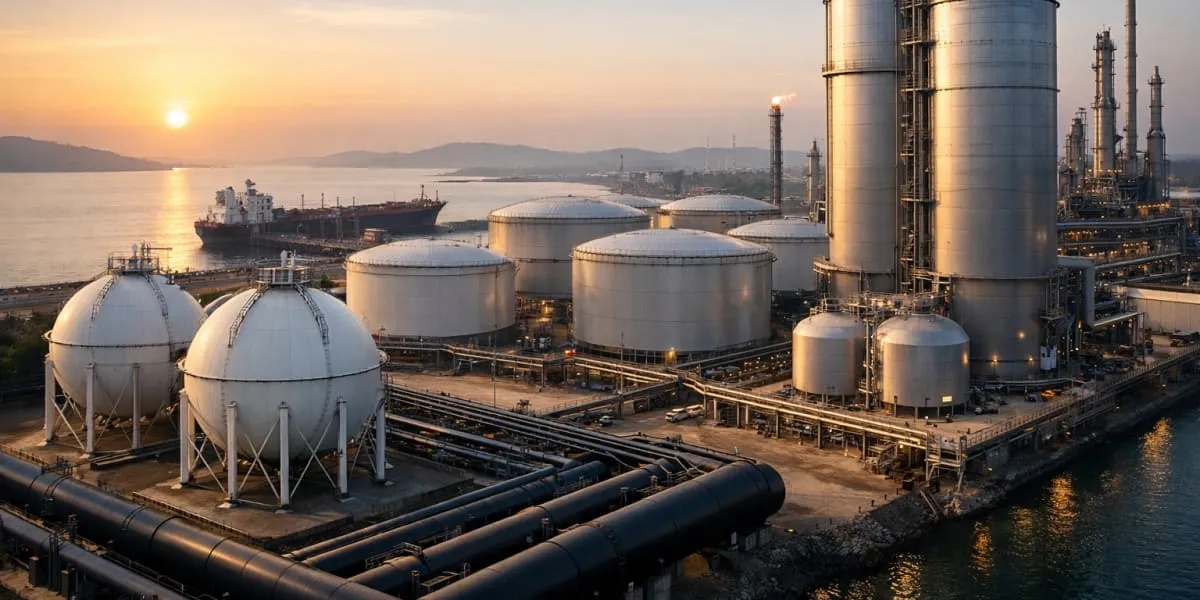
ONGC will set up one point seven five million metric tonnes (mn t) of storage at Mangaluru in Karnataka, with half the capacity earmarked for strategic reserves and the remainder for commercial operations. The government told Parliament that the project will be fully funded by ONGC and that the minister provided the information in a written reply. The minister did not specify whether the facility will be limited to crude oil or will also handle liquefied petroleum gas and liquefied natural gas.

Indian Strategic Petroleum Reserve Limited has acquired and registered land for a proposed four mn t strategic reserve at Chandikhol in Odisha and the project has moved to the bidding stage. The work on the draft request for proposal and the concession agreement is being finalised and the government estimated the development cost at Rs 90 billion (bn). The minister said the project is expected to boost the gross domestic product of the state and to increase ancillary economic activity, and preliminary assessments indicate the potential to generate employment for about 4000 persons per day during the construction phase and about 150 persons per day during operations.

The Phase two tranche approved in July 2021 envisages development of the four mn t facility at Chandikhol and a two point five mn t facility at Padur in Karnataka, taking total Phase two capacity to six point five mn t. Under Phase one the special purpose vehicle had already established strategic crude storage with a combined capacity of five point three three mn t across Visakhapatnam, Mangaluru and Padur. The capacities at the individual sites were one point three three mn t at Visakhapatnam, one point five mn t at Mangaluru and two point five mn t at Padur.

The government added that India possesses extensive crude oil and petroleum product storage across refineries, terminals, offshore tankage and a pipeline network of more than 35,000 km. Collectively the national capacity is equivalent to meet 74 days of net crude import requirements, the reply said.

ONGC will set up one point seven five million metric tonnes (mn t) of storage at Mangaluru in Karnataka, with half the capacity earmarked for strategic reserves and the remainder for commercial operations. The government told Parliament that the project will be fully funded by ONGC and that the minister provided the information in a written reply. The minister did not specify whether the facility will be limited to crude oil or will also handle liquefied petroleum gas and liquefied natural gas. Indian Strategic Petroleum Reserve Limited has acquired and registered land for a proposed four mn t strategic reserve at Chandikhol in Odisha and the project has moved to the bidding stage. The work on the draft request for proposal and the concession agreement is being finalised and the government estimated the development cost at Rs 90 billion (bn). The minister said the project is expected to boost the gross domestic product of the state and to increase ancillary economic activity, and preliminary assessments indicate the potential to generate employment for about 4000 persons per day during the construction phase and about 150 persons per day during operations. The Phase two tranche approved in July 2021 envisages development of the four mn t facility at Chandikhol and a two point five mn t facility at Padur in Karnataka, taking total Phase two capacity to six point five mn t. Under Phase one the special purpose vehicle had already established strategic crude storage with a combined capacity of five point three three mn t across Visakhapatnam, Mangaluru and Padur. The capacities at the individual sites were one point three three mn t at Visakhapatnam, one point five mn t at Mangaluru and two point five mn t at Padur. The government added that India possesses extensive crude oil and petroleum product storage across refineries, terminals, offshore tankage and a pipeline network of more than 35,000 km. Collectively the national capacity is equivalent to meet 74 days of net crude import requirements, the reply said.

Related Stories

Gold Stories

Next Story
Infrastructure Urban

Bengaluru Metro Awards Rs 554.8 mn Travellator Contract

Bengaluru Metro Rail Corporation (BMRCL) has awarded a Rs 55.48 crore (Rs 554.8 million (mn)) contract to Milan Road Buildtech LLP for civil and structural works to install a travellator and a connecting walkway at Central Silk Board. The contract covers design, construction and structural interfaces required to link the two adjacent metro stations. BMRCL authorised the award as part of procurement for infrastructure works on the Phase-2A project. The procurement followed BMRCL's standard tendering and evaluation procedures. The project will connect the Yellow Line Central Silk Board station w..

Next Story
Infrastructure Transport

GMRC Floats Tenders For Ahmedabad Metro RRTS Hybrid Corridors

Gujarat Metro Rail Corporation (GMRC) has floated three tenders for design consultancy services for the Ahmedabad Metro Phase three Metro cum Regional Rapid Transit System (RRTS) hybrid corridor. The procurements cover work on an additional network of 48.38 kilometre (km) to be integrated into the existing metro system. GMRC framed the tenders to secure specialised consultancy for alignment design, systems integration and coordination with RRTS planning. The consultancy scope will support detailed design and interface management for the hybrid corridors. The proposed hybrid routes include Vaki..

Next Story
Infrastructure Transport

Pune Metro Groundwork Starts on Swargate Katraj Underground Line

Construction work has begun on Pune Metro’s underground extension from Swargate to Katraj, with excavation starting at the busy Market Yard station. MLA Madhuri Misal inaugurated the excavation and inspected activities along the corridor. Maha Metro has commenced digging shafts to lower Tunnel Boring Machines (TBMs) into the ground and intends to deploy four TBMs gradually over the next few months. Station building and tunnelling will proceed simultaneously to streamline the schedule. Because the entire line is underground, authorities expect traffic disruption to be minimal and road space w..

Advertisement

Subscribe to Our Newsletter

Get daily newsletters around different themes from Construction world.

STAY CONNECTED

Advertisement