




+
Supreme Court Declines PIL On Ethanol Disclosure At Pumps
OIL & GAS

Supreme Court Declines PIL On Ethanol Disclosure At Pumps

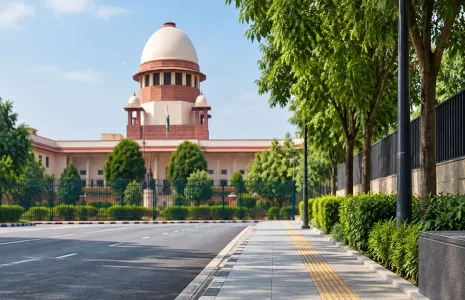
The Supreme Court (SC) on Monday declined to entertain a public interest litigation seeking a directive to require mandatory and uniform labelling on every dispensing nozzle at petrol pumps disclosing the exact percentage of ethanol in petrol. A bench of Justices MM Sundresh and PB Varale said the petitioner, Narendra Kumar Goswami, should approach the jurisdictional high court rather than invoking Article 32 directly and asked him to seek relief there. The Attorney General for the Centre argued that the petition amounted to proxy litigation because a similar plea had already been dismissed by the court.

Goswami maintained that consumers have a right to know the composition of the fuel dispensed at pumps and urged the court to require invoices to state legibly the percentage of ethanol contained in each sale. He had also sought an order directing authorities to prepare and publish an official, public, vehicle-wise compatibility database searchable by manufacturer, model, engine type and year of manufacture indicating suitability or otherwise of various ethanol blends for each vehicle. The plea requested clear timelines for publication and accessibility of the database to assist owners and service providers.

The petition called for constitution of an independent expert committee including representatives from the ministries of petroleum and natural gas, road transport and highways, the Bureau of Indian Standards (BIS) and independent automobile engineers to examine real-world vehicle compatibility of the E20 blend across the existing fleet. The committee was to be asked to assess effects on fuel efficiency, engine longevity and maintenance costs as well as warranty and insurance implications and to produce a public report. It would also evaluate the net environmental footprint, including tail-pipe emissions and water consumption associated with ethanol production, and examine alleged food-security and feed diversion concerns linked to the blending programme.

The bench advised the petitioner to approach the jurisdictional high court and declined to entertain the plea under Article 32. It directed him to move the proper forum for the relief sought.

The Supreme Court (SC) on Monday declined to entertain a public interest litigation seeking a directive to require mandatory and uniform labelling on every dispensing nozzle at petrol pumps disclosing the exact percentage of ethanol in petrol. A bench of Justices MM Sundresh and PB Varale said the petitioner, Narendra Kumar Goswami, should approach the jurisdictional high court rather than invoking Article 32 directly and asked him to seek relief there. The Attorney General for the Centre argued that the petition amounted to proxy litigation because a similar plea had already been dismissed by the court. Goswami maintained that consumers have a right to know the composition of the fuel dispensed at pumps and urged the court to require invoices to state legibly the percentage of ethanol contained in each sale. He had also sought an order directing authorities to prepare and publish an official, public, vehicle-wise compatibility database searchable by manufacturer, model, engine type and year of manufacture indicating suitability or otherwise of various ethanol blends for each vehicle. The plea requested clear timelines for publication and accessibility of the database to assist owners and service providers. The petition called for constitution of an independent expert committee including representatives from the ministries of petroleum and natural gas, road transport and highways, the Bureau of Indian Standards (BIS) and independent automobile engineers to examine real-world vehicle compatibility of the E20 blend across the existing fleet. The committee was to be asked to assess effects on fuel efficiency, engine longevity and maintenance costs as well as warranty and insurance implications and to produce a public report. It would also evaluate the net environmental footprint, including tail-pipe emissions and water consumption associated with ethanol production, and examine alleged food-security and feed diversion concerns linked to the blending programme. The bench advised the petitioner to approach the jurisdictional high court and declined to entertain the plea under Article 32. It directed him to move the proper forum for the relief sought.

Related Stories

Gold Stories

Next Story
Real Estate

Elevate Homes to Develop Premium Project in Gurugram

Elevate Homes, the integrated residential development platform established by Hines and Conscient Infrastructure, will develop a premium residential project in Sector 63A, Golf Course Extension Road, Gurugram. Spread across 10.5 acres with around two million sq. ft. of saleable area, the project is planned for launch later in 2026.Designed by global architecture firm Benoy, the development will feature globally inspired architecture, nature-led design and curated wellness-focused spaces. The project will offer more than 600 three- and four-bedroom residences, with a focus on liveability, susta..

Next Story
Real Estate

BPTP Skynest Wins Premium High-Rise Development Award

BPTP Limited has been recognised with the ‘Premium High-Rise Development of the Year’ award for its residential project BPTP Skynest at the Times Realty & Infrastructure Conclave 2026, held at Grand Hyatt, Gurugram.Located in Sector 80, Greater Faridabad, BPTP Skynest is designed as a premium high-rise residential development featuring contemporary architecture, thoughtfully planned homes and lifestyle-oriented amenities. The project comprises 504 residential units and incorporates biophilic design elements through 20 dedicated Sky Nests, landscaped green spaces integrated within the t..

Next Story
Real Estate

Dubai Buyers Seek Independent Property Transfer Services

Dubai’s property market is witnessing growing discussions around the role of independent transfer services, as some leading brokerages require buyers to pay conveyancing or sales-progression fees even when the service is managed within the same business group holding the seller’s mandate.The practice has gained attention as brokerage websites promote such services, while LinkedIn and Instagram profiles highlight dedicated sales-progression teams operating within agencies. Industry observers point out that the concern is not about the capability of in-house conveyancers but whether buyers s..

Advertisement

Subscribe to Our Newsletter

Get daily newsletters around different themes from Construction world.

STAY CONNECTED

Advertisement

SPECIAL OFFER
QR Code