Adani Green Energy Crosses 20 GW Renewable Milestone And Expands BESS
POWER & RENEWABLE ENERGY

Adani Green Energy Crosses 20 GW Renewable Milestone And Expands BESS

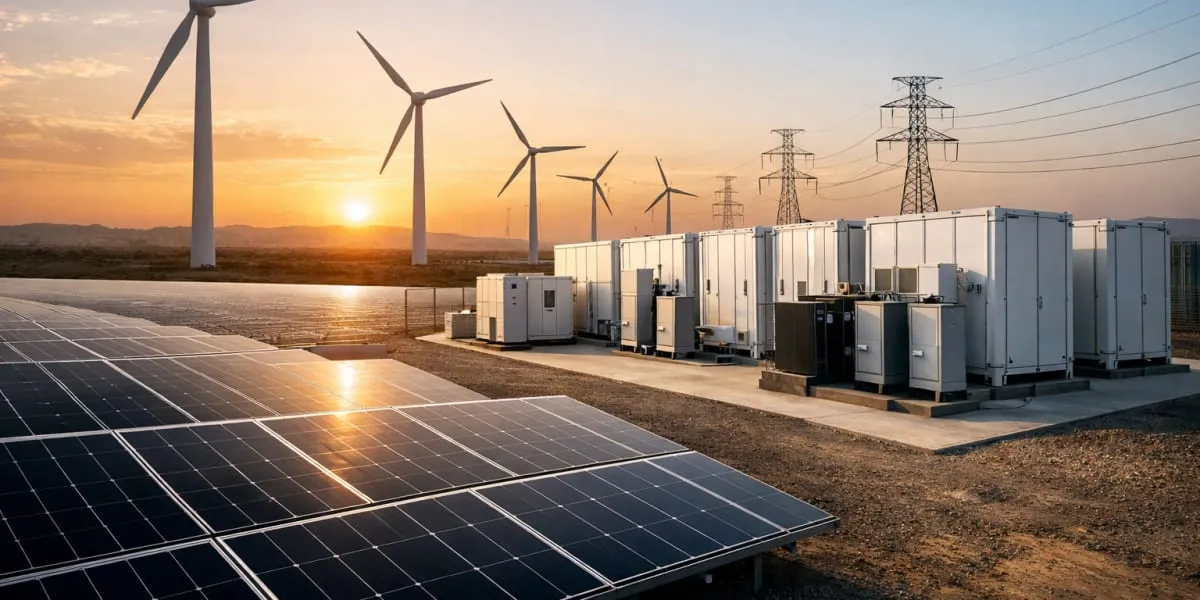
Adani Green Energy Limited (AGEL) reported robust financial and operational results for the first quarter of FY2026-27 as it crossed the 20 gigawatt (GW) operational renewable energy milestone and expanded its Battery Energy Storage System (BESS) portfolio. The company said disciplined execution and rising electricity demand underpinned the progress, and it highlighted large-scale deployments at the Khavda renewable energy project in Gujarat. AGEL noted that the quarter included significant greenfield commissioning activity and further localisation of construction processes.

For the quarter ended 30 June 2026, revenue from power supply rose 29 per cent year-on-year to Rs 42.8 bn, while EBITDA from power supply increased 33 per cent to Rs 41.22 bn. The company reported an industry-leading EBITDA margin of 94 per cent and a 28 per cent year-on-year rise in cash profit to Rs 22.25 bn, signalling improved operational efficiency and higher renewable generation. AGEL attributed the stronger profitability to better plant availability and scale benefits.

Operational renewable energy capacity increased 27 per cent year-on-year to 20,142 megawatt (MW), supported by 4,327 MW of greenfield additions over the past year, including 3,051 MW of solar, 684 MW of wind and 592 MW of solar-wind hybrid capacity. During the first quarter alone the company commissioned 848 MW of new renewable capacity. Electricity sales rose 30 per cent year-on-year to 13,657 mn units, reflecting the impact of fresh capacity and sustained plant performance.

AGEL said its Energy Network Operation Center delivered advanced digital monitoring that improved real-time oversight, enhanced availability and helped reduce operations and maintenance costs. The Khavda project, described by the company as the world’s largest renewable energy plant, now has an operational portfolio of 10,262 MW across 538 square kilometres and has risen to about 10.3 GW from 5.6 GW a year earlier. The company confirmed it remains on track to achieve 30 GW of installed capacity at Khavda by 2029 through local manufacturing and automated installation techniques.

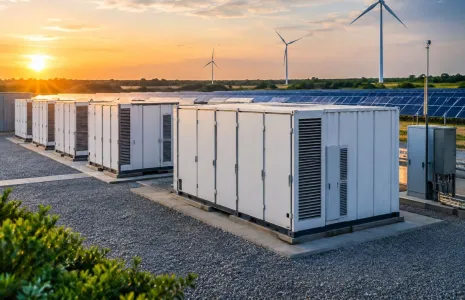
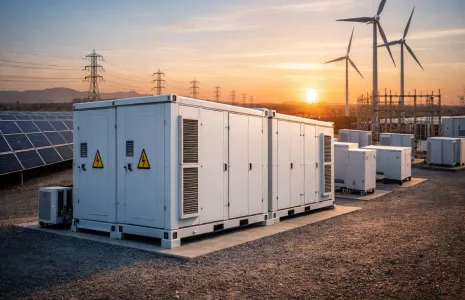
On energy storage AGEL reported commissioning 1,972 MWh of BESS during the quarter, taking total installed BESS capacity to 3,551 MWh, and said storage will be central to delivering round-the-clock renewables. The company also highlighted sustainability credentials, noting it retained the highest CRISIL ESG score in the Indian power sector for the fifth consecutive year with a score improvement from 66 to 69, maintained Net Water Positive status and improved its water balance index by 30 per cent year-on-year, alongside several industry awards and global rankings.

Adani Green Energy Limited (AGEL) reported robust financial and operational results for the first quarter of FY2026-27 as it crossed the 20 gigawatt (GW) operational renewable energy milestone and expanded its Battery Energy Storage System (BESS) portfolio. The company said disciplined execution and rising electricity demand underpinned the progress, and it highlighted large-scale deployments at the Khavda renewable energy project in Gujarat. AGEL noted that the quarter included significant greenfield commissioning activity and further localisation of construction processes. For the quarter ended 30 June 2026, revenue from power supply rose 29 per cent year-on-year to Rs 42.8 bn, while EBITDA from power supply increased 33 per cent to Rs 41.22 bn. The company reported an industry-leading EBITDA margin of 94 per cent and a 28 per cent year-on-year rise in cash profit to Rs 22.25 bn, signalling improved operational efficiency and higher renewable generation. AGEL attributed the stronger profitability to better plant availability and scale benefits. Operational renewable energy capacity increased 27 per cent year-on-year to 20,142 megawatt (MW), supported by 4,327 MW of greenfield additions over the past year, including 3,051 MW of solar, 684 MW of wind and 592 MW of solar-wind hybrid capacity. During the first quarter alone the company commissioned 848 MW of new renewable capacity. Electricity sales rose 30 per cent year-on-year to 13,657 mn units, reflecting the impact of fresh capacity and sustained plant performance. AGEL said its Energy Network Operation Center delivered advanced digital monitoring that improved real-time oversight, enhanced availability and helped reduce operations and maintenance costs. The Khavda project, described by the company as the world’s largest renewable energy plant, now has an operational portfolio of 10,262 MW across 538 square kilometres and has risen to about 10.3 GW from 5.6 GW a year earlier. The company confirmed it remains on track to achieve 30 GW of installed capacity at Khavda by 2029 through local manufacturing and automated installation techniques. On energy storage AGEL reported commissioning 1,972 MWh of BESS during the quarter, taking total installed BESS capacity to 3,551 MWh, and said storage will be central to delivering round-the-clock renewables. The company also highlighted sustainability credentials, noting it retained the highest CRISIL ESG score in the Indian power sector for the fifth consecutive year with a score improvement from 66 to 69, maintained Net Water Positive status and improved its water balance index by 30 per cent year-on-year, alongside several industry awards and global rankings.

Next Story
Technology

AI-Enabled Workflows Lift Profitability and Productivity

Organisations modernising frontline workflows with artificial intelligence, automation and real-time data are reporting stronger financial performance, higher productivity and improved employee engagement, according to a global study by Zebra Technologies and Oxford Economics.The research covered 1,000 senior leaders across retail, manufacturing, transportation and logistics in the US, Mexico, the UK, Germany, India, Japan, Australia and New Zealand.In transportation and logistics, 54 per cent of companies that improved picking and packing operations reported faster operational performance, wh..

Next Story
Real Estate

India Leads Global AI Readiness but Implementation Lags

Indian companies lead global averages across all eight artificial intelligence readiness indicators tracked by JLL, but only 19 per cent have started making changes to their workplaces, according to the JLL 2026 Future of Work Survey.The study found that 77 per cent of Indian business leaders expect AI to change their office requirements, creating a 58-percentage-point gap between awareness and implementation. The survey covered more than 2,200 CEOs, CFOs and real estate leaders across 21 countries during the first quarter of 2026.Despite concerns over automation, 58 per cent of Indian leaders..

Next Story
Equipment

Three WOLFF Cranes Build Riyadh Cable-Stayed Bridges

Three WOLFF 180 B luffing jib cranes are supporting the construction of two cable-stayed bridges alongside the existing Wadi Laban Bridge in Riyadh, Saudi Arabia. The project is being developed for the Royal Commission for Riyadh City and executed by the ICRC joint venture comprising IC Ictas and Al Rashid Trading & Contracting Company.The cranes are handling lifting operations including formwork, reinforcement, concrete placement, work platforms, surveying equipment and other construction materials. Each crane is fitted with a 40 m jib, reaches a hook height of 157 m and offers a maximum ..

Advertisement

Subscribe to Our Newsletter

Get daily newsletters around different themes from Construction world.

STAY CONNECTED

Advertisement

Advertisement

Advertisement