Adani Green Energy Launches World’s Largest Battery Storage In Gujarat
POWER & RENEWABLE ENERGY

Adani Green Energy Launches World’s Largest Battery Storage In Gujarat

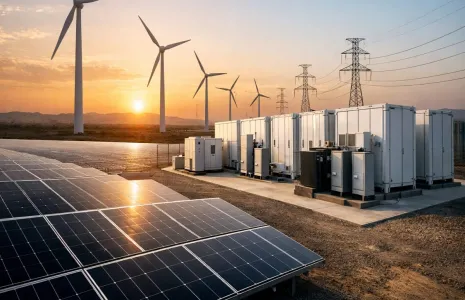
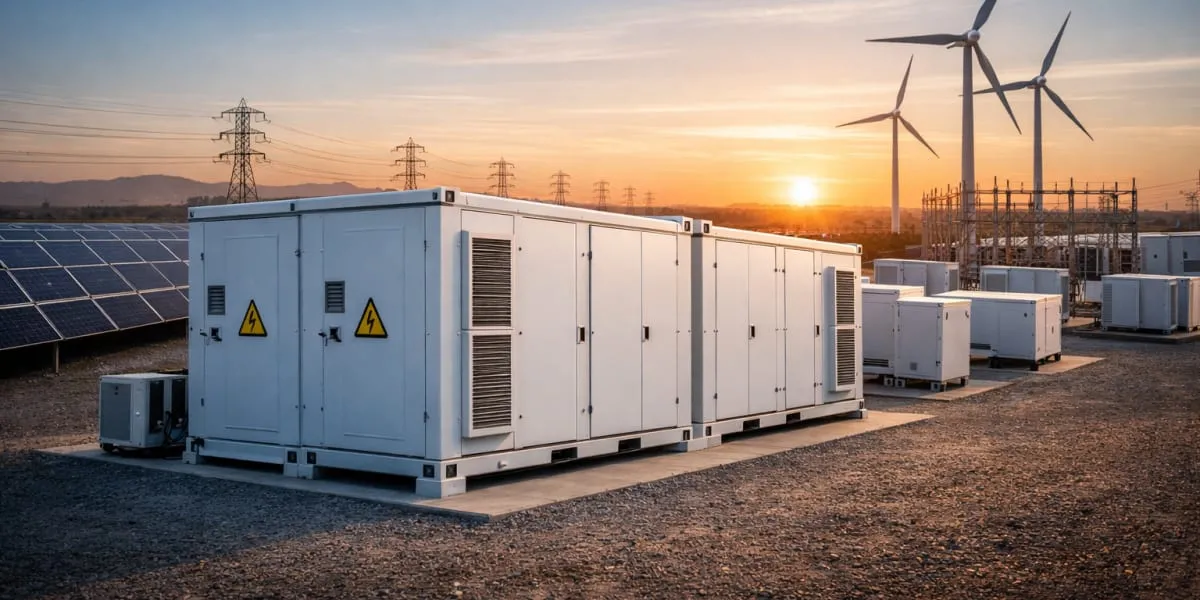
Adani Green Energy (AGEL) has commissioned the world's largest battery energy storage system (BESS) in the western Indian state of Gujarat. The initiative marks a significant milestone in the deployment of utility-scale storage in India and is designed to support the integration of variable renewable generation into the grid. The installation forms part of AGEL's ongoing strategy to enhance grid stability, to provide dispatchable power during times of peak demand and to strengthen energy security.

According to a company statement, the BESS will enable renewables to be time shifted and to supply ancillary services that help manage frequency and voltage on the network. AGEL said that the facility will smooth variability from solar and wind assets, reduce the need for thermal ramping and support lower carbon operation of the power system. The project is intended to improve supply reliability for distribution utilities and to assist grid operators in balancing supply and demand over short time horizons.

AGEL framed the installation as part of a broader programme of investments in clean energy infrastructure and in battery storage technologies that can provide firming, peak shaving and fast response capability. The company highlighted the role of storage in reducing curtailment of renewable output, in offering frequency regulation and in enabling greater utilisation of existing solar and wind plants. Industry observers noted that large-scale storage deployments are central to cost-effective decarbonisation of power systems with high renewable penetration.

The Gujarat project reinforces the state's position as a hub for renewable projects and aligns with policy measures aimed at encouraging grid flexibility. AGEL indicated that the facility will operate alongside its existing renewable portfolio and will be made available to support market mechanisms and ancillary service arrangements. Company executives said that storage will be integral to future project planning as India progresses towards its clean energy ambitions, and that the deployment represents a practical step towards more resilient and flexible power infrastructure.

Adani Green Energy (AGEL) has commissioned the world's largest battery energy storage system (BESS) in the western Indian state of Gujarat. The initiative marks a significant milestone in the deployment of utility-scale storage in India and is designed to support the integration of variable renewable generation into the grid. The installation forms part of AGEL's ongoing strategy to enhance grid stability, to provide dispatchable power during times of peak demand and to strengthen energy security. According to a company statement, the BESS will enable renewables to be time shifted and to supply ancillary services that help manage frequency and voltage on the network. AGEL said that the facility will smooth variability from solar and wind assets, reduce the need for thermal ramping and support lower carbon operation of the power system. The project is intended to improve supply reliability for distribution utilities and to assist grid operators in balancing supply and demand over short time horizons. AGEL framed the installation as part of a broader programme of investments in clean energy infrastructure and in battery storage technologies that can provide firming, peak shaving and fast response capability. The company highlighted the role of storage in reducing curtailment of renewable output, in offering frequency regulation and in enabling greater utilisation of existing solar and wind plants. Industry observers noted that large-scale storage deployments are central to cost-effective decarbonisation of power systems with high renewable penetration. The Gujarat project reinforces the state's position as a hub for renewable projects and aligns with policy measures aimed at encouraging grid flexibility. AGEL indicated that the facility will operate alongside its existing renewable portfolio and will be made available to support market mechanisms and ancillary service arrangements. Company executives said that storage will be integral to future project planning as India progresses towards its clean energy ambitions, and that the deployment represents a practical step towards more resilient and flexible power infrastructure.

Next Story
Real Estate

CREDAI-MCHI to Host 10th Design & Construction Conference

CREDAI-MCHI will host the 10th anniversary edition of its Design & Construction Conference on August 19, 2026, at the Jio World Convention Centre in Mumbai.The event is expected to bring together more than 500 procurement leaders, construction heads, architects, consultants and senior real estate decision-makers, alongside over 50 construction and ancillary brands.The conference will feature product launches, technology showcases, knowledge sessions, strategic business-to-business networking and recognition of procurement professionals contributing to the transformation of the construction..

Next Story
Infrastructure Energy

BorgWarner Wins Extension for High-Voltage Inverter Programmes

BorgWarner has secured a major extension of several high-volume high-voltage inverter programmes from a leading European automotive manufacturer.The contracts cover updated inverter designs for plug-in hybrid and 800V battery-electric vehicle applications. Production is scheduled to begin in 2029.Isabelle McKenzie, President and General Manager, BorgWarner PowerDrive Systems, said the programme extensions demonstrate the company’s position in power electronics and reflect the strength of its technology, in-house expertise and customer relationships.For plug-in hybrid vehicles, BorgWarner wil..

Next Story
Infrastructure Urban

Castrol India Q2 Profit Rises 43% to Rs 3.48 bn

Castrol India reported a 43 per cent year-on-year increase in profit after tax to Rs 3.48 billion for the quarter ended June 30, 2026, supported by growth across its consumer, industrial and institutional businesses.Revenue from operations increased 25 per cent to Rs 18.71 billion during the second quarter of 2026, compared with Rs 14.97 billion in the corresponding period of 2025. EBITDA rose 41 per cent to Rs 4.94 billion from Rs 3.50 billion.Sequentially, revenue increased from Rs 15.45 billion in the first quarter of 2026, while EBITDA rose from Rs 3.29 billion. Profit after tax increased ..

Advertisement

Subscribe to Our Newsletter

Get daily newsletters around different themes from Construction world.

STAY CONNECTED

Advertisement

Advertisement

Advertisement