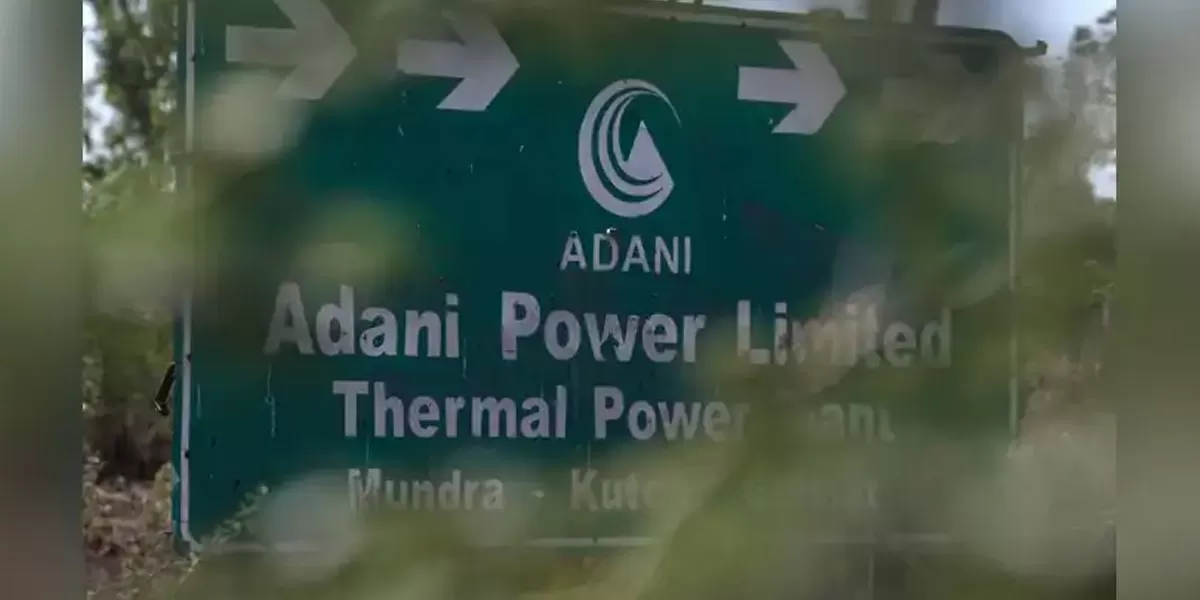
Bangladesh Pays $384 Mn to Adani, Settles Most Power Dues
POWER & RENEWABLE ENERGY

Bangladesh Pays $384 Mn to Adani, Settles Most Power Dues

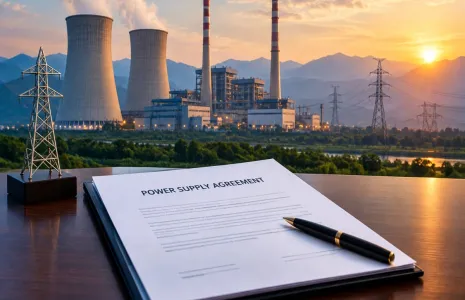
Bangladesh has significantly reduced its dues to Adani Power with a $384 million payment in June 2025 under their 2017 power supply agreement. This settlement brings the total cleared amount to nearly $1.5 billion out of approximately $2 billion billed, leaving an estimated $500 million still as 'claimed' dues. The payment is part of a $437 million commitment due by the end of the month.

The power deal has come under scrutiny due to Bangladesh’s economic struggles, exacerbated by the Russia–Ukraine conflict and political instability. The ousting of Prime Minister Sheikh Hasina led to further financial challenges, causing delays in payments and prompting Adani Power to halve electricity supply in November 2024. With the resumption of monthly payments, full supply resumed in March 2025.

Adani Power has reportedly waived late payment surcharges worth about $20 million for the January–June 2025 period, conditional on Bangladesh continuing timely payments. Differences between ‘claimed’ and ‘admitted’ dues stem from ongoing negotiations over coal pricing and capacity utilisation. An Adani Power spokesperson confirmed the recent payments but did not elaborate on disputed amounts.

Bangladesh continues to face difficulty in generating enough foreign currency to fund key imports such as electricity, oil, and coal. Declining foreign reserves have triggered rural power shortages and unrest. The interim government, led by Nobel laureate Muhammad Yunus, is seeking further IMF assistance beyond the current $4.7 billion bailout and has ordered a review of existing energy agreements, including the one with Adani, citing a lack of transparency.

Other Indian firms like NTPC and PTC India also supply electricity to Bangladesh, making these deals vital for ensuring energy stability, particularly in rural regions. As the country navigates political and fiscal upheaval, these agreements will remain under close scrutiny by the interim government and global observers.

Meanwhile, Adani Power shares have rallied 13.8 per cent this week to reach Rs 605 on the BSE, supported by high trading volumes. The stock remains above key daily exponential moving averages, with its 5-day EMA at Rs 558.3, 10-day EMA at Rs 555.7, and 20-day EMA at Rs 555.0. Longer-term EMAs are also strong, including the 200-day at Rs 548.6.

The Relative Strength Index (RSI) stands at 59, signalling neutral momentum. Though the stock has declined 15.64 per cent over the past year, it has recovered well, gaining 14.5 per cent year-to-date and 9.14 per cent in the past month alone.

Bangladesh has significantly reduced its dues to Adani Power with a $384 million payment in June 2025 under their 2017 power supply agreement. This settlement brings the total cleared amount to nearly $1.5 billion out of approximately $2 billion billed, leaving an estimated $500 million still as 'claimed' dues. The payment is part of a $437 million commitment due by the end of the month.The power deal has come under scrutiny due to Bangladesh’s economic struggles, exacerbated by the Russia–Ukraine conflict and political instability. The ousting of Prime Minister Sheikh Hasina led to further financial challenges, causing delays in payments and prompting Adani Power to halve electricity supply in November 2024. With the resumption of monthly payments, full supply resumed in March 2025.Adani Power has reportedly waived late payment surcharges worth about $20 million for the January–June 2025 period, conditional on Bangladesh continuing timely payments. Differences between ‘claimed’ and ‘admitted’ dues stem from ongoing negotiations over coal pricing and capacity utilisation. An Adani Power spokesperson confirmed the recent payments but did not elaborate on disputed amounts.Bangladesh continues to face difficulty in generating enough foreign currency to fund key imports such as electricity, oil, and coal. Declining foreign reserves have triggered rural power shortages and unrest. The interim government, led by Nobel laureate Muhammad Yunus, is seeking further IMF assistance beyond the current $4.7 billion bailout and has ordered a review of existing energy agreements, including the one with Adani, citing a lack of transparency.Other Indian firms like NTPC and PTC India also supply electricity to Bangladesh, making these deals vital for ensuring energy stability, particularly in rural regions. As the country navigates political and fiscal upheaval, these agreements will remain under close scrutiny by the interim government and global observers.Meanwhile, Adani Power shares have rallied 13.8 per cent this week to reach Rs 605 on the BSE, supported by high trading volumes. The stock remains above key daily exponential moving averages, with its 5-day EMA at Rs 558.3, 10-day EMA at Rs 555.7, and 20-day EMA at Rs 555.0. Longer-term EMAs are also strong, including the 200-day at Rs 548.6.The Relative Strength Index (RSI) stands at 59, signalling neutral momentum. Though the stock has declined 15.64 per cent over the past year, it has recovered well, gaining 14.5 per cent year-to-date and 9.14 per cent in the past month alone.

Related Stories

Gold Stories

Next Story
Infrastructure Energy

JSW Motors Signs MoU with ARAI for Vehicle Development

JSW Motors, the passenger vehicle arm of JSW Group, has signed a memorandum of understanding (MoU) with the Automotive Research Association of India (ARAI) for technical collaboration on the design, validation and localisation of new energy vehicles (NEVs). The agreement is intended to create technical foundations for vehicles designed for Indian operating conditions. The companies will work on vehicle engineering and technical baselines, testing, validation and performance assessment, according to JSW Motors. Their programme will also cover advanced driver assistance systems (ADAS), battery s..

Next Story
Infrastructure Urban

Karnataka Offers Support for Toyota Expansion Plans

Karnataka Chief Minister D K Shivakumar assured Toyota Motor Corporation of the state government’s support for expanding its manufacturing operations during a meeting with the company’s senior leadership in Japan. The discussions covered higher production, new mobility solutions and further investment in Karnataka, as Toyota looks to increase vehicle production capacity to 1 mn in the near future. Shivakumar was accompanied by M B Patil, Karnataka’s Minister for Large and Medium Industries and Infrastructure Development. The Toyota delegation was led by Masakazu Yoshimura, the company’..
Next Story
Infrastructure Transport

Railways to Begin Bullet Train Trial on Surat-Bilimora Section

Indian Railways will begin a trial run of its bullet train service on the 50 km Surat-Bilimora section by May 2027. The section is part of the Mumbai-Ahmedabad high-speed rail corridor and is expected to provide the first operational segment of the project. The trial will use an indigenous trainset capable of travelling at 280 km per hour. Railway Ministry sources said the first section of the corridor, extending from Surat to Vapi, is scheduled to become operational by the end of 2027. The planned trial marks a step towards introducing high-speed rail services on the corridor, which connects ..

Subscribe to Our Newsletter

Get daily newsletters around different themes from Construction world.

STAY CONNECTED

Advertisement

SPECIAL OFFER
QR Code