+
Bihar Leads India In Prepaid Smart Metre Rollout
POWER & RENEWABLE ENERGY

Bihar Leads India In Prepaid Smart Metre Rollout

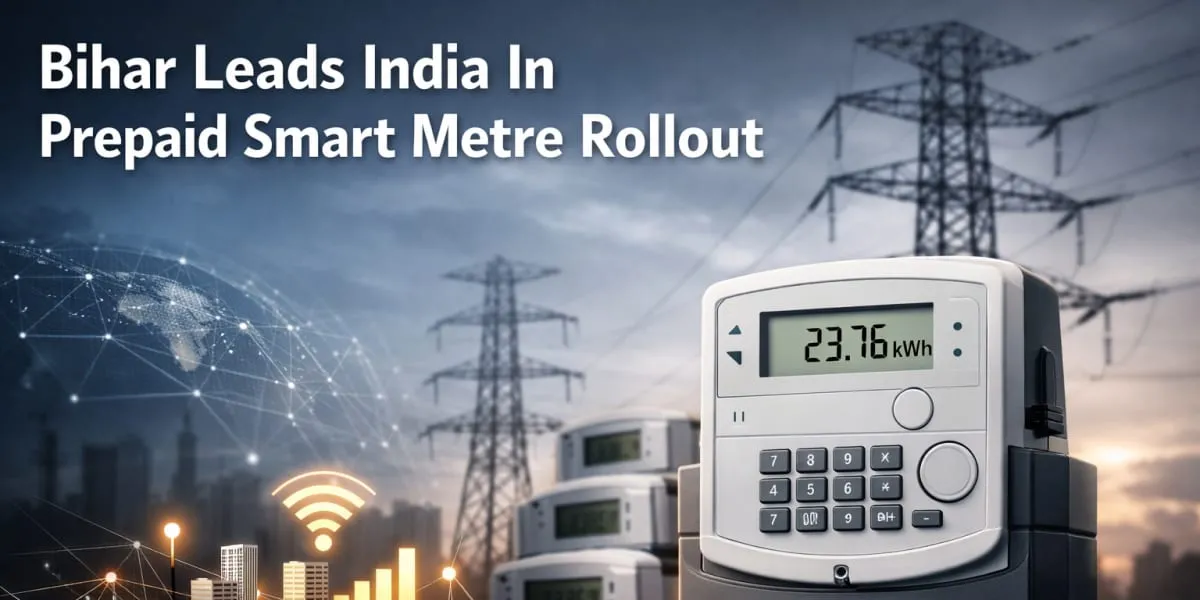
At the 7th CII International Energy Conference & Exhibition in New Delhi, Bihar was presented as a national leader in smart metering as Energy Secretary Ajay Yadav said the State accounts for around 70 per cent of India’s prepaid smart metres. Bihar has installed nine point two million (mn) prepaid smart metres and about 30 per cent of total smart metre installations including postpaid devices. He outlined the use of smart metering, artificial intelligence and internet of things (IoT) technologies to create flexible and consumer?centric power systems.

He outlined rapid sector improvements between 2020 and 2025, with billing efficiency rising from 75.14 per cent in financial year 2019?20 to 88.46 per cent in 2025?26 and collection efficiency moving from 86 per cent to 100 per cent. Aggregate technical and commercial losses declined from 35.12 per cent to 11.54 per cent and the gap between cost of supply and revenue turned positive. The rollout of prepaid smart metering has reduced electricity theft and virtually eliminated arrears, strengthening consumer confidence.

He said Bihar had generated 10 billion (bn) data points to analyse consumption patterns, forecast demand and support planning, and the State has installed zero point two million (mn) Distribution Transformer (DT) metres for real?time monitoring, predictive maintenance and improved asset planning. The successful implementation of time?of?day tariffs is supporting optimisation of consumption and demand?side management. These measures are enabling more targeted interventions and better operational decision?making.

He noted the next phase of reforms will promote industrialisation, with plans for 13 greenfield satellite townships and supporting infrastructure, and reported a peak demand of 9,475 megawatt (MW) this year. Urban supply is being provided for 23?24 hours and rural supply for 22?23 hours, marking a shift from availability to quality and resilience of supply. Integrated platforms such as GIS?enabled asset mapping, digital asset registers and a customer relationship management system are being deployed alongside the Suvidha Bihar Portal, which offers 21 online consumer services.

He added that the State is expanding rooftop solar, solarising agricultural feeders and implementing the PM?KUSUM Scheme while readying the distribution network through smart grid technologies and advanced analytics to support higher renewable integration. The Energy Secretary called for greater collaboration among governments, utilities, technology providers, research institutions and consumers to build a resilient and digitally enabled power sector. Panellists at the session emphasised that partnerships and technological innovation will be central to accelerating the clean energy transition.

At the 7th CII International Energy Conference & Exhibition in New Delhi, Bihar was presented as a national leader in smart metering as Energy Secretary Ajay Yadav said the State accounts for around 70 per cent of India’s prepaid smart metres. Bihar has installed nine point two million (mn) prepaid smart metres and about 30 per cent of total smart metre installations including postpaid devices. He outlined the use of smart metering, artificial intelligence and internet of things (IoT) technologies to create flexible and consumer?centric power systems. He outlined rapid sector improvements between 2020 and 2025, with billing efficiency rising from 75.14 per cent in financial year 2019?20 to 88.46 per cent in 2025?26 and collection efficiency moving from 86 per cent to 100 per cent. Aggregate technical and commercial losses declined from 35.12 per cent to 11.54 per cent and the gap between cost of supply and revenue turned positive. The rollout of prepaid smart metering has reduced electricity theft and virtually eliminated arrears, strengthening consumer confidence. He said Bihar had generated 10 billion (bn) data points to analyse consumption patterns, forecast demand and support planning, and the State has installed zero point two million (mn) Distribution Transformer (DT) metres for real?time monitoring, predictive maintenance and improved asset planning. The successful implementation of time?of?day tariffs is supporting optimisation of consumption and demand?side management. These measures are enabling more targeted interventions and better operational decision?making. He noted the next phase of reforms will promote industrialisation, with plans for 13 greenfield satellite townships and supporting infrastructure, and reported a peak demand of 9,475 megawatt (MW) this year. Urban supply is being provided for 23?24 hours and rural supply for 22?23 hours, marking a shift from availability to quality and resilience of supply. Integrated platforms such as GIS?enabled asset mapping, digital asset registers and a customer relationship management system are being deployed alongside the Suvidha Bihar Portal, which offers 21 online consumer services. He added that the State is expanding rooftop solar, solarising agricultural feeders and implementing the PM?KUSUM Scheme while readying the distribution network through smart grid technologies and advanced analytics to support higher renewable integration. The Energy Secretary called for greater collaboration among governments, utilities, technology providers, research institutions and consumers to build a resilient and digitally enabled power sector. Panellists at the session emphasised that partnerships and technological innovation will be central to accelerating the clean energy transition.

Related Stories

Gold Stories

Next Story
Infrastructure Transport

Mumbai-Ahmedabad Bullet Train’s Surat-Vapi Section Set for 2027

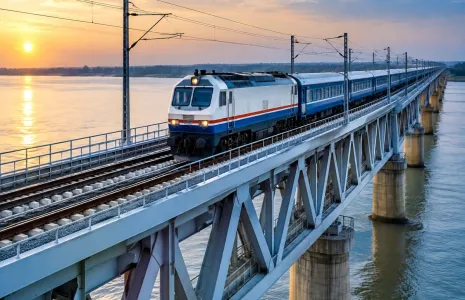
The first section of the Mumbai-Ahmedabad Bullet Train corridor, linking Surat and Vapi, is targeted to begin services in 2027. Construction is expected to be completed by December 2026, while Railway Minister Ashwini Vaishnaw has indicated that an inauguration could take place around the middle of 2027. The National High Speed Rail Corporation (NHSRCL) said the train being manufactured in India is expected to reach the tracks around April or May 2027. The train will undergo extensive testing before the section is opened for passenger services. The project began construction in 2021 and includ..

Next Story
Infrastructure Transport

Indian Railways Approves Four Projects Worth Rs. 7.36 bn Across Four States

Indian Railways has approved four projects with a combined value of Rs. 7.36 bn across Uttar Pradesh, Maharashtra, Andhra Pradesh and Gujarat. The programme covers train protection, signalling, electric traction supply and a road overbridge, with each project assigned to a different railway zone. In Uttar Pradesh, Rs. 2.52 bn has been approved to extend the Kavach 4.0 automatic train protection system across 607.7 km in the Lucknow Division of North Eastern Railway. The system monitors train movements and can apply the brakes if a driver fails to observe a signal or exceeds a safe speed. The w..

Next Story
Infrastructure Urban

Chandru Raheja Sells 1.49% Stake in Mindspace REIT for Rs. 5 bn

Billionaire Chandru Lachmandas Raheja has sold a 1.49 per cent holding in Mindspace Business Parks REIT for Rs. 5 bn through a bulk deal on the BSE. The transaction involved 9.9 mn units and was executed at an average price of Rs. 505 per unit, according to exchange data. Following the sale, units of Mindspace Business Parks REIT were trading 0.18 per cent lower at Rs. 504.05 on Tuesday. Exchange data did not identify the buyers involved in the transaction. Raheja is the chairman of real estate company K Raheja Corp. The sale involved 99,00,990 units, representing 1.49 per cent of the Mumbai-b..

Advertisement

Subscribe to Our Newsletter

Get daily newsletters around different themes from Construction world.

STAY CONNECTED

Advertisement

SPECIAL OFFER
QR Code