+
CERC Proposes Transmission Charge Relief For Delayed Renewables
POWER & RENEWABLE ENERGY

CERC Proposes Transmission Charge Relief For Delayed Renewables

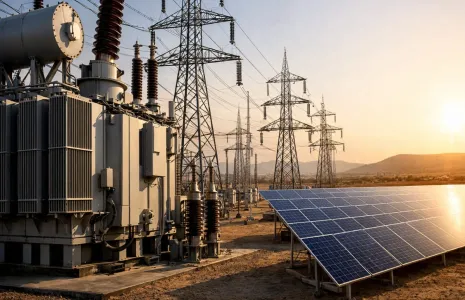
The Central Electricity Regulatory Commission (CERC) has proposed transmission charge relief for renewable energy projects that have been delayed on account of transmission constraints. The proposal aims to ease the financial burden on developers by adjusting the levy applied for use of the grid where project commissioning has been deferred. The regulator has framed the measure as part of broader efforts to support timely integration of renewable capacity.

The relief would apply to projects facing delays that are attributable to network availability rather than developer inaction. It outlines criteria for eligibility and a framework for calculation of adjusted transmission charges. Developers and distribution companies are required to submit relevant data to the grid operator for assessment under the proposed mechanism.

The proposal also addresses how cost causation will be determined and seeks to balance consumer interest with investor protection. By limiting carrying costs in certain instances the regulator intends to prevent escalation of levies that would otherwise fall on end users. The approach preserves the principle that network costs are borne by those who benefit from grid assets.

A public consultation period is proposed so affected parties can provide comments and data supporting their claims. The regulator will review submissions and issue a final order after examining technical feasibility and legal considerations. Interested stakeholders will be expected to follow the timetable set out in the consultation paper.

Industry participants welcomed clarity on the treatment of stranded or stalled projects and noted that streamlined remedies reduce carrying costs and improve project bankability. The regulator described the change as aligning with policy objectives to accelerate the energy transition while maintaining tariff stability. Market participants will review the final order once it is issued and adjust procurement and commissioning schedules accordingly.

The Central Electricity Regulatory Commission (CERC) has proposed transmission charge relief for renewable energy projects that have been delayed on account of transmission constraints. The proposal aims to ease the financial burden on developers by adjusting the levy applied for use of the grid where project commissioning has been deferred. The regulator has framed the measure as part of broader efforts to support timely integration of renewable capacity. The relief would apply to projects facing delays that are attributable to network availability rather than developer inaction. It outlines criteria for eligibility and a framework for calculation of adjusted transmission charges. Developers and distribution companies are required to submit relevant data to the grid operator for assessment under the proposed mechanism. The proposal also addresses how cost causation will be determined and seeks to balance consumer interest with investor protection. By limiting carrying costs in certain instances the regulator intends to prevent escalation of levies that would otherwise fall on end users. The approach preserves the principle that network costs are borne by those who benefit from grid assets. A public consultation period is proposed so affected parties can provide comments and data supporting their claims. The regulator will review submissions and issue a final order after examining technical feasibility and legal considerations. Interested stakeholders will be expected to follow the timetable set out in the consultation paper. Industry participants welcomed clarity on the treatment of stranded or stalled projects and noted that streamlined remedies reduce carrying costs and improve project bankability. The regulator described the change as aligning with policy objectives to accelerate the energy transition while maintaining tariff stability. Market participants will review the final order once it is issued and adjust procurement and commissioning schedules accordingly.

Related Stories

Gold Stories

Next Story
Real Estate

BMC OC Amnesty Scheme Requires Key Approvals from Mumbai Societies

The Brihanmumbai Municipal Corporation (BMC) has clarified that housing societies applying under its Occupation Certificate (OC) amnesty scheme must possess key approvals linked to the original construction. The requirements include a valid Intimation of Disapproval (IOD), an approved building plan and a Commencement Certificate (CC), along with a No Objection Certificate (NOC) from the developer or original construction applicant. The Standard Operating Procedure (SOP) makes clear that the absence of an OC alone will not qualify a building for relief. Societies must establish that their build..

Next Story
Real Estate

Gurugram Emerges as Luxury Senior Living Hub

Gurugram is emerging as a potential hub for luxury senior living, supported by available land, healthcare infrastructure, connectivity and a concentration of affluent professionals, high-net-worth individuals and non-resident Indians. These factors could give the city an advantage over land-constrained metros such as Mumbai. A report by the Association of Senior Living India (ASLI) and JLL estimates that India’s organised senior living market could represent a $10.1 bn opportunity by 2030. The sector had about 25,050 organised units as of June 2026, while penetration stood at only 1.5 per ce..

Next Story
Real Estate

Corrosion Costs India’s Infrastructure Rs. 142 bn Annually

Corrosion costs India an estimated Rs. 1.42 tn annually, equivalent to 4.3 per cent of gross domestic product, according to a report by the Confederation of Indian Industry and the National Research Institute. Infrastructure accounts for Rs. 142 bn of the annual burden, making it the sector with the largest absolute cost among those examined. The report, presented at the CII Annual Infrastructure Summit 2026, said the infrastructure-sector cost equals about 2.9 per cent of the sector’s gross domestic product. It estimated that effective measures could generate maximum savings of Rs. 495.8 bn..

Advertisement

Subscribe to Our Newsletter

Get daily newsletters around different themes from Construction world.

STAY CONNECTED

Advertisement

SPECIAL OFFER
QR Code