Domestic Content Rule Hits Demand for Rooftop Solar Projects
POWER & RENEWABLE ENERGY

Domestic Content Rule Hits Demand for Rooftop Solar Projects

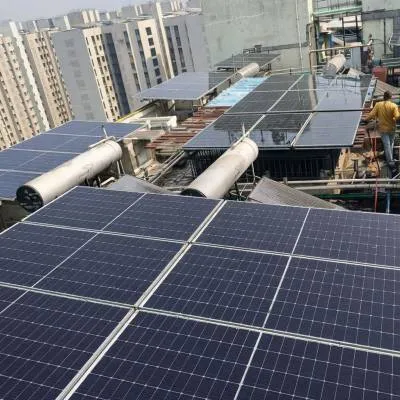
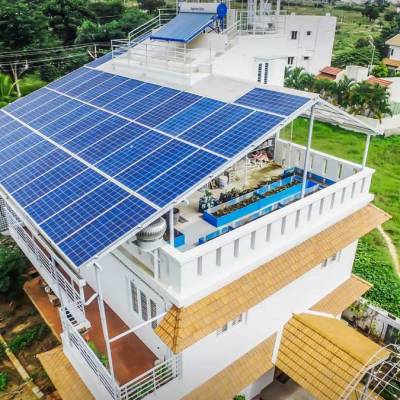
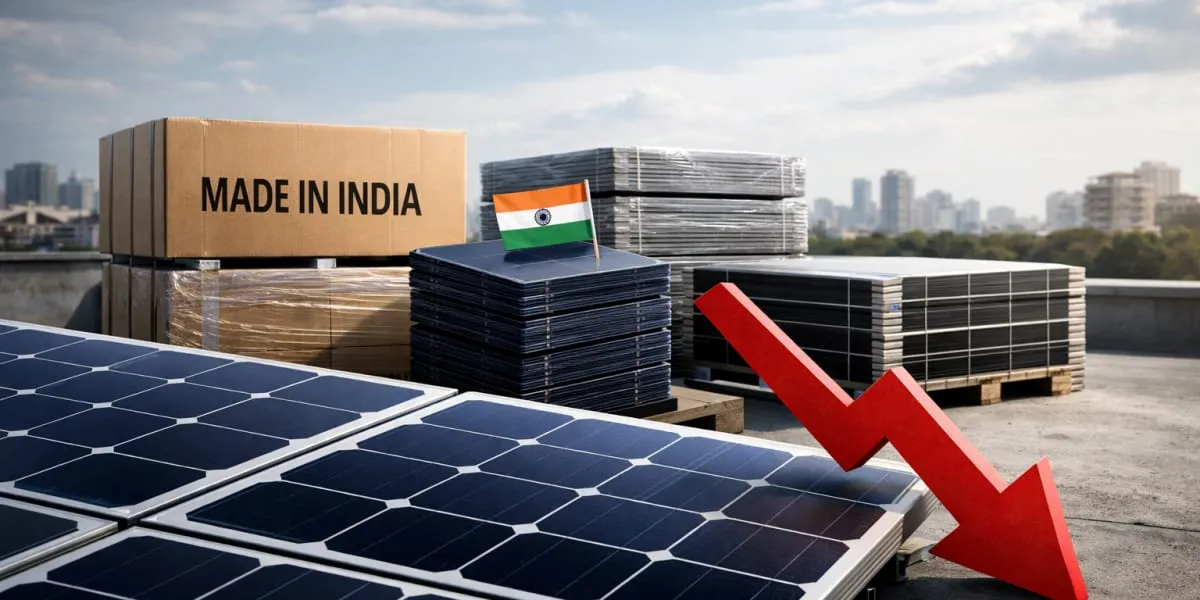
The Ministry for New and Renewable Energy (MNRE) has made it mandatory for new solar projects to use solar cells and modules made in India under the Domestic Content Requirement that came into force on June one. The rule applies to new rooftop and utility-scale installations and is intended to prioritise locally manufactured components. The change has been implemented nationwide by the ministry.

Since the requirement took effect many solar power system providers have reported a fall in demand, with some citing higher component costs and longer procurement timelines. Industry sources said project prices had risen by at least 20 per cent, increasing the upfront cost for household and commercial buyers. The reduction in new projects has been most visible over the last month as installers reassess costs.

Representatives of the Karnataka Renewable Energy Systems Manufacturers Association (KRESMA) reported that customers were reconsidering bookings and that sales volumes had softened. A senior association member conveyed that some buyers were deferring decisions because domestic modules increased system prices. Installers and manufacturers are exploring adjustments to procurement and financing to mitigate the short-term impact.

Market analysts noted that while the immediate effect has been a slowdown in rooftop uptake, the policy aims to build domestic manufacturing capacity and reduce import dependence over time. Several developers indicated they would seek cost efficiencies or pass some costs to end users depending on contract terms and subsidy availability. The ministry has maintained that the requirement will support local industry and long-term energy security even as stakeholders adapt to the new procurement landscape.

Analysts said the sector would undergo an adjustment as suppliers scaled production and price differentials narrowed, with timelines varying by manufacturer and project size. Regulators and industry groups will monitor procurement outcomes and market response to assess whether further measures are required.

The Ministry for New and Renewable Energy (MNRE) has made it mandatory for new solar projects to use solar cells and modules made in India under the Domestic Content Requirement that came into force on June one. The rule applies to new rooftop and utility-scale installations and is intended to prioritise locally manufactured components. The change has been implemented nationwide by the ministry. Since the requirement took effect many solar power system providers have reported a fall in demand, with some citing higher component costs and longer procurement timelines. Industry sources said project prices had risen by at least 20 per cent, increasing the upfront cost for household and commercial buyers. The reduction in new projects has been most visible over the last month as installers reassess costs. Representatives of the Karnataka Renewable Energy Systems Manufacturers Association (KRESMA) reported that customers were reconsidering bookings and that sales volumes had softened. A senior association member conveyed that some buyers were deferring decisions because domestic modules increased system prices. Installers and manufacturers are exploring adjustments to procurement and financing to mitigate the short-term impact. Market analysts noted that while the immediate effect has been a slowdown in rooftop uptake, the policy aims to build domestic manufacturing capacity and reduce import dependence over time. Several developers indicated they would seek cost efficiencies or pass some costs to end users depending on contract terms and subsidy availability. The ministry has maintained that the requirement will support local industry and long-term energy security even as stakeholders adapt to the new procurement landscape. Analysts said the sector would undergo an adjustment as suppliers scaled production and price differentials narrowed, with timelines varying by manufacturer and project size. Regulators and industry groups will monitor procurement outcomes and market response to assess whether further measures are required.

Next Story
Real Estate

LML Realty Launches Cinema Campaign on Industrial Vision

LML Realty has launched a cinema advertising campaign in partnership with PVR INOX across 81 screens in Gurugram and Faridabad, showcasing the brand’s transformation from a mobility icon to an industrial infrastructure developer.The campaign features a cinematic brand film tracing LML’s journey since 1972, beginning with its iconic scooters and highlighting its evolution into creating infrastructure solutions that support India’s manufacturing growth.The film focuses on LML Industrial Park at Jhirka Valley, the company’s flagship industrial development approved under the Haryana Govern..

Next Story
Real Estate

IIM Ahmedabad Publishes Case Study on HoABL’s Business Model

The Indian Institute of Management Ahmedabad (IIMA) has published a case study on The House of Abhinandan Lodha (HoABL), examining the company’s digital-first consumer journey and business model that created India’s branded land category.Titled “HoABL: Ready for Scaling Up”, the case study has been published by the IIMA Case Centre and co-authored by Sourav Borah, Associate Professor of Marketing at IIMA, and Dr Aparna Kansal of IMT Ghaziabad. IIMA case studies are used across management and executive education programmes to help students and business leaders analyse strategic decision..

Next Story
Infrastructure Energy

Advait Energy and MEIL Partner for Energy Transition Projects

Advait Energy Transitions Limited (AETL) and Manipal Energy Infratech Limited (MEIL), a company of The Manipal Group, have entered into a strategic Memorandum of Understanding (MoU) to collaborate on power and energy transition opportunities across India and international markets.The partnership aims to combine AETL’s expertise in innovative energy technologies and manufacturing with MEIL’s EPC execution capabilities and project management experience. The collaboration will focus on opportunities across Power Transmission & Distribution, Renewable Energy, Battery Energy Storage Systems..

Advertisement

Subscribe to Our Newsletter

Get daily newsletters around different themes from Construction world.

STAY CONNECTED

Advertisement

Advertisement

Advertisement