India and United Kingdom Launch Offshore Wind Task Force
POWER & RENEWABLE ENERGY

India and United Kingdom Launch Offshore Wind Task Force

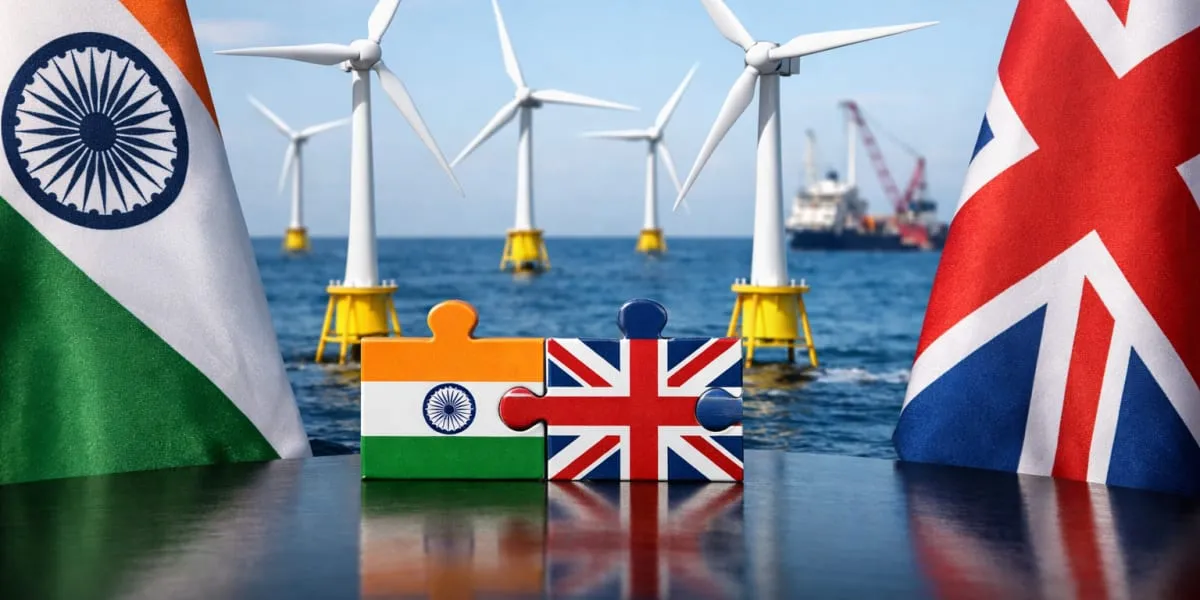
India and the United Kingdom (U.K.) have launched a bilateral offshore wind task force to accelerate development of wind energy and strengthen cooperation in the renewable sector. The initiative aims to coordinate policy frameworks, mobilise investment and align technical standards to facilitate deployment of offshore projects. Officials said the task force will also seek to develop local supply chains and workforce capacity to support large scale installations. The move is part of broader ties on clean energy between the two countries.

India has crossed 272 gigawatt (GW) of installed non-fossil fuel power capacity, reflecting rapid expansion in renewable generation and nuclear power. The milestone encompasses solar, onshore wind, hydro and other clean sources, and signals growing capacity alongside thermal generation. Policymakers noted that continued policy support and investment will be needed to integrate variable renewable output and modernise grid infrastructure. Analysts expect this capacity build-out to influence future planning of energy supplies and emissions trajectories.

The U.K. is expected to bring technical expertise, financing models and developer experience to support India's offshore ambitions, while Indian firms will contribute local manufacturing and project delivery capabilities. The task force will reportedly identify regulatory and environmental safeguards and recommend measures to de-risk projects for private investment. Stakeholders emphasised the importance of cross-border collaboration to build resilient supply chains, stimulate domestic industry and create employment in coastal regions.

Observers said coordinated planning between the two governments could accelerate project timelines and reduce costs through shared research and standardisation. Integrating large-scale offshore generation will require grid enhancements, transmission investment and advances in forecasting and storage technologies to maintain system reliability. The partnership underlines a strategic pivot to low carbon infrastructure and may influence other international collaborations in the Asia-Pacific region. Officials indicated follow-up meetings and technical exchanges will map actionable steps.

India and the United Kingdom (U.K.) have launched a bilateral offshore wind task force to accelerate development of wind energy and strengthen cooperation in the renewable sector. The initiative aims to coordinate policy frameworks, mobilise investment and align technical standards to facilitate deployment of offshore projects. Officials said the task force will also seek to develop local supply chains and workforce capacity to support large scale installations. The move is part of broader ties on clean energy between the two countries. India has crossed 272 gigawatt (GW) of installed non-fossil fuel power capacity, reflecting rapid expansion in renewable generation and nuclear power. The milestone encompasses solar, onshore wind, hydro and other clean sources, and signals growing capacity alongside thermal generation. Policymakers noted that continued policy support and investment will be needed to integrate variable renewable output and modernise grid infrastructure. Analysts expect this capacity build-out to influence future planning of energy supplies and emissions trajectories. The U.K. is expected to bring technical expertise, financing models and developer experience to support India's offshore ambitions, while Indian firms will contribute local manufacturing and project delivery capabilities. The task force will reportedly identify regulatory and environmental safeguards and recommend measures to de-risk projects for private investment. Stakeholders emphasised the importance of cross-border collaboration to build resilient supply chains, stimulate domestic industry and create employment in coastal regions. Observers said coordinated planning between the two governments could accelerate project timelines and reduce costs through shared research and standardisation. Integrating large-scale offshore generation will require grid enhancements, transmission investment and advances in forecasting and storage technologies to maintain system reliability. The partnership underlines a strategic pivot to low carbon infrastructure and may influence other international collaborations in the Asia-Pacific region. Officials indicated follow-up meetings and technical exchanges will map actionable steps.

Next Story
Equipment

MYCRANE Crosses 1,000 Customers in India

MYCRANE, the global platform for crane rental and purchase, has achieved major commercial milestones in India, reinforcing the country’s position as one of its fastest-growing strategic markets. The company has surpassed 1,000 registered customers and 1,000 crane suppliers nationwide, while completing more than 100 paid orders.The growth reflects rising adoption of digital procurement solutions across India’s construction, infrastructure, energy and industrial sectors. Equipment sourced through the platform is supporting projects across the country, with several leading contractors and EPC..

Next Story
Infrastructure Urban

AMTOE 2026 Opens Global Machine Tool Sourcing Hub

The Asian Machine Tool Online Exhibition 2026 (AMTOE 2026) has officially opened as a B2B sourcing platform connecting global buyers with verified Asian suppliers across the machine tool and manufacturing sector. The exhibition will run until 31 October 2026 through a hybrid online and offline model, offering extended sourcing and business networking opportunities.Co-organised by AsianNet and TradeAsia, the event aims to strengthen links between Asian manufacturers and international importers while improving cross-border procurement efficiency and supplier matching.Since launching in 2022, AMT..

Next Story
Infrastructure Energy

Vedanta Lifts Renewable Energy Use by Over 50%

On World Earth Day, Vedanta Limited announced that its renewable energy usage rose by over 50 per cent year on year to 3.97 billion units in FY26, helping avoid 3 million tonnes of carbon dioxide emissions.The company said its portfolio of metals, minerals, power, and oil & gas continues to support advanced manufacturing, electrification, energy transition and clean technology. Aluminium, copper and silver remain critical for applications such as mobility, power transmission, renewable infrastructure and solar photovoltaics, while iron, steel and zinc continue to support energy infrastruct..

Advertisement

Subscribe to Our Newsletter

Get daily newsletters around different themes from Construction world.

STAY CONNECTED

Advertisement

Advertisement

Advertisement