Kishan Reddy Directs Fast Tracking Of Mining And Exploration Projects
COAL & MINING

Kishan Reddy Directs Fast Tracking Of Mining And Exploration Projects

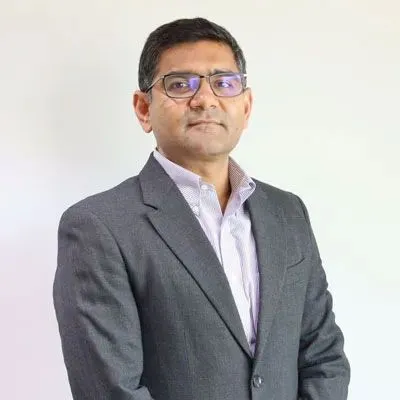
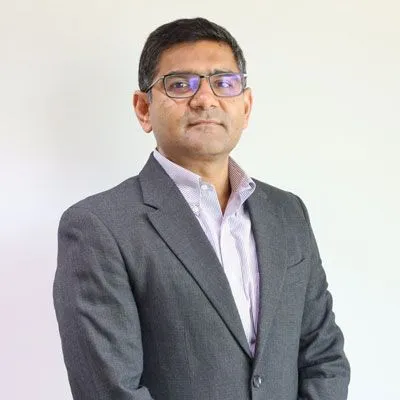
The Union Minister for Coal and Mines, G. Kishan Reddy, directed agencies to fast-track pending mining and exploration projects and to adopt a mission-mode approach to strengthen India’s mineral security.

He chaired review meetings in Bengaluru with senior officials of the Geological Survey of India, the National Institute of Rock Mechanics, the Indian Bureau of Mines and the Remote Sensing and Aerial Survey division and set expectations for speed, accountability and measurable outcomes. The reviews focused on accelerating exploration and strengthening scientific and technological capabilities while promoting sustainable mining practices aligned with Viksit Bharat 2047.

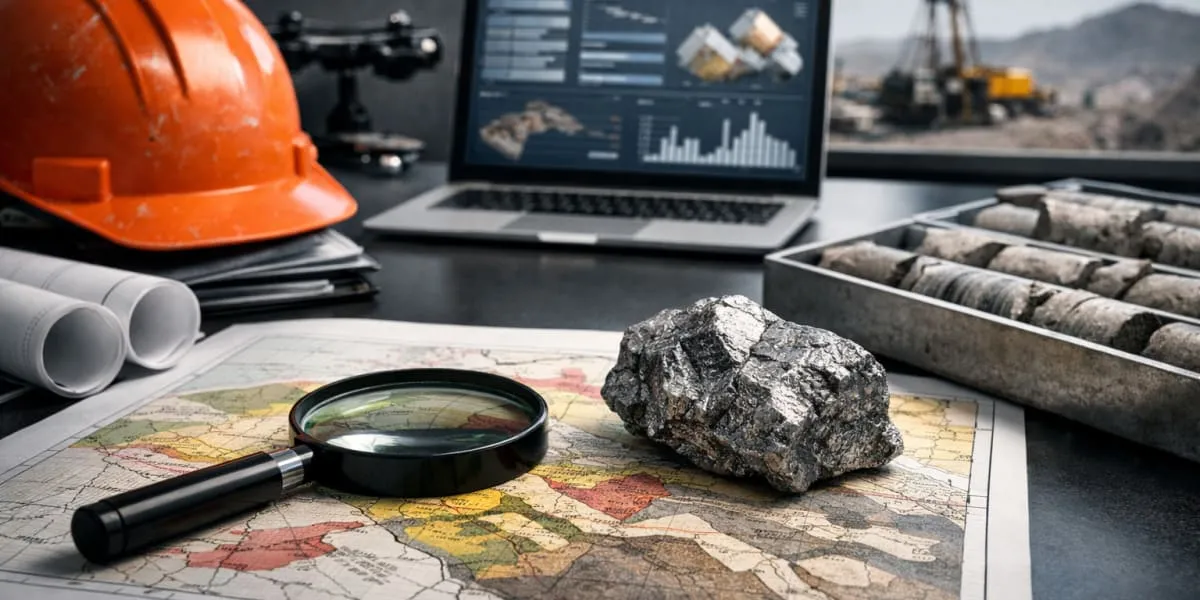
Officials reported work on critical and strategic minerals, including Rare Earth Elements (REE), lithium, nickel, cobalt, tungsten, vanadium and platinum group elements, and on mineral targeting and geospatial technologies. The Geological Survey of India outlined outcomes in Karnataka and Goa and a five-year roadmap for thematic mapping and AI and ML-enabled mineral targeting covering nearly 48,000 sq. km.

NIRM outlined contributions to infrastructure and mining safety projects, covering hydropower, metro rail, tunnel engineering and seismic monitoring and set out capabilities in rock mechanics and engineering geology. The Indian Bureau of Mines reviewed sustainable practices, operationalisation of auctioned mineral blocks, scientific mine closure and mineral beneficiation and reported findings on critical mineral enrichment under the National Critical Mineral Mission. The Remote Sensing and Aerial Survey division reported that more than zero point six five million (mn) sq. km. has been covered under the National Aerogeophysical Mapping Programme, generating over 200 exploration projects.

The minister emphasised advanced technologies, data integration and scientific innovation and urged institutions to adopt AI driven systems, remote sensing and integrated geoscience analytics to make India resource secure. He directed coordinated work with clear timelines, measurable outcomes and enhanced accountability to support industrial expansion and strategic mineral security. During the Bengaluru visit he also visited the Art of Living Centre, interacted with members and sought blessings from Sri Sri Ravi Shankar, and noted that development should be guided by spiritual consciousness and cultural values.

The Union Minister for Coal and Mines, G. Kishan Reddy, directed agencies to fast-track pending mining and exploration projects and to adopt a mission-mode approach to strengthen India’s mineral security. He chaired review meetings in Bengaluru with senior officials of the Geological Survey of India, the National Institute of Rock Mechanics, the Indian Bureau of Mines and the Remote Sensing and Aerial Survey division and set expectations for speed, accountability and measurable outcomes. The reviews focused on accelerating exploration and strengthening scientific and technological capabilities while promoting sustainable mining practices aligned with Viksit Bharat 2047. Officials reported work on critical and strategic minerals, including Rare Earth Elements (REE), lithium, nickel, cobalt, tungsten, vanadium and platinum group elements, and on mineral targeting and geospatial technologies. The Geological Survey of India outlined outcomes in Karnataka and Goa and a five-year roadmap for thematic mapping and AI and ML-enabled mineral targeting covering nearly 48,000 sq. km. NIRM outlined contributions to infrastructure and mining safety projects, covering hydropower, metro rail, tunnel engineering and seismic monitoring and set out capabilities in rock mechanics and engineering geology. The Indian Bureau of Mines reviewed sustainable practices, operationalisation of auctioned mineral blocks, scientific mine closure and mineral beneficiation and reported findings on critical mineral enrichment under the National Critical Mineral Mission. The Remote Sensing and Aerial Survey division reported that more than zero point six five million (mn) sq. km. has been covered under the National Aerogeophysical Mapping Programme, generating over 200 exploration projects. The minister emphasised advanced technologies, data integration and scientific innovation and urged institutions to adopt AI driven systems, remote sensing and integrated geoscience analytics to make India resource secure. He directed coordinated work with clear timelines, measurable outcomes and enhanced accountability to support industrial expansion and strategic mineral security. During the Bengaluru visit he also visited the Art of Living Centre, interacted with members and sought blessings from Sri Sri Ravi Shankar, and noted that development should be guided by spiritual consciousness and cultural values.

Next Story
Real Estate

CREDAI-MCHI to Host 10th Design & Construction Conference

CREDAI-MCHI will host the 10th anniversary edition of its Design & Construction Conference on August 19, 2026, at the Jio World Convention Centre in Mumbai.The event is expected to bring together more than 500 procurement leaders, construction heads, architects, consultants and senior real estate decision-makers, alongside over 50 construction and ancillary brands.The conference will feature product launches, technology showcases, knowledge sessions, strategic business-to-business networking and recognition of procurement professionals contributing to the transformation of the construction..

Next Story
Infrastructure Energy

BorgWarner Wins Extension for High-Voltage Inverter Programmes

BorgWarner has secured a major extension of several high-volume high-voltage inverter programmes from a leading European automotive manufacturer.The contracts cover updated inverter designs for plug-in hybrid and 800V battery-electric vehicle applications. Production is scheduled to begin in 2029.Isabelle McKenzie, President and General Manager, BorgWarner PowerDrive Systems, said the programme extensions demonstrate the company’s position in power electronics and reflect the strength of its technology, in-house expertise and customer relationships.For plug-in hybrid vehicles, BorgWarner wil..

Next Story
Infrastructure Urban

Castrol India Q2 Profit Rises 43% to Rs 3.48 bn

Castrol India reported a 43 per cent year-on-year increase in profit after tax to Rs 3.48 billion for the quarter ended June 30, 2026, supported by growth across its consumer, industrial and institutional businesses.Revenue from operations increased 25 per cent to Rs 18.71 billion during the second quarter of 2026, compared with Rs 14.97 billion in the corresponding period of 2025. EBITDA rose 41 per cent to Rs 4.94 billion from Rs 3.50 billion.Sequentially, revenue increased from Rs 15.45 billion in the first quarter of 2026, while EBITDA rose from Rs 3.29 billion. Profit after tax increased ..

Advertisement

Subscribe to Our Newsletter

Get daily newsletters around different themes from Construction world.

STAY CONNECTED

Advertisement

Advertisement

Advertisement