India Mulls Incentives For Over 10 GW Polysilicon Capacity
POWER & RENEWABLE ENERGY

India Mulls Incentives For Over 10 GW Polysilicon Capacity

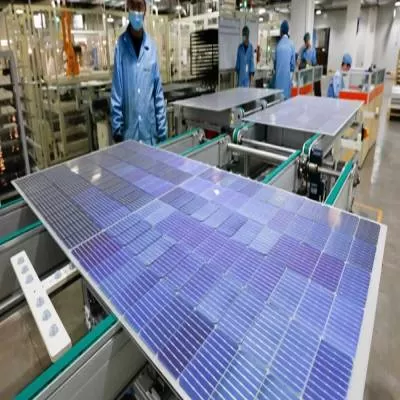
India is preparing an incentive scheme to build more than 10 GW of domestic polysilicon manufacturing capacity to reduce dependence on China for the raw material, the Union new and renewable energy secretary Santosh Kumar Sarangi said. The measure aims to push manufacturing deeper into the solar value chain by supporting production of polysilicon used to make ingots and wafers that are processed into solar cells and modules. The government has not disclosed the proposed outlay or timeline.

The support would complement an existing production linked incentive programme for high efficiency solar modules valued at Rs 240 billion (Rs 240 bn). Under that programme manufacturers were selected for eight point seven four GW in the first tranche and 39.6 GW in the second. India has built more than 213 GW of module manufacturing capacity and around 32 GW of solar cell capacity, and the government expects cell capacity to reach 100 GW within a year.

The push coincides with India crossing 300 GW of non fossil fuel based generation capacity by end July and remaining on course to meet a 500 GW target by 2030. Wind manufacturing has reached 24 GW with around 85 per cent indigenisation. The Solar Energy Corporation of India ran a round the clock renewable energy bid that provided 90 per cent assured power availability in every time block, with the discovered tariff at Rs 5.25 per unit.

Under the latest structure, solar will account for only 50 per cent of daytime supply, requiring developers to combine solar, wind and storage to maintain continuous availability. Developers were said to be confident that Rs 5.25 per unit would remain an inflation proof price for supplying electricity over 25 years. The secretary said cross border electricity trade will require compatible regulations as well as transmission lines, substations and undersea cables, and he highlighted the One Sun One World One Grid initiative and cooperation with neighbouring countries such as Bhutan.

India is preparing an incentive scheme to build more than 10 GW of domestic polysilicon manufacturing capacity to reduce dependence on China for the raw material, the Union new and renewable energy secretary Santosh Kumar Sarangi said. The measure aims to push manufacturing deeper into the solar value chain by supporting production of polysilicon used to make ingots and wafers that are processed into solar cells and modules. The government has not disclosed the proposed outlay or timeline. The support would complement an existing production linked incentive programme for high efficiency solar modules valued at Rs 240 billion (Rs 240 bn). Under that programme manufacturers were selected for eight point seven four GW in the first tranche and 39.6 GW in the second. India has built more than 213 GW of module manufacturing capacity and around 32 GW of solar cell capacity, and the government expects cell capacity to reach 100 GW within a year. The push coincides with India crossing 300 GW of non fossil fuel based generation capacity by end July and remaining on course to meet a 500 GW target by 2030. Wind manufacturing has reached 24 GW with around 85 per cent indigenisation. The Solar Energy Corporation of India ran a round the clock renewable energy bid that provided 90 per cent assured power availability in every time block, with the discovered tariff at Rs 5.25 per unit. Under the latest structure, solar will account for only 50 per cent of daytime supply, requiring developers to combine solar, wind and storage to maintain continuous availability. Developers were said to be confident that Rs 5.25 per unit would remain an inflation proof price for supplying electricity over 25 years. The secretary said cross border electricity trade will require compatible regulations as well as transmission lines, substations and undersea cables, and he highlighted the One Sun One World One Grid initiative and cooperation with neighbouring countries such as Bhutan.

Related Stories

Gold Stories

Next Story
Infrastructure Urban

Sabarmati Riverfront Two Plots Up for Auction at Rs2.24 bn Base Price

Two commercial plots on the western bank of the Sabarmati Riverfront will be auctioned with a base price of Rs 112 crore each, equivalent to Rs 1.12 bn apiece and Rs 2.24 billion in total. The parcels are located adjacent to the Metro Rail Bridge in Ahmedabad and form the first commercial offering after a prolonged pause. The Riverfront Development Corporation has framed the sale as part of a phased commercial release to revive development along the riverfront. The combined base valuation has been set by the corporation to reflect market rates along the riverfront. The corporation has fixed a ..

Next Story
Infrastructure Urban

Andhra Pradesh to Connect Over One Million Streetlights

Andhra Pradesh will undertake a statewide smart streetlighting programme across all 123 Urban Local Bodies (ULBs), bringing around 1.05 million (mn) streetlights under an AI enabled monitoring and management system. The programme will be implemented by Energy Efficiency Services Limited (EESL) with the Commissioner and Director of Municipal Administration under the state Municipal Administration and Urban Development Department. The project aims to convert conventional streetlighting into a digitally managed municipal service monitored and maintained remotely. The initial phase will cover abou..

Next Story
Infrastructure Urban

AMC To Procure Four Machines For Guard Rail Cleaning

Ahmedabad Municipal Corporation will introduce four specialised machines for cleaning guard railings along major roads and the central verges of BRTS and Metro corridors. The civic body plans to replace manual labour with mechanised cleaning to improve maintenance of road infrastructure and greenery. The purchase is estimated at Rs 82.8 million (mn), excluding GST. The proposal sets the base price of each machine at about Rs 20.7 million (mn) so four units total Rs 82.8 million (mn) before GST. 18 per cent GST will be applicable separately. During the warranty period each machine will operate ..

Advertisement

Subscribe to Our Newsletter

Get daily newsletters around different themes from Construction world.

STAY CONNECTED

Advertisement