India, Russia Reaffirm Nuclear and Energy Cooperation
POWER & RENEWABLE ENERGY

India, Russia Reaffirm Nuclear and Energy Cooperation

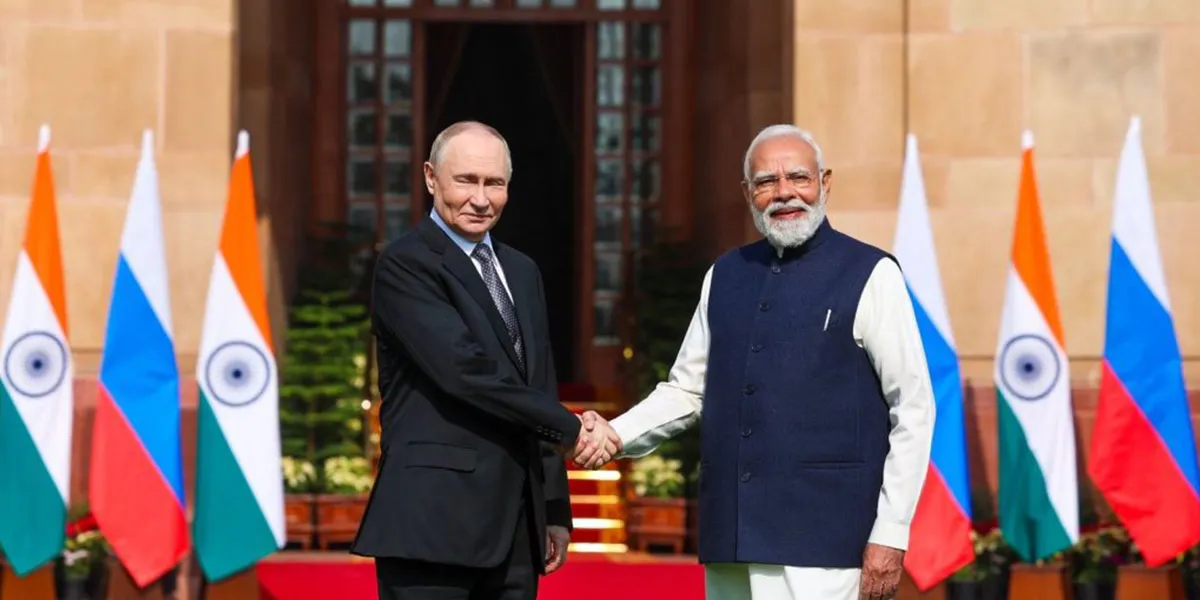
India and Russia on Friday reaffirmed their commitment to deepening cooperation in civil nuclear energy and the wider energy sector, underscoring the strategic importance of their Special and Privileged Strategic Partnership. The joint statement followed the 23rd India–Russia Annual Summit, during which both sides reviewed ongoing and prospective collaboration across multiple energy domains.

The discussions covered cooperation in oil and oil products, refining and petrochemical technologies, oilfield services, upstream exploration technologies, LNG and LPG infrastructure, and underground coal gasification. The two nations also examined progress in nuclear energy projects. Both sides stressed the need for timely resolution of issues affecting energy investment projects and agreed to work jointly to address investor concerns.

The leaders welcomed advancements at the Kudankulam Nuclear Power Plant, including the construction of the remaining units, and reaffirmed their commitment to meeting timelines for equipment and fuel supply. They also emphasised continued consultations on identifying a second nuclear power plant site in India, with the Indian side committed to completing the formal allotment process in line with prior agreements.

India and Russia further agreed to accelerate technical and commercial engagements on Russian-designed VVER nuclear reactors. Key focus areas will include research and joint development, localisation and the joint manufacturing of nuclear equipment and fuel assemblies for large-capacity reactors, subject to mutually agreed terms.

India and Russia on Friday reaffirmed their commitment to deepening cooperation in civil nuclear energy and the wider energy sector, underscoring the strategic importance of their Special and Privileged Strategic Partnership. The joint statement followed the 23rd India–Russia Annual Summit, during which both sides reviewed ongoing and prospective collaboration across multiple energy domains. The discussions covered cooperation in oil and oil products, refining and petrochemical technologies, oilfield services, upstream exploration technologies, LNG and LPG infrastructure, and underground coal gasification. The two nations also examined progress in nuclear energy projects. Both sides stressed the need for timely resolution of issues affecting energy investment projects and agreed to work jointly to address investor concerns. The leaders welcomed advancements at the Kudankulam Nuclear Power Plant, including the construction of the remaining units, and reaffirmed their commitment to meeting timelines for equipment and fuel supply. They also emphasised continued consultations on identifying a second nuclear power plant site in India, with the Indian side committed to completing the formal allotment process in line with prior agreements. India and Russia further agreed to accelerate technical and commercial engagements on Russian-designed VVER nuclear reactors. Key focus areas will include research and joint development, localisation and the joint manufacturing of nuclear equipment and fuel assemblies for large-capacity reactors, subject to mutually agreed terms.

Next Story
Building Material

Cement Makers Set for ~250 bps Margin Boost on Strong Realisations

Cement manufacturers are expected to record a 250–300 basis points (bps) expansion in operating margins this fiscal, supported by improved realisations driven by higher volumes, greater premiumisation and broadly stable input costs. Industry volume is projected to grow 6.5–7.5 per cent this fiscal, up from 5 per cent in the previous year. While the first half saw a moderate 5 per cent on-year rise—recovering from flat demand a year earlier—the second half is likely to strengthen with 8–9 per cent growth backed by pent-up demand and better liquidity.Pan-India cement prices are expecte..

Next Story
Infrastructure Urban

Zen Technologies Bags Rs 1.20 Bn MoD Contract for Combat Training Node

Zen Technologies has secured a Rs 1.20 billion contract from the Ministry of Defence to establish India’s first Combat Training Node (CTN) at the Infantry School in Mhow, Madhya Pradesh. The institution, regarded as the alma mater of the country’s infantry forces, will host this state-of-the-art training ecosystem designed to enhance operational preparedness through advanced simulation technologies.The CTN will integrate more than 60 training simulators and solutions, aimed at modernising and standardising combat training. The initiative aligns with India’s broader goal of strengthening ..

Next Story
Building Material

Shree Cement Rolls Out Bangur Marble Cement in Odisha Market

Shree Cement has expanded its premium portfolio in eastern India with the launch of Bangur Marble Cement in Odisha under its master brand, Bangur Cement. The product, a premium PSC cement, is engineered for superior brightness, enhanced strength and strong crack resistance—qualities that make it particularly suitable for exposed concrete structures and large, visually striking designs. Its composition also makes it well suited to the climatic conditions of coastal Odisha, offering durable performance in challenging environments.The company plans to make the cement available through more than..

Advertisement

Subscribe to Our Newsletter

Get daily newsletters around different themes from Construction world.

STAY CONNECTED

Advertisement

Advertisement

Advertisement

Advertisement

Open In App