+
Kashmir Industry Body Seeks Rooftop Solar Drive In Industrial Estates
POWER & RENEWABLE ENERGY

Kashmir Industry Body Seeks Rooftop Solar Drive In Industrial Estates

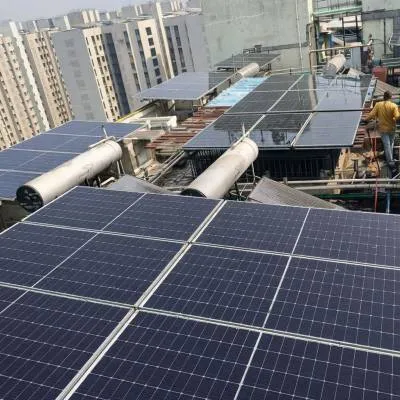
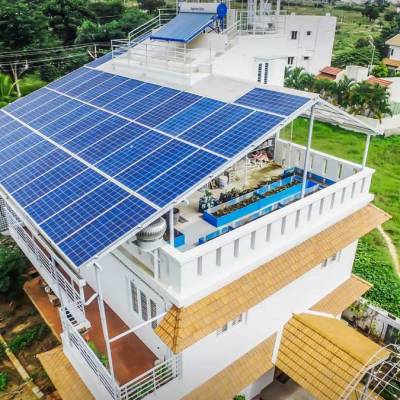
The Kashmir industry body has urged the administration to drive a rooftop solar initiative across industrial estates under the central Micro, Small and Medium Enterprises (MSME) scheme. It asked for coordinated implementation to facilitate installation of panels on factory roofs and shared infrastructure within estate precincts. The proposal aimed to reduce energy costs for units while improving energy security and environmental performance. Industry representatives highlighted the scheme as an opportunity to modernise energy supply for small manufacturing units.

They requested that the state nodal agency and estate managers be tasked with conducting technical surveys, preparing aggregated capacity plans and fast tracking approvals. The body sought clarity on financing modalities available under the central scheme and on procedures for net metering and grid connectivity. Attention was drawn to the need for vendor prequalification and standardised procurement to ensure quality and economies of scale. Support for training and operations and maintenance was also urged.

The advocacy noted that rooftop deployments could lower operational expenses by substituting expensive grid power and by stabilising supply during peak demand. Emphasis was placed on benefits to competitiveness for Micro, Small and Medium Enterprises and on the potential for modest employment in installation and maintenance services. The proposal avoided specifying targets or budgetary figures but framed the drive as a pragmatic step that aligned with broader moves towards cleaner energy across industrial clusters.

Officials and industry contacts were asked to set timelines and a clear decision matrix so that estates could begin preparatory work without delay. The industry body proposed periodic reviews to monitor rollout and to resolve technical or regulatory bottlenecks. It encouraged collaboration between central scheme administrators, the state government and estate associations to ensure that benefits reach smallest units. The request concluded with an appeal for policy clarity and prompt support to accelerate the transition.

The Kashmir industry body has urged the administration to drive a rooftop solar initiative across industrial estates under the central Micro, Small and Medium Enterprises (MSME) scheme. It asked for coordinated implementation to facilitate installation of panels on factory roofs and shared infrastructure within estate precincts. The proposal aimed to reduce energy costs for units while improving energy security and environmental performance. Industry representatives highlighted the scheme as an opportunity to modernise energy supply for small manufacturing units. They requested that the state nodal agency and estate managers be tasked with conducting technical surveys, preparing aggregated capacity plans and fast tracking approvals. The body sought clarity on financing modalities available under the central scheme and on procedures for net metering and grid connectivity. Attention was drawn to the need for vendor prequalification and standardised procurement to ensure quality and economies of scale. Support for training and operations and maintenance was also urged. The advocacy noted that rooftop deployments could lower operational expenses by substituting expensive grid power and by stabilising supply during peak demand. Emphasis was placed on benefits to competitiveness for Micro, Small and Medium Enterprises and on the potential for modest employment in installation and maintenance services. The proposal avoided specifying targets or budgetary figures but framed the drive as a pragmatic step that aligned with broader moves towards cleaner energy across industrial clusters. Officials and industry contacts were asked to set timelines and a clear decision matrix so that estates could begin preparatory work without delay. The industry body proposed periodic reviews to monitor rollout and to resolve technical or regulatory bottlenecks. It encouraged collaboration between central scheme administrators, the state government and estate associations to ensure that benefits reach smallest units. The request concluded with an appeal for policy clarity and prompt support to accelerate the transition.

Next Story
Infrastructure Urban

India Expands Semiconductor Training To 500 Institutions

Under the Chips to Startups programme of the India Semiconductor Mission, the Union minister responsible for Railways, Information and Broadcasting, and Electronics and IT reported notable progress in talent development. He indicated that over the past four years substantial steps have been taken towards a 10-year target of training 85,000 engineers in semiconductor design. World-class EDA tools have been deployed in 315 academic institutions across the country to provide students with practical exposure to chip design. These EDA tools are supported by leading global firms and are accessible t..

Next Story
Infrastructure Urban

Delhi Institutions Support India Semiconductor Mission

The Government of India has prioritised talent development through training, upskilling and workforce development under the Chips to Startups initiative of the India Semiconductor Mission, with officials noting progress in four years towards a 10-year target of training 85,000 engineers in semiconductor design. Electronic design automation tools provided by Synopsys, Cadence, Siemens, Renesas, Ansys and AMD have been deployed in 315 academic institutions, enabling students to gain practical chip design experience. Chips have been fabricated and tested at the Semiconductor Laboratory, Mohali, a..

Next Story
Infrastructure Urban

NHA Announces Winners Of NHCX Hackathon At IIT Hyderabad

The National Health Authority (NHA) has concluded the NHCX Hackathon under the Ayushman Bharat Digital Mission (ABDM) to stimulate innovation around the National Health Claims Exchange (NHCX). The winning teams presented their solutions at the NHCX Innovation Meet held at IIT Hyderabad during a two-day event in March 2026 that also served as the hackathon grand finale. The hackathon itself ran from 22 to 28 February 2026 and aimed to accelerate paperless, transparent claims processing across India. The event was organised with a range of ecosystem partners, including the Insurance Regulatory a..

Advertisement

Subscribe to Our Newsletter

Get daily newsletters around different themes from Construction world.

STAY CONNECTED

Advertisement

Advertisement

Advertisement