NTPC Scouts Land Across 16 States for Large Nuclear Power Projects
POWER & RENEWABLE ENERGY

NTPC Scouts Land Across 16 States for Large Nuclear Power Projects

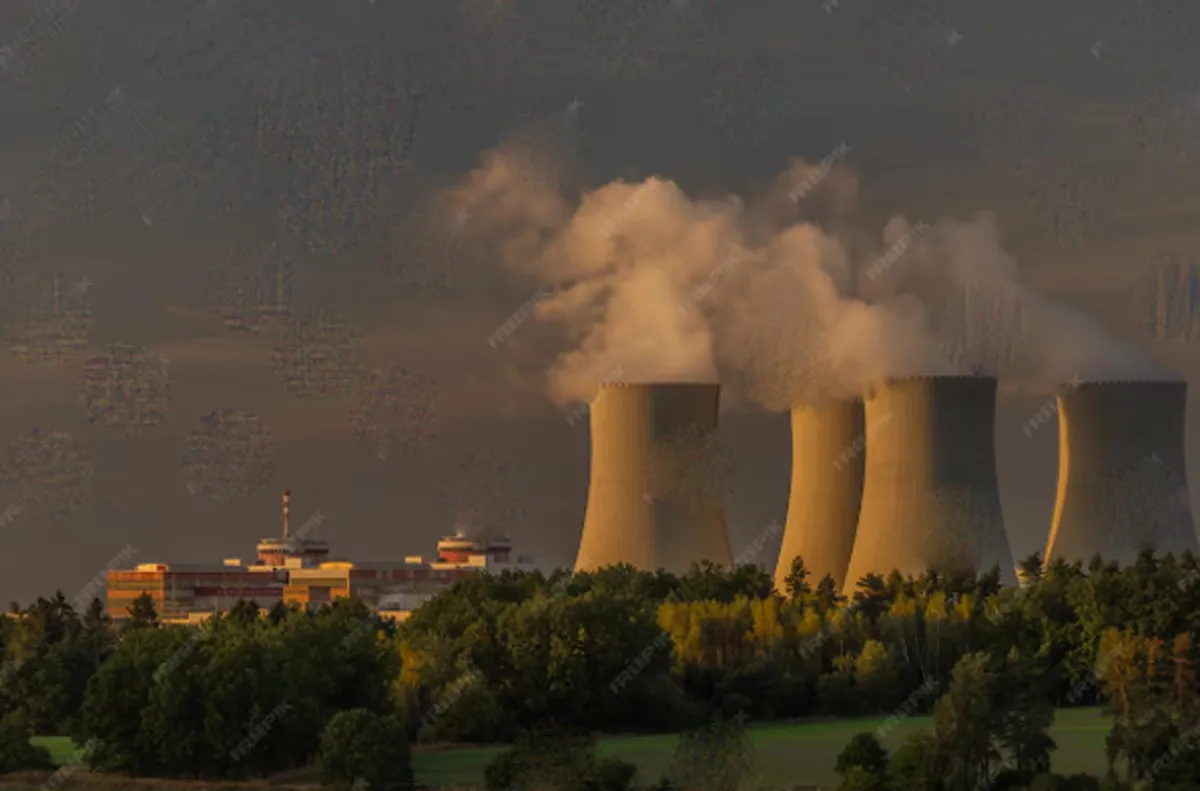
NTPC is identifying land across 16 states — including Madhya Pradesh, Gujarat, Chhattisgarh, Andhra Pradesh, Bihar, Maharashtra and Haryana — to set up nuclear power plants (NPPs) with capacities of up to 1,600 MW. The government-owned utility is expected to contribute one-third of India’s target of achieving 100 GW of nuclear power capacity by 2047 under the Viksit Bharat vision.
The Maharatna company has created a dedicated subsidiary, NTPC Parmanu Urja Nigam (NPUN), which will develop conventional nuclear plants of 1,200–1,600 MW using Pressurised Heavy Water Reactor (PHWR) technology. “Large plants make economic sense as NTPC is a bulk producer and seller of power. Decisions on Small Modular Reactors will come when the technology becomes economically scalable,” a source said.
NTPC’s first nuclear project — the 2.8 GW Mahi Banswada plant — is under construction. Site selection for upcoming projects is underway in 16 states, though suitable parcels are expected in only four to five states, given the need for an exclusive one-kilometre safety zone around each plant. All land must be approved by the Atomic Energy Regulatory Board (AERB). NPUN’s first batch of personnel is already receiving training at NTPC’s Power Management Institute.
A senior official estimated the cost of setting up nuclear plants at Rs 150–200 billion per GW. At present, joint ventures with private players are not permitted, but the government is preparing amendments to the Atomic Energy Act, 1962, and the Civil Liability for Nuclear Damage (CLND) Act, 2010. These are expected to be placed before Parliament in the upcoming Winter Session and will enable private sector participation.
NTPC is also working on indigenising critical nuclear power technologies. In March 2025, it issued a global tender seeking cooperation to localise Pressurised Water Reactor (PWR) technology and develop large-capacity reactors (1,000 MW and above) on a concept-to-commissioning basis. The target capacity outlined in the tender is 15 GW (±10 per cent), with applications closing on 31 May 2025. Vendors from countries sharing a land border with India are eligible only if registered with DPIIT’s Competent Authority.
India currently operates 24 nuclear reactors with a combined capacity of 8.78 GW. An additional eight reactors totalling 6.6 GW — including indigenous 700 MW PHWRs — are under construction.

NTPC is identifying land across 16 states — including Madhya Pradesh, Gujarat, Chhattisgarh, Andhra Pradesh, Bihar, Maharashtra and Haryana — to set up nuclear power plants (NPPs) with capacities of up to 1,600 MW. The government-owned utility is expected to contribute one-third of India’s target of achieving 100 GW of nuclear power capacity by 2047 under the Viksit Bharat vision.The Maharatna company has created a dedicated subsidiary, NTPC Parmanu Urja Nigam (NPUN), which will develop conventional nuclear plants of 1,200–1,600 MW using Pressurised Heavy Water Reactor (PHWR) technology. “Large plants make economic sense as NTPC is a bulk producer and seller of power. Decisions on Small Modular Reactors will come when the technology becomes economically scalable,” a source said.NTPC’s first nuclear project — the 2.8 GW Mahi Banswada plant — is under construction. Site selection for upcoming projects is underway in 16 states, though suitable parcels are expected in only four to five states, given the need for an exclusive one-kilometre safety zone around each plant. All land must be approved by the Atomic Energy Regulatory Board (AERB). NPUN’s first batch of personnel is already receiving training at NTPC’s Power Management Institute.A senior official estimated the cost of setting up nuclear plants at Rs 150–200 billion per GW. At present, joint ventures with private players are not permitted, but the government is preparing amendments to the Atomic Energy Act, 1962, and the Civil Liability for Nuclear Damage (CLND) Act, 2010. These are expected to be placed before Parliament in the upcoming Winter Session and will enable private sector participation.NTPC is also working on indigenising critical nuclear power technologies. In March 2025, it issued a global tender seeking cooperation to localise Pressurised Water Reactor (PWR) technology and develop large-capacity reactors (1,000 MW and above) on a concept-to-commissioning basis. The target capacity outlined in the tender is 15 GW (±10 per cent), with applications closing on 31 May 2025. Vendors from countries sharing a land border with India are eligible only if registered with DPIIT’s Competent Authority.India currently operates 24 nuclear reactors with a combined capacity of 8.78 GW. An additional eight reactors totalling 6.6 GW — including indigenous 700 MW PHWRs — are under construction.

Next Story
Real Estate

RBI Rate Cut Boosts Confidence Across Housing Market

Industry Context and Market DynamicsThe real estate industry has welcomed the RBI’s rate cut as a timely boost to affordability and demand. With home prices having risen steadily across major markets, even a marginal reduction in interest rates meaningfully strengthens purchasing power, especially for first-time and mid-income buyers.Ashish Jerath, President – Sales & Marketing, Smartworld Developers, observes:“The RBI’s 25-basis-point cut, bringing the repo rate down to 5.25%, is a timely boost for the real estate sector. Lower interest rates reduce borrowing costs, enabling homeb..

Next Story
Infrastructure Transport

BMC Resumes Rs 170 Billion Road Works, Targets 80 per cent By Jan 2026

Following the withdrawal of the southwest monsoon in October, the Brihanmumbai Municipal Corporation (BMC) has restarted work on 645 roads—covering 297.49 kilometres—under its large-scale concretisation programme. Data shows that more than 60 per cent of the resumed works are located in the western suburbs. Officials said the civic body aims to complete concretisation on 80 per cent of the roads where fresh work has begun by January 2026. Launched in 2022, the Rs 170 billion project seeks to concretise 700 kilometres of roads across Mumbai. All civil works were halted during the monsoon ..

Next Story
Infrastructure Urban

India Pushes Digital Shift In Urban Land Mapping

The Department of Land Resources (DoLR) under the Ministry of Rural Development has convened a National Symposium on NAKSHA – the National Geospatial Knowledge-based Land Survey of Urban Habitations – to advance India’s transition to modern, technology-driven land mapping. Speaking at the inaugural session, Secretary Manoj Joshi underscored the urgent need to move revenue departments away from outdated, tape-based methods and rough hand-drawn sketches. He stressed that adopting latitude–longitude-based digital mapping and GIS-linked registration systems is essential for economic stabi..

Advertisement

Subscribe to Our Newsletter

Get daily newsletters around different themes from Construction world.

STAY CONNECTED

Advertisement

Advertisement

Advertisement

Advertisement

Open In App