



Rosatom Delivers Nuclear Fuel for Kudankulam Unit 3
ECONOMY & POLICY

Rosatom Delivers Nuclear Fuel for Kudankulam Unit 3

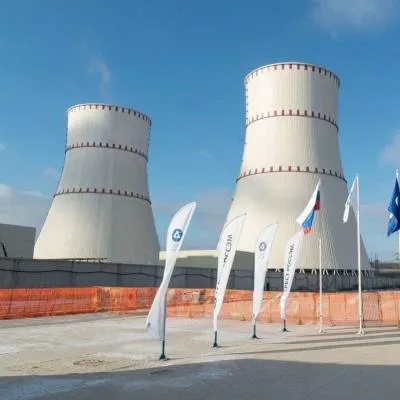
Rosatom has recently supplied nuclear fuel for the initial loading of the VVER-1000 reactor core at Unit 3 of the Kudankulam Nuclear Power Plant, marking a key milestone in the second stage of the Russian-designed nuclear power project in southern India.
The fuel was supplied by Rosatom’s Nuclear Fuel Division, managed by TVEL, and manufactured at the Novosibirsk Chemical Concentrates Plant. The delivery includes the initial reactor load along with reserve fuel assemblies and is part of a long-term contract covering the entire operational life of Units 3 and 4.
Building on operational experience from Units 1 and 2, Russian and Indian engineers have implemented advanced fuel solutions to improve efficiency and reliability. Since 2022, the plant has been using TVS-2M nuclear fuel, which features a rigid design, next-generation anti-debris filters and higher uranium content. These enhancements have enabled the extension of fuel cycles from 12 to 18 months, reducing outage frequency and increasing electricity generation.
Units under the second stage of the Kudankulam project will be the first VVER-1000 reactors globally to begin operations with an 18-month fuel cycle from initial launch. This achievement reflects sustained technical collaboration between Rosatom and Indian partners, drawing on best practices implemented at similar reactors in Russia and China.
Located in Tamil Nadu, the Kudankulam Nuclear Power Plant comprises six VVER-1000 units with a total installed capacity of 6,000 MW. Units 1 and 2 were commissioned in 2013 and 2017, while Units 3 to 6 are currently under construction. The project’s technical customer is the Nuclear Power Corporation of India, with Rosatom’s Engineering Division serving as the general designer and equipment supplier. All new units comply with the latest International Atomic Energy Agency safety standards.      

Rosatom has recently supplied nuclear fuel for the initial loading of the VVER-1000 reactor core at Unit 3 of the Kudankulam Nuclear Power Plant, marking a key milestone in the second stage of the Russian-designed nuclear power project in southern India.The fuel was supplied by Rosatom’s Nuclear Fuel Division, managed by TVEL, and manufactured at the Novosibirsk Chemical Concentrates Plant. The delivery includes the initial reactor load along with reserve fuel assemblies and is part of a long-term contract covering the entire operational life of Units 3 and 4.Building on operational experience from Units 1 and 2, Russian and Indian engineers have implemented advanced fuel solutions to improve efficiency and reliability. Since 2022, the plant has been using TVS-2M nuclear fuel, which features a rigid design, next-generation anti-debris filters and higher uranium content. These enhancements have enabled the extension of fuel cycles from 12 to 18 months, reducing outage frequency and increasing electricity generation.Units under the second stage of the Kudankulam project will be the first VVER-1000 reactors globally to begin operations with an 18-month fuel cycle from initial launch. This achievement reflects sustained technical collaboration between Rosatom and Indian partners, drawing on best practices implemented at similar reactors in Russia and China.Located in Tamil Nadu, the Kudankulam Nuclear Power Plant comprises six VVER-1000 units with a total installed capacity of 6,000 MW. Units 1 and 2 were commissioned in 2013 and 2017, while Units 3 to 6 are currently under construction. The project’s technical customer is the Nuclear Power Corporation of India, with Rosatom’s Engineering Division serving as the general designer and equipment supplier. All new units comply with the latest International Atomic Energy Agency safety standards.      

Next Story
Infrastructure Transport

Chembur Metro to Boost East Mumbai Links

MMRDA is advancing eastern Mumbai’s urban mobility network, with the upcoming Chembur Metro Station set to emerge as a key interchange and the Mumbai Monorail preparing for relaunch.Dr Sanjay Mukherjee, Metropolitan Commissioner, MMRDA, conducted a site visit to Chembur Metro Station along with Kanhuraj Bagate, Managing Director, MMMOCL. He also visited the nearby VN Purav Monorail Station to review system preparedness and ease of interconnectivity.Once operational, the interchange is expected to offer commuters across the eastern suburbs quicker access, smoother transfers and seamless conne..

Next Story
Equipment

Herrenknecht TBMs Drive Thane–Borivali Tunnel Progress

Herrenknecht India has supplied two of the four tunnel boring machines (TBMs) required for the 11-km Thane–Borivali Twin Tunnel Project being developed by the Mumbai Metropolitan Region Development Authority (MMRDA). The project is expected to reduce travel time between Thane and Borivali from 60–90 minutes to around 15 minutes while easing congestion across the Mumbai Metropolitan Region.The first two Single Shield TBMs, named Nayak and Arjuna, feature 13.34-m cutterhead diameters and are designed for hard-rock excavation. They will be deployed to tunnel through the challenging geological..

Next Story
Resources

KBL Launches Smart Skid Mounted Fire Pump Set

Kirloskar Brothers (KBL) has launched its Smart Skid Mounted Fire Pump Set, an integrated fire protection solution designed to improve operational efficiency, remote monitoring and installation flexibility. The system was inaugurated by Ms Madhuritai Misal, Hon. Minister of State for Urban Development, Government of Maharashtra.The Smart Skid Mounted Fire Pump Set is a factory-tested, pre-packaged solution that combines FM/UL-certified motor and engine pump sets with IoT-enabled remote monitoring. Designed to deliver a flow rate of 170 m³/hr at a head of 100 metres, the system aims to provide..

Advertisement

Subscribe to Our Newsletter

Get daily newsletters around different themes from Construction world.

STAY CONNECTED

Advertisement

Advertisement

Advertisement

-->














