+
SJVN Commissions 1,000 MW Bikaner Solar Project in Rajasthan
POWER & RENEWABLE ENERGY

SJVN Commissions 1,000 MW Bikaner Solar Project in Rajasthan

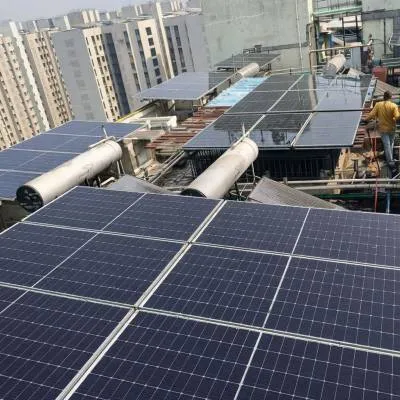
SJVN has achieved the Commercial Operation Date (COD) of its 1,000 MW Bikaner Solar Power Project in Rajasthan, marking a major milestone in the company’s efforts to expand India’s renewable energy capacity.

Announcing the development, Bhupender Gupta, Chairman & Managing Director, SJVN, said the commissioning of the project reflects the organisation’s technical capability and coordinated execution. “This achievement highlights the dedication of SJVN’s employees, contractors and all stakeholders involved in delivering a project of this scale,” Gupta said.

The project is located in Bikaner district of Rajasthan and is being implemented through SJVN’s wholly owned subsidiary, SJVN Green Energy Limited (SGEL). In its first year of operation, the solar plant is expected to generate around 2,454.55 million units of electricity, with cumulative generation estimated at nearly 56,838 million units over a 25-year period. The maximum usage charge has been fixed at ₹2.57 per unit, supporting the availability of affordable green power. Electricity from the project will be supplied to Rajasthan, Jammu & Kashmir and Uttarakhand.

Ajay Kumar Sharma, Director (Personnel), SJVN, said the project has been developed on about 5,000 acres of outright-purchased land near Village Banderwala in Bikaner district, one of India’s highest solar-yield regions. He added that the commissioning contributes significantly to the Government of India’s target of achieving 500 GW of renewable energy capacity by 2030.

Sipan Kumar Garg, Director (Finance), SJVN, said the project has been developed at a cost of ₹5,492 crore under the Domestic Content Requirement (DCR) mode, using domestically manufactured solar photovoltaic cells and modules, in line with the Make in India initiative. The project is also expected to reduce carbon emissions by an estimated 27,85,077 tonnes.

The foundation stone for the project was laid by President of India Droupadi Murmu on January 3, 2023. The project has been developed under the CPSU Scheme – Phase II, Tranche III, of the Ministry of New and Renewable Energy (MNRE), Government of India.

News source: The Statesman

SJVN has achieved the Commercial Operation Date (COD) of its 1,000 MW Bikaner Solar Power Project in Rajasthan, marking a major milestone in the company’s efforts to expand India’s renewable energy capacity.Announcing the development, Bhupender Gupta, Chairman & Managing Director, SJVN, said the commissioning of the project reflects the organisation’s technical capability and coordinated execution. “This achievement highlights the dedication of SJVN’s employees, contractors and all stakeholders involved in delivering a project of this scale,” Gupta said.The project is located in Bikaner district of Rajasthan and is being implemented through SJVN’s wholly owned subsidiary, SJVN Green Energy Limited (SGEL). In its first year of operation, the solar plant is expected to generate around 2,454.55 million units of electricity, with cumulative generation estimated at nearly 56,838 million units over a 25-year period. The maximum usage charge has been fixed at ₹2.57 per unit, supporting the availability of affordable green power. Electricity from the project will be supplied to Rajasthan, Jammu & Kashmir and Uttarakhand.Ajay Kumar Sharma, Director (Personnel), SJVN, said the project has been developed on about 5,000 acres of outright-purchased land near Village Banderwala in Bikaner district, one of India’s highest solar-yield regions. He added that the commissioning contributes significantly to the Government of India’s target of achieving 500 GW of renewable energy capacity by 2030.Sipan Kumar Garg, Director (Finance), SJVN, said the project has been developed at a cost of ₹5,492 crore under the Domestic Content Requirement (DCR) mode, using domestically manufactured solar photovoltaic cells and modules, in line with the Make in India initiative. The project is also expected to reduce carbon emissions by an estimated 27,85,077 tonnes.The foundation stone for the project was laid by President of India Droupadi Murmu on January 3, 2023. The project has been developed under the CPSU Scheme – Phase II, Tranche III, of the Ministry of New and Renewable Energy (MNRE), Government of India.News source: The Statesman

Next Story
Infrastructure Transport

Second Mountain Tunnel Breakthrough in Palghar Advances High Speed Rail

The Mumbai-Ahmedabad high speed rail (MAHSR) project reached a milestone with the breakthrough of a mountain tunnel in Palghar, Maharashtra. Mountain tunnel MT-six measures 454 metres long and 14.4 metres wide and will accommodate up and down tracks. The breakthrough follows MT-five near Saphale on second January 2026 and the MT-six excavation was completed from both ends using the New Austrian Tunnelling Method. The ministry reported that the tunnelling was completed within 12 months. The New Austrian Tunnelling Method is favoured for its flexibility in complex geology and irregular tunnel s..

Next Story
Infrastructure Transport

Modi Government Pushes Atmanirbhar Container Drive With BCSL MoU

The Union Government advanced a plan to create an integrated, domestically anchored container ecosystem with the signing of a Memorandum of Understanding to establish the Bharat Container Shipping Line (BCSL). The MoU was signed by key agencies including the Shipping Corporation of India and Container Corporation of India alongside major port authorities and Sagarmala Finance Corporation Limited under the Ministry of Ports, Shipping and Waterways, in the presence of senior ministers. The initiative aligns with the Container Manufacturing Assistance Scheme announced in the Union Budget 2026–2..

Next Story
Infrastructure Urban

Ministry Reports Gains In Mobility For Marginalised Communities

The Ministry of Social Justice and Empowerment is implementing skill development, education and rehabilitation schemes to promote socio-economic mobility and sustainable livelihoods for marginalised and disadvantaged communities across the country. Programmes target Scheduled Castes, Other Backward Classes, Economically Weaker Sections, De-notified Tribes and Safai Karamcharis through specialised implementing corporations and empanelled training institutes. Pradhan Mantri Dakshata Aur Kushalta Sampann Hitgrahi Yojana, or PM-DAKSH, provided skill training and placement support through the Nati..

Advertisement

Subscribe to Our Newsletter

Get daily newsletters around different themes from Construction world.

STAY CONNECTED

Advertisement

Advertisement

Advertisement

Open In App