+
Poringalkuthu project of 24 MW to be operational by April
POWER & RENEWABLE ENERGY

Poringalkuthu project of 24 MW to be operational by April

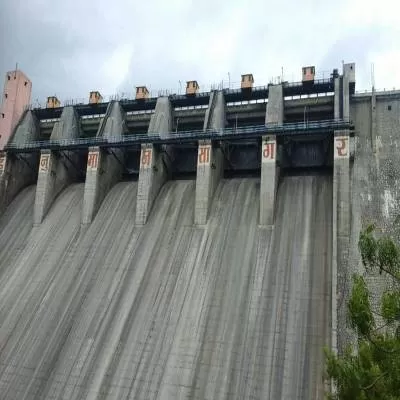
The Poringalkuthu small hydroelectric project (SHEP), with a capacity of 24 megawatts (MW), is expected to be completed in April, which will help to meet the increased demand for electricity during the summer months.

Civil work associated with the project is now complete.The turbine was tested on Sunday, and the remaining tests will be conducted soon, according to officials from the Kerala State Electricity Board (KSEB). According to the Power Department, the Poringalkuthu SHEP will be the first hydro project of its size to be commissioned in nearly a decade.

The Poringalkuthu SHEP, which will be built in the Chalakkudy basin, received its initial contract in October 2014 and was expected to be completed in 24 months. However, delays in transferring forestland to the contractor, the 2018 and 2019 floods, and the Covid-19 pandemic all hampered the project, forcing the KSEB to extend deadlines multiple times. Poringalkuthu SHEP has a 45.02 million units (mu) annual generation capacity and a project cost of 159.19 crore.

Aside from Poringalkuthu, the 60 MW Pallivasal Extension Scheme, the 40 MW Thottiyar, and the 24 Bhoothathankettu schemes should all be completed by 2022-23 if all goes well. Work on all three projects was pushed back due to a variety of factors.

The KSEB had a total installed capacity of 2,240.22 MW as of March 31, 2021, with hydel projects accounting for 91%, thermal 7.14%, and solar and wind projects accounting for the rest. The KSEB owns 40 hydroelectric generating stations, 17 of which are major.

Four hydroelectric projects with varying capacities, which have been delayed, are expected to be completed in the fiscal year 2022-23, increasing the State's internal power generation capability.

Image Source

Also read: Policy for stalled private hydro projects likely for takeover

The Poringalkuthu small hydroelectric project (SHEP), with a capacity of 24 megawatts (MW), is expected to be completed in April, which will help to meet the increased demand for electricity during the summer months. Civil work associated with the project is now complete.The turbine was tested on Sunday, and the remaining tests will be conducted soon, according to officials from the Kerala State Electricity Board (KSEB). According to the Power Department, the Poringalkuthu SHEP will be the first hydro project of its size to be commissioned in nearly a decade. The Poringalkuthu SHEP, which will be built in the Chalakkudy basin, received its initial contract in October 2014 and was expected to be completed in 24 months. However, delays in transferring forestland to the contractor, the 2018 and 2019 floods, and the Covid-19 pandemic all hampered the project, forcing the KSEB to extend deadlines multiple times. Poringalkuthu SHEP has a 45.02 million units (mu) annual generation capacity and a project cost of 159.19 crore. Aside from Poringalkuthu, the 60 MW Pallivasal Extension Scheme, the 40 MW Thottiyar, and the 24 Bhoothathankettu schemes should all be completed by 2022-23 if all goes well. Work on all three projects was pushed back due to a variety of factors. The KSEB had a total installed capacity of 2,240.22 MW as of March 31, 2021, with hydel projects accounting for 91%, thermal 7.14%, and solar and wind projects accounting for the rest. The KSEB owns 40 hydroelectric generating stations, 17 of which are major. Four hydroelectric projects with varying capacities, which have been delayed, are expected to be completed in the fiscal year 2022-23, increasing the State's internal power generation capability. Image Source Also read: Policy for stalled private hydro projects likely for takeover

Next Story
Infrastructure Urban

India Expands Semiconductor Training To 500 Institutions

Under the Chips to Startups programme of the India Semiconductor Mission, the Union minister responsible for Railways, Information and Broadcasting, and Electronics and IT reported notable progress in talent development. He indicated that over the past four years substantial steps have been taken towards a 10-year target of training 85,000 engineers in semiconductor design. World-class EDA tools have been deployed in 315 academic institutions across the country to provide students with practical exposure to chip design. These EDA tools are supported by leading global firms and are accessible t..

Next Story
Infrastructure Urban

Delhi Institutions Support India Semiconductor Mission

The Government of India has prioritised talent development through training, upskilling and workforce development under the Chips to Startups initiative of the India Semiconductor Mission, with officials noting progress in four years towards a 10-year target of training 85,000 engineers in semiconductor design. Electronic design automation tools provided by Synopsys, Cadence, Siemens, Renesas, Ansys and AMD have been deployed in 315 academic institutions, enabling students to gain practical chip design experience. Chips have been fabricated and tested at the Semiconductor Laboratory, Mohali, a..

Next Story
Infrastructure Urban

NHA Announces Winners Of NHCX Hackathon At IIT Hyderabad

The National Health Authority (NHA) has concluded the NHCX Hackathon under the Ayushman Bharat Digital Mission (ABDM) to stimulate innovation around the National Health Claims Exchange (NHCX). The winning teams presented their solutions at the NHCX Innovation Meet held at IIT Hyderabad during a two-day event in March 2026 that also served as the hackathon grand finale. The hackathon itself ran from 22 to 28 February 2026 and aimed to accelerate paperless, transparent claims processing across India. The event was organised with a range of ecosystem partners, including the Insurance Regulatory a..

Advertisement

Subscribe to Our Newsletter

Get daily newsletters around different themes from Construction world.

STAY CONNECTED

Advertisement

Advertisement

Advertisement