Rajasthan Regulator Greenlights MW Solar Project
POWER & RENEWABLE ENERGY

Rajasthan Regulator Greenlights MW Solar Project

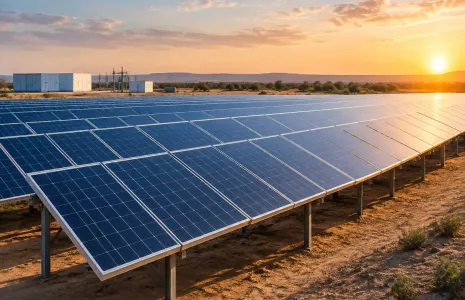
The Rajasthan Electricity Regulatory Commission (RERC) has granted approval for a new solar power project with a capacity of several megawatts (MW). This regulatory clearance marks a significant step towards expanding Rajasthan's renewable energy infrastructure, reinforcing the state's commitment to sustainable energy development.

The approved solar project is poised to contribute substantially to Rajasthan's renewable energy targets, adding to its existing capacity and diversifying the energy mix. This initiative aligns with the state's broader strategy to reduce reliance on conventional sources and promote clean energy alternatives.

The project approval follows rigorous evaluation and compliance with regulatory requirements, underscoring RERC's role in ensuring the integrity and sustainability of energy projects in Rajasthan. It signifies a positive regulatory environment conducive to investments in renewable energy, attracting developers keen on leveraging Rajasthan's abundant solar potential.

Once operational, the new solar project is expected to bolster electricity generation capabilities, meeting growing demand while reducing carbon footprint. It represents a key milestone in Rajasthan's journey towards energy independence and environmental stewardship, contributing to national goals of achieving a greener and more sustainable energy landscape.

With Rajasthan's regulatory nod secured, stakeholders anticipate accelerated progress in solar energy deployment, supporting economic growth through job creation and technology innovation in the renewable energy sector.

"Join industry leaders at RAHSTA Expo, India's premier platform for roads, highways and traffic infrastructure. Register now to explore innovations, network with experts and shape the future of mobility."

The Rajasthan Electricity Regulatory Commission (RERC) has granted approval for a new solar power project with a capacity of several megawatts (MW). This regulatory clearance marks a significant step towards expanding Rajasthan's renewable energy infrastructure, reinforcing the state's commitment to sustainable energy development. The approved solar project is poised to contribute substantially to Rajasthan's renewable energy targets, adding to its existing capacity and diversifying the energy mix. This initiative aligns with the state's broader strategy to reduce reliance on conventional sources and promote clean energy alternatives. The project approval follows rigorous evaluation and compliance with regulatory requirements, underscoring RERC's role in ensuring the integrity and sustainability of energy projects in Rajasthan. It signifies a positive regulatory environment conducive to investments in renewable energy, attracting developers keen on leveraging Rajasthan's abundant solar potential. Once operational, the new solar project is expected to bolster electricity generation capabilities, meeting growing demand while reducing carbon footprint. It represents a key milestone in Rajasthan's journey towards energy independence and environmental stewardship, contributing to national goals of achieving a greener and more sustainable energy landscape. With Rajasthan's regulatory nod secured, stakeholders anticipate accelerated progress in solar energy deployment, supporting economic growth through job creation and technology innovation in the renewable energy sector.

Next Story
Real Estate

The Workplace Reset

If the past few years have seen sustainability emerge as a buzzword in the design of commercial spaces, the next few years will see the focus shift to ‘experience’. Workplaces that prioritise superior employee experiences consistently report stronger talent attraction and higher retention rates and productivity, while using resources sustainably.First things first; what sort of experiences are expected from a workplace?As Vandana Dhawan Saxena, Founder and Design Principal, Studio IV Designs, explains, “Offices have grown into environments that need to support various kinds of experience..

Next Story
Infrastructure Urban

Designing Human-Centric High-Rises

The Institution of Engineers (India) (IEI), Navi Mumbai Local Centre, under the aegis of the Architectural Engineering Division Board, organised a one-day national seminar, ‘Reaching New Heights – Overcoming High-Rise Construction Challenges’, at CBD Belapur, Navi Mumbai.The seminar brought together architects, engineers, planners, developers, academicians and industry professionals to deliberate on the design, construction, operation and sustainability of tall buildings in rapidly urbanising cities...To read the full article Click Here ..

Next Story
Infrastructure Urban

Carbon-negative and ultra-low carbon are not just claims!

In an interaction with Construction World, Tarun Jami, Founder, GreenJams, explains how the company is cutting cement’s carbon footprint by 80 per cent through Binder, while scaling innovations such as Agrocrete® and Novastone to make buildings lighter, faster and carbon-negative.Agrocrete® is positioned as a carbon-negative material. What does this mean for developers?For developers, Agrocrete® offers a practical way to reduce embodied carbon at the material level. Since walling forms a significant part of a building’s material footprint, using carbon-negative blocks can bring the net ..

Advertisement

Subscribe to Our Newsletter

Get daily newsletters around different themes from Construction world.

STAY CONNECTED

Advertisement

Advertisement

Advertisement