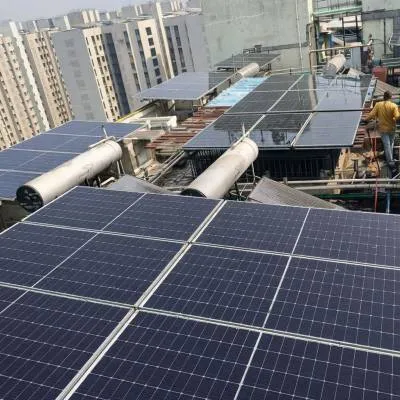
Sunsol Targets Two Gigawatt Solar Rollout By 2030
POWER & RENEWABLE ENERGY

Sunsol Targets Two Gigawatt Solar Rollout By 2030

Sunsol Cleantech has outlined plans to support the deployment of over two gigawatts (GW) of solar capacity across India by 2030 through a single window platform for rooftop and on?ground installations. The initiative targets 5,000 projects encompassing rooftop, captive, open?access and utility?scale installations and is presented as a contribution to India’s national goal of 280 GW of solar capacity by the end of the decade. The programme is positioned to accelerate rollouts at multiple scales while simplifying procurement and implementation for corporate and institutional clients.

The effort is underpinned by the parent group Sunkonnect, headquartered in Singapore, which the company said brings proven expertise in sustainability consulting and project delivery. Since 2019 Sunkonnect has completed over five gigawatts (GW) of renewable energy projects in partnership with more than 20 major industry players across India, China, Vietnam, Malaysia and other markets. The combined teams include 200+ skilled professionals with experience in solar, green hydrogen, waste?to?energy, energy storage and electric mobility.

India’s clean energy landscape has shifted markedly, with non?fossil energy sources accounting for over 50 per cent of installed electricity capacity as of April 2026. Solar has been the primary driver of that transition, expanding from a modest 2.8 gigawatts in 2014 to around 150 gigawatts today and thereby reshaping capacity mixes and investment flows. With the government now targeting 280 gigawatts of solar by 2030, industry platforms that enable distributed deployment are being promoted as complementary to large?scale utility builds.

The managing director of Sunsol Cleantech described the ambition as an effort to act as a catalyst for India’s clean energy transformation by supporting more than two gigawatts of solar deployment by 2030 and by delivering measurable benefits to energy security, affordability and sustainability. The company said the distributed approach will aim to unlock projects across multiple segments and to streamline the pathway from site assessment to operations. Market observers noted that single window platforms can reduce transaction friction and support faster uptake of rooftop and captive installations.

"Join industry leaders at RAHSTA Expo, India's premier platform for roads, highways and traffic infrastructure. Register now to explore innovations, network with experts and shape the future of mobility."

Sunsol Cleantech has outlined plans to support the deployment of over two gigawatts (GW) of solar capacity across India by 2030 through a single window platform for rooftop and on?ground installations. The initiative targets 5,000 projects encompassing rooftop, captive, open?access and utility?scale installations and is presented as a contribution to India’s national goal of 280 GW of solar capacity by the end of the decade. The programme is positioned to accelerate rollouts at multiple scales while simplifying procurement and implementation for corporate and institutional clients. The effort is underpinned by the parent group Sunkonnect, headquartered in Singapore, which the company said brings proven expertise in sustainability consulting and project delivery. Since 2019 Sunkonnect has completed over five gigawatts (GW) of renewable energy projects in partnership with more than 20 major industry players across India, China, Vietnam, Malaysia and other markets. The combined teams include 200+ skilled professionals with experience in solar, green hydrogen, waste?to?energy, energy storage and electric mobility. India’s clean energy landscape has shifted markedly, with non?fossil energy sources accounting for over 50 per cent of installed electricity capacity as of April 2026. Solar has been the primary driver of that transition, expanding from a modest 2.8 gigawatts in 2014 to around 150 gigawatts today and thereby reshaping capacity mixes and investment flows. With the government now targeting 280 gigawatts of solar by 2030, industry platforms that enable distributed deployment are being promoted as complementary to large?scale utility builds. The managing director of Sunsol Cleantech described the ambition as an effort to act as a catalyst for India’s clean energy transformation by supporting more than two gigawatts of solar deployment by 2030 and by delivering measurable benefits to energy security, affordability and sustainability. The company said the distributed approach will aim to unlock projects across multiple segments and to streamline the pathway from site assessment to operations. Market observers noted that single window platforms can reduce transaction friction and support faster uptake of rooftop and captive installations.

Next Story
Infrastructure Transport

RITES Expands NUPPL Railway Siding Contract To Rs1,489.3 mn

RITES Limited has expanded the scope of its railway siding contract with Neyveli Uttar Pradesh Power Limited (NUPPL), increasing the contract value to Rs1,489.3 million (mn) from Rs1,201.3 million (mn). The revision covers comprehensive operation and maintenance of the NUPPL/GTPP railway siding and includes hiring of locomotives on a wet-lease basis. The locomotive hire is for a period of 48 months and forms part of the extended operational scope under the agreement. The overall execution period remains five years from the original Memorandum of Understanding dated 13 February 2025, with the e..

Next Story
Infrastructure Urban

India Office Leasing Rises Six Per Cent In H1 2026

A Colliers India report said India's Grade A office market recorded gross leasing of 35.7 million (mn) square feet in the first half of 2026, up six per cent year-on-year despite a softer second quarter amid global trade disruptions. Leasing in April–June totalled 17.4 mn square feet, down two per cent from a year earlier, while Grade A absorption exceeded 15 mn square feet for the ninth consecutive quarter across seven markets. Demand was supported by Global Capability Centres (GCCs), technology firms and flexible workspace operators. Bengaluru led leasing with 10.5 mn square feet in H1 and..

Next Story
Real Estate

PE Investments Fall 23 per cent To Rs 1.13 bn In H1 2026

Private equity investments in the Indian real estate sector fell 23 per cent year-on-year to Rs 1.13 billion (bn) in the first half of 2026, down from Rs 1.47 bn in H1 of 2025, as investors adopted a more selective approach amid elevated global interest rates, tighter financial conditions and heightened geopolitical uncertainty. The finding appears in Knight Frank's Trends in Private Equity Investment in India: H1 2026 report. Despite the overall decline, the office segment remained the preferred asset class, accounting for 89 per cent of private equity allocations in H1 2026, with the residen..

Advertisement

Subscribe to Our Newsletter

Get daily newsletters around different themes from Construction world.

STAY CONNECTED

Advertisement

Advertisement

Advertisement