+
TPWODL Surpasses 111.42 MW Rooftop Solar Capacity in Western Odisha
POWER & RENEWABLE ENERGY

TPWODL Surpasses 111.42 MW Rooftop Solar Capacity in Western Odisha

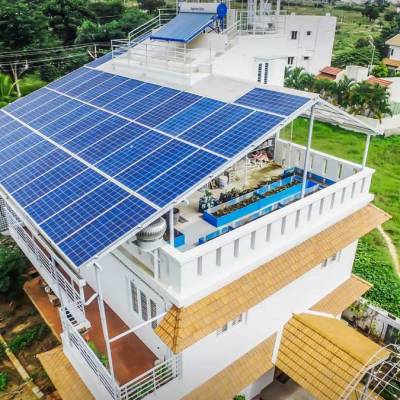
TP Western Odisha Distribution (TPWODL) has enabled the installation of 38,638 rooftop solar systems with a cumulative installed capacity of 111.42 megawatt (MW) across Western Odisha, enabling an annual reduction of nearly 0.132 million (mn) tonnes (t) of carbon dioxide (CO?). The milestone was achieved under the PM Surya Ghar Muft Bijli Yojana and TPWODL's consumer-friendly ULA Model and is presented as part of efforts to expand affordable clean energy access in the region.

Of the total installations, 38,025 rooftop systems were commissioned for domestic consumers under the PM Surya Ghar Muft Bijli Yojana while 613 commercial establishments adopted rooftop solar, taking the cumulative capacity to 111.42 MW. During the last month, an additional 11.922 MW was added, reflecting an accelerating pace of renewable adoption. TPWODL's chief executive said the uptake demonstrates growing consumer commitment and that the schemes are making solar more accessible and affordable.

Beyond emissions reductions, the initiative is reported to deliver material economic benefits for consumers as well. In June 2026, 10,112 households recorded zero-unit electricity bills, indicating reduced energy expenditure for many customers. The clean electricity generated is estimated to save nearly 0.13 million (mn) t of coal annually and to deliver an ecological benefit equivalent to planting 6 million (mn) mature trees each year.

Financial incentives have supported rapid adoption. Consumers installing three kilowatt (kW) systems costing around Rs 0.2 mn are eligible for assistance of up to Rs 0.138 mn while two kilowatt (kW) systems costing around Rs 0.14 mn attract subsidies of up to Rs 0.11 mn, substantially lowering upfront costs. To widen access, TPWODL has introduced a one kilowatt (kW) ULA Model under which eligible households pay only Rs 1,875; the company undertakes full installation and provides a five-year warranty on equipment as well as a 25-year performance warranty on solar panels. The programme is described as reinforcing climate action and sustainable development while delivering household savings.

TP Western Odisha Distribution (TPWODL) has enabled the installation of 38,638 rooftop solar systems with a cumulative installed capacity of 111.42 megawatt (MW) across Western Odisha, enabling an annual reduction of nearly 0.132 million (mn) tonnes (t) of carbon dioxide (CO?). The milestone was achieved under the PM Surya Ghar Muft Bijli Yojana and TPWODL's consumer-friendly ULA Model and is presented as part of efforts to expand affordable clean energy access in the region. Of the total installations, 38,025 rooftop systems were commissioned for domestic consumers under the PM Surya Ghar Muft Bijli Yojana while 613 commercial establishments adopted rooftop solar, taking the cumulative capacity to 111.42 MW. During the last month, an additional 11.922 MW was added, reflecting an accelerating pace of renewable adoption. TPWODL's chief executive said the uptake demonstrates growing consumer commitment and that the schemes are making solar more accessible and affordable. Beyond emissions reductions, the initiative is reported to deliver material economic benefits for consumers as well. In June 2026, 10,112 households recorded zero-unit electricity bills, indicating reduced energy expenditure for many customers. The clean electricity generated is estimated to save nearly 0.13 million (mn) t of coal annually and to deliver an ecological benefit equivalent to planting 6 million (mn) mature trees each year. Financial incentives have supported rapid adoption. Consumers installing three kilowatt (kW) systems costing around Rs 0.2 mn are eligible for assistance of up to Rs 0.138 mn while two kilowatt (kW) systems costing around Rs 0.14 mn attract subsidies of up to Rs 0.11 mn, substantially lowering upfront costs. To widen access, TPWODL has introduced a one kilowatt (kW) ULA Model under which eligible households pay only Rs 1,875; the company undertakes full installation and provides a five-year warranty on equipment as well as a 25-year performance warranty on solar panels. The programme is described as reinforcing climate action and sustainable development while delivering household savings.

Related Stories

Gold Stories

Next Story
Real Estate

BMC OC Amnesty Scheme Requires Key Approvals from Mumbai Societies

The Brihanmumbai Municipal Corporation (BMC) has clarified that housing societies applying under its Occupation Certificate (OC) amnesty scheme must possess key approvals linked to the original construction. The requirements include a valid Intimation of Disapproval (IOD), an approved building plan and a Commencement Certificate (CC), along with a No Objection Certificate (NOC) from the developer or original construction applicant. The Standard Operating Procedure (SOP) makes clear that the absence of an OC alone will not qualify a building for relief. Societies must establish that their build..

Next Story
Real Estate

Gurugram Emerges as Luxury Senior Living Hub

Gurugram is emerging as a potential hub for luxury senior living, supported by available land, healthcare infrastructure, connectivity and a concentration of affluent professionals, high-net-worth individuals and non-resident Indians. These factors could give the city an advantage over land-constrained metros such as Mumbai. A report by the Association of Senior Living India (ASLI) and JLL estimates that India’s organised senior living market could represent a $10.1 bn opportunity by 2030. The sector had about 25,050 organised units as of June 2026, while penetration stood at only 1.5 per ce..

Next Story
Real Estate

Corrosion Costs India’s Infrastructure Rs. 142 bn Annually

Corrosion costs India an estimated Rs. 1.42 tn annually, equivalent to 4.3 per cent of gross domestic product, according to a report by the Confederation of Indian Industry and the National Research Institute. Infrastructure accounts for Rs. 142 bn of the annual burden, making it the sector with the largest absolute cost among those examined. The report, presented at the CII Annual Infrastructure Summit 2026, said the infrastructure-sector cost equals about 2.9 per cent of the sector’s gross domestic product. It estimated that effective measures could generate maximum savings of Rs. 495.8 bn..

Advertisement

Subscribe to Our Newsletter

Get daily newsletters around different themes from Construction world.

STAY CONNECTED

Advertisement

SPECIAL OFFER
QR Code