Tripura Targets Addition Of 11 Megawatt Solar Capacity In 2026-27
POWER & RENEWABLE ENERGY

Tripura Targets Addition Of 11 Megawatt Solar Capacity In 2026-27

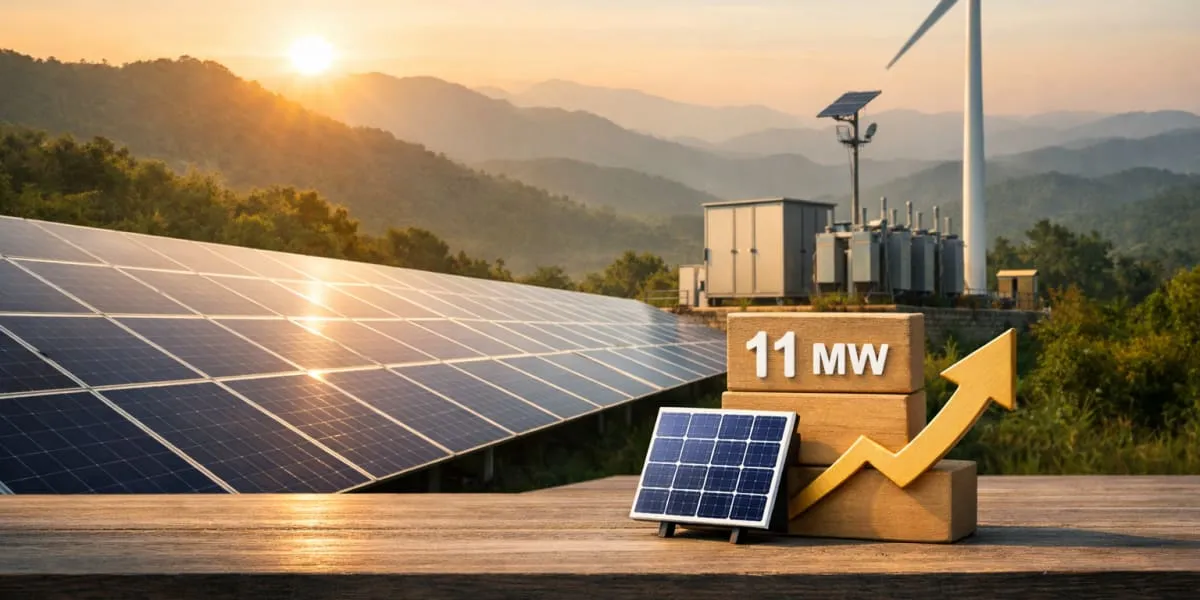
Tripura has set a target to add 11 megawatt (MW) of solar power generation capacity in the 2026-27 financial year as part of a drive to expand renewable energy infrastructure and reduce reliance on conventional electricity. The initiative is intended to improve access in remote and hilly areas that face challenges in extending traditional grid connections.

The Tripura Renewable Energy Development Agency (TREDA) has framed the target amid a wider state government push to promote clean energy across public institutions. The state currently generates around 35 MW of solar power, and the TREDA director general in charge Debabrata Sukladas indicated that work towards achieving the new target was progressing steadily, with plans to install systems in all 58 Block Development Offices and 275 village committee offices.

Solar power systems are also planned for installation in a range of government offices and the tendering process for the project was reported to be in its final stage and expected to be floated soon. All district magistrate offices in the state have already been equipped with solar panels, the agency added. Installation schedules will be phased to cover remaining sites over coming months.

TREDA records show the state has a total of 1,919 government buildings, of which 90 currently have solar power systems and the remainder will be covered under future renewable energy initiatives. Officials said the programme aims to cut dependence on gas-based power plants and to diversify the state energy mix. The planned additions would increase on-grid distributed solar capacity and support operational resilience.

Authorities emphasise that decentralised solar installations offer particular advantages in sparsely populated hilly terrain where extending grid infrastructure is costly and technically difficult, and that localised generation can improve reliability and lower transmission losses. The state push reflects broader policy priorities to accelerate clean energy uptake within public sector assets and to extend modern electricity access to underserved communities.

"Join industry leaders at RAHSTA Expo, India's premier platform for roads, highways and traffic infrastructure. Register now to explore innovations, network with experts and shape the future of mobility."

Tripura has set a target to add 11 megawatt (MW) of solar power generation capacity in the 2026-27 financial year as part of a drive to expand renewable energy infrastructure and reduce reliance on conventional electricity. The initiative is intended to improve access in remote and hilly areas that face challenges in extending traditional grid connections. The Tripura Renewable Energy Development Agency (TREDA) has framed the target amid a wider state government push to promote clean energy across public institutions. The state currently generates around 35 MW of solar power, and the TREDA director general in charge Debabrata Sukladas indicated that work towards achieving the new target was progressing steadily, with plans to install systems in all 58 Block Development Offices and 275 village committee offices. Solar power systems are also planned for installation in a range of government offices and the tendering process for the project was reported to be in its final stage and expected to be floated soon. All district magistrate offices in the state have already been equipped with solar panels, the agency added. Installation schedules will be phased to cover remaining sites over coming months. TREDA records show the state has a total of 1,919 government buildings, of which 90 currently have solar power systems and the remainder will be covered under future renewable energy initiatives. Officials said the programme aims to cut dependence on gas-based power plants and to diversify the state energy mix. The planned additions would increase on-grid distributed solar capacity and support operational resilience. Authorities emphasise that decentralised solar installations offer particular advantages in sparsely populated hilly terrain where extending grid infrastructure is costly and technically difficult, and that localised generation can improve reliability and lower transmission losses. The state push reflects broader policy priorities to accelerate clean energy uptake within public sector assets and to extend modern electricity access to underserved communities.

Next Story
Real Estate

VeARC leases 27,000 sq ft office space in Bengaluru

VeARC India has leased approximately 27,000 sq ft of office space at The Executive Centre's (TEC) Helios Business Park on Outer Ring Road (ORR), Bengaluru, to support the expansion of its Global Capability Centre (GCC) operations.The new workspace accommodates more than 450 workstations and is intended to support the company's growing workforce in India. VeARC India serves as the Global Capability Centre for Long Arc Capital.Located on Bengaluru's Outer Ring Road, the office provides access to one of the city's key technology and business corridors. The expansion comes amid continued growth in..

Next Story
Real Estate

Bharat Shah Family Buys Four Luxury Apartments In Worli For Rs1.8 bn

The family of veteran investor Bharat Shah has acquired four ultra-luxury apartments on the higher floors of Kalpataru One in Worli, South Mumbai, for Rs1.8 billion (bn). The purchases were registered on 6 July 2026 and were executed through Preeti Bharat Shah and Kinnari Bharat Shah, who bought the flats from Kalpataru Properties Limited. Property registration documents reviewed by Zapkey show the total consideration at Rs1.7941 billion. The transactions recorded a per square foot RERA carpet price of Rs0.101 million (mn), with each apartment valued at about Rs448.5 million. The four residenc..

Next Story
Infrastructure Urban

NITI Aayog Consultation On Critical Mineral Supply Chains

NITI Aayog convened a stakeholder consultation in New Delhi on Wednesday to assess requirements for critical minerals across strategic sectors, bringing together experts from government, research institutions, academia and industry. The meeting aimed to estimate current and future demand, identify supply chain vulnerabilities and discuss measures to strengthen domestic capabilities in exploration, processing and recycling. The exercise formed part of broader efforts to secure mineral value chains essential for economic growth, technological advancement and national security.\n\nDiscussions con..

Advertisement

Subscribe to Our Newsletter

Get daily newsletters around different themes from Construction world.

STAY CONNECTED

Advertisement

Advertisement

Advertisement