We invested in increasing capacity in a few select plants, which helped us improve volumes
Cement

We invested in increasing capacity in a few select plants, which helped us improve volumes

SECTOR: Cement Products Ramco Industries Established in 1967, Ramco Industries Ltd is part of the $1 billion Ramco Group which has interests in cement, drywall and ceiling products, roofing products, cotton yarn, surgical cotton and computer software. With 12 plan...

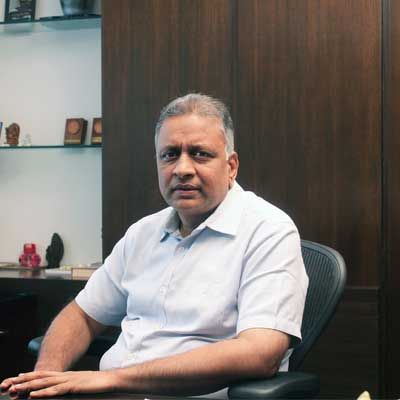
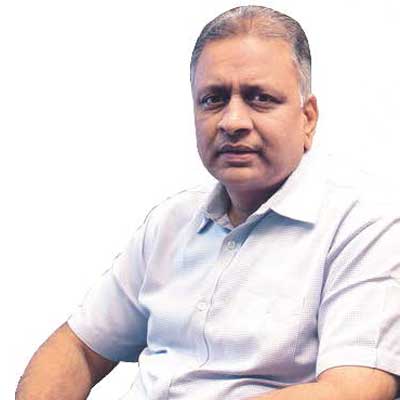
SECTOR: Cement Products Ramco Industries Established in 1967, Ramco Industries Ltd is part of the $1 billion Ramco Group which has interests in cement, drywall and ceiling products, roofing products, cotton yarn, surgical cotton and computer software. With 12 plants across South Asia and an 8,000-strong partner network, Ramco Industries is one of the leading building materials companies in South Asia, manufacturing fibre cement roofing sheets, fibre cement boards and calcium silicate boards. The company strives to pioneer modular green dry construction technology in India with its wide range of products. Prem Shanker, CEO, Ramco Industries Ltd, shares more…. Strategies to overcome COVID-19 and other challenges in FY2020-21: We first ensured all employees adopt COVID safe working practices so that our workforce was always ready to face the new challenge. We adopted the latest platforms in virtual conferencing and electronic workflow to ensure that the regular routine was maintained without disruption. Frontline sales officers were provided with real-time sales data on their mobiles, which reduced the necessity to make dealer visits. Whenever there was a lockdown that prevented regular production and transport, we undertook intensive preventive maintenance of our plants and upgrade of equipment wherever possible. All migrant workmen were provided free boarding and lodging and special incentives were given to retain them at the plants, as a result of which almost none left the company. Major contributor to growth in FY2020-21: We completely revamped our computer hardware and software systems to enable all employees work with real-time data even with their mobiles, so that operations were resumed quickly and with better impact than before. Remote monitoring of plant production parameters reduced the necessity of senior managers to travel to factories. Decision that helped maintain top-line and bottom-line: During the slowdown, we invested in increasing capacity in a few select plants, which helped us improve volumes when the markets reopened. Also intensive replacement of inefficient equipment and completing all pending repair works helped us restart plants quickly and with better production capacity. Plans for growth in FY2021-22 and beyond: We will continue to invest in technologies that will enable employees to work anywhere, either with their personal computer or a smartphone. We have set a target of 100 per cent vaccination for all our employees by the end of September 2021 in all our plants and offices, in addition to vigorously implementing COVID safe operating procedures at all locations. And, we are aggressively expanding production capacity as we are confident that the economy will come to near normal by the middle of 2022.

Next Story
Infrastructure Urban

Implementation Status of Jal Jeevan Mission

Since August 2019 the Government has implemented Jal Jeevan Mission to provide assured potable water through household tap connections in rural India. At the start of the mission only 32.3 million (mn) rural households, representing 16.7 per cent, were reported to have tap water connections. States and union territories have reported that 125.8 mn additional rural households have since been provided with tap connections. As a result, of about 193.6 mn rural households roughly 158.2 mn, or 81.71 per cent, are reported to have tap water supply at home.\n\nThe State, district and village level st..

Next Story
Infrastructure Urban

Jal Jeevan Mission Reaches Eighty One Per Cent Rural Coverage

The Government reported substantial progress under the Jal Jeevan Mission, launched in August 2019 to provide tap water to every rural household. At launch only 32.3 million (mn) rural households had tap connections and states and Union territories reported provision of 125.8 mn additional households by March 2026. Consequently, out of about 193.6 mn rural households around 158.2 mn, or 81.71 per cent, are reported to have tap water at home. The Finance Minister announced extension of the mission until 2028 in the 2025-26 budget speech. The Swachh Bharat Mission Grameen, launched in October 20..

Next Story
Infrastructure Urban

Empowering Local Governance for Sustainable Rural Water Supply

The Ministry of Jal Shakti has aligned the Jal Jeevan Mission (JJM) with the 73rd Amendment to strengthen village level planning and community ownership of water supply. Gram Panchayats, village water and sanitation committees and Pani Samitis are to plan, implement, manage and maintain piped water systems, with gram sabha processes formalising handover and oversight. Implementation support agencies including non government organisations, community based organisations and self help groups have been empanelled to train local committees and promote women participation. Under JJM, the department ..

Advertisement

Subscribe to Our Newsletter

Get daily newsletters around different themes from Construction world.

STAY CONNECTED

Advertisement

Advertisement

Advertisement