The company has recently been awarded contracts worth over Rs.660 crore
OIL & GAS

The company has recently been awarded contracts worth over Rs.660 crore

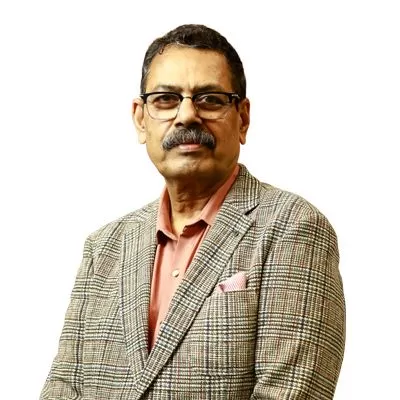
Ranjit Singh, Managing Director, Kalpataru Power Transmission Ltd
An integral part of the Kalpataru Group, Kalpataru Power Transmission Ltd (KPTL) offers end-to-end solutions in the field of power transmission, infrastructure and asset creation. Having received around 17 accolades across the group´s various departments, KPTL witnessed a growth of 20 per cent in the first quarter of 2014 as it registered a revenue of Rs 1,063.4 crore. Ranjit Singh, Managing Director, Kalpataru Power Transmission Ltd, elaborates upon the company´s global expertise and strategies for India with CW.

What strategies led to the 20-per-cent growth?
Two years ago, the company took a conscious strategic decision to increase its focus on overseas transmission projects. As a result, KPTL´s international business now contributes 50 per cent of its revenue compared to the earlier 30 per cent. Consequently, the company has witnessed a growth rate of 20 per cent despite headwinds in the domestic market. Looking ahead, the company will continue to focus on international business but also plans to grow its domestic business as the overall macroeconomic scenario has changed for the better in India. Moreover, the company has improved its production efficiencies, thus expanding its business of supplying towers to countries like Australia, the US and Canada, which are globally growing businesses. Apart from these, growth is expected from sectors such as oil and gas, substations and railways.

With footprints in 38 countries across the globe, how has your experience been in working in other countries compared to India from policy to planning to execution?
Each country offers its own set of challenges and opportunities and each project in a country is unique in terms of terrain, resource deployment, towers and systems design, inter alia. In many countries, the entire Right of Way (RoW) is acquired even before the company commences work and the contract offers a level playing field where additional costs incurred by the company for no fault are reimbursed. In India, the key challenge is still delays owing to forest and RoW clearance as well as shortage of skilled manpower.

What are the challenges involved in executing projects in EPC and BOOT modes? Also, which is your most preferred mode, and why?
Development of inter-state and intra-state transmission system has been hampering generation-capacity augmentation. Moreover, the existing transmission system is stressed owing to open access requirement. As a result, adding transmission capacity has become critical to ensure 24 + 7 power to all. Earlier, Inter State Transmission System (ISTS) development was the sole prerogative of the Power Grid Corporation of India (PGCIL). Since June 2011, ISTS projects are primarily bid out on the Independent Power Transmission Company (IPTC) model. In this scenario, the company has the option of taking up EPC work for a private developer and/or developing its own IPTC projects. In both cases, the challenges remain the same, i.e. RoW acquisition and forest land clearance. In the IPTC model, an additional challenge revolves around funding the capex. In future, the company will continue to strike a fair balance between the EPC and IPTC models with the majority of revenue coming from EPC.

Introduce us to the projects recently awarded to the company along with requirements in terms of manpower and procurement of equipment, materials, technologies, etc.
The company has recently been awarded contracts worth over Rs 660 crore of which Rs 375 crore are transmission line orders and the balance Rs 285 crore are pipeline laying orders from Cairn Energy and GAIL. In the past two years, KPTL´s pipeline division was under-utilised because of low order traction in the entire industry. Having said that, requirement of capacity expansion in terms of equipment and skilled manpower is not a concern. Also, no major capex is expected in transmission line projects.

Highlight your key projects along with your experience on working for projects funded by the government.
KPTL has carried out various types of works under various schemes supported or funded by the Government of India. In India, the majority of ISTS projects were awarded by the Power Grid Corporation. Of late, the company has traction from State Transmission Utilities (STU) awarding contracts for intra-state transmission systems. The international projects undertaken by the company are funded by multilateral agencies such as the World Bank, Asian Development Bank, African Development Bank and European Bank for Reconstruction and Development along with development agencies such as Japan International Cooperation Agency. Moreover, such projects are stable in nature and assure timely cash flows that are essential for expeditious execution of projects.

How much does the company invest annually in construction equipment? Is equipment rented or owned?
KPTL´s major requirement is tension string equipment for stinging conductors on overhead lines. Generally, we deploy our own specialised equipment for execution. General equipment like earthmovers and excavation machines can be rented or owned depending on the economics.

Also, introduce us to some innovative construction materials and technologies that you have used in the construction of your projects. From where have these been sourced?
In one of the projects in the Northeast, there was no space to construct conventional stone or concrete masonry retaining wall for towers. KPTL´s design team borrowed a concept from road bridges construction-development of retaining wall without essentially requiring any foundation. Also, recently we used European technology - ground and aerial LIDAR for line survey that gave impressive results.

Recently, the Minister of State (Independent Charge) for Power, Coal and New and Renewable Energy Piyush Goyal, said that the Government is planning to seek major transmission projects in states bordering China. With this announcement, how do you view opportunities in the power transmission sector?
In September 2014, the Cabinet Committee cleared Rs 5,000 crore worth of transmission projects in the Northeast to be funded by the Government of India to enhance border security. These are in addition to the Rs 5,000 crore worth of projects in the same region funded by the World Bank. Further, the government has released a 20-year perspective plan for transmission (2014-2034). We consider this as a point of inflexion for the transmission and distribution sector, signalling public recognition of the fact that transmission is more critical than ever today. Further, the government has taken steps to expedite clearances for power projects and ensuring coal to them. All these measures will lead to demand for power evacuation capacities. What´s more, thrust on renewables continues with a dedicated grid for renewables under development. In this context, as a leading EPC player in the transmission space, we are enthusiastic about the growth prospects.

How do you view the company´s performance in FY14-15?
In our view, the announcements by the new government will result in some tangible gains in this fiscal but more so in FY15-16. In terms of financing, we are striving to lower cost of finance, both for capital invested so far and working capital for projects.

Fact Sheet
Year of establishment: 1981
Top management (promoters):
Mofatraj P Munot
No. of employees: Around 2,000 employees and around 15,000 contract a Centre(s) of operation: Registered office and two plants in Gandhinagar (Gujarat); corporate office in Mumbai; one plant in Raipur (Chhattisgarh)
Ongoing projects: Over 40 transmission line EPC projects across the globe mainly in India, Africa, CIS region, SAARC and Middle East
Turnover FY14: Rs.4,177 crore (standalone) and Rs.7,211 crore (consolidated)
Current order book (March 31, 2014): Rs.6,500 crore (standalone) and Rs.11,600 crore (consolidated)


Ranjit Singh, Managing Director, Kalpataru Power Transmission Ltd An integral part of the Kalpataru Group, Kalpataru Power Transmission Ltd (KPTL) offers end-to-end solutions in the field of power transmission, infrastructure and asset creation. Having received around 17 accolades across the group´s various departments, KPTL witnessed a growth of 20 per cent in the first quarter of 2014 as it registered a revenue of Rs 1,063.4 crore. Ranjit Singh, Managing Director, Kalpataru Power Transmission Ltd, elaborates upon the company´s global expertise and strategies for India with CW. What strategies led to the 20-per-cent growth? Two years ago, the company took a conscious strategic decision to increase its focus on overseas transmission projects. As a result, KPTL´s international business now contributes 50 per cent of its revenue compared to the earlier 30 per cent. Consequently, the company has witnessed a growth rate of 20 per cent despite headwinds in the domestic market. Looking ahead, the company will continue to focus on international business but also plans to grow its domestic business as the overall macroeconomic scenario has changed for the better in India. Moreover, the company has improved its production efficiencies, thus expanding its business of supplying towers to countries like Australia, the US and Canada, which are globally growing businesses. Apart from these, growth is expected from sectors such as oil and gas, substations and railways. With footprints in 38 countries across the globe, how has your experience been in working in other countries compared to India from policy to planning to execution? Each country offers its own set of challenges and opportunities and each project in a country is unique in terms of terrain, resource deployment, towers and systems design, inter alia. In many countries, the entire Right of Way (RoW) is acquired even before the company commences work and the contract offers a level playing field where additional costs incurred by the company for no fault are reimbursed. In India, the key challenge is still delays owing to forest and RoW clearance as well as shortage of skilled manpower. What are the challenges involved in executing projects in EPC and BOOT modes? Also, which is your most preferred mode, and why? Development of inter-state and intra-state transmission system has been hampering generation-capacity augmentation. Moreover, the existing transmission system is stressed owing to open access requirement. As a result, adding transmission capacity has become critical to ensure 24 + 7 power to all. Earlier, Inter State Transmission System (ISTS) development was the sole prerogative of the Power Grid Corporation of India (PGCIL). Since June 2011, ISTS projects are primarily bid out on the Independent Power Transmission Company (IPTC) model. In this scenario, the company has the option of taking up EPC work for a private developer and/or developing its own IPTC projects. In both cases, the challenges remain the same, i.e. RoW acquisition and forest land clearance. In the IPTC model, an additional challenge revolves around funding the capex. In future, the company will continue to strike a fair balance between the EPC and IPTC models with the majority of revenue coming from EPC. Introduce us to the projects recently awarded to the company along with requirements in terms of manpower and procurement of equipment, materials, technologies, etc. The company has recently been awarded contracts worth over Rs 660 crore of which Rs 375 crore are transmission line orders and the balance Rs 285 crore are pipeline laying orders from Cairn Energy and GAIL. In the past two years, KPTL´s pipeline division was under-utilised because of low order traction in the entire industry. Having said that, requirement of capacity expansion in terms of equipment and skilled manpower is not a concern. Also, no major capex is expected in transmission line projects. Highlight your key projects along with your experience on working for projects funded by the government. KPTL has carried out various types of works under various schemes supported or funded by the Government of India. In India, the majority of ISTS projects were awarded by the Power Grid Corporation. Of late, the company has traction from State Transmission Utilities (STU) awarding contracts for intra-state transmission systems. The international projects undertaken by the company are funded by multilateral agencies such as the World Bank, Asian Development Bank, African Development Bank and European Bank for Reconstruction and Development along with development agencies such as Japan International Cooperation Agency. Moreover, such projects are stable in nature and assure timely cash flows that are essential for expeditious execution of projects. How much does the company invest annually in construction equipment? Is equipment rented or owned? KPTL´s major requirement is tension string equipment for stinging conductors on overhead lines. Generally, we deploy our own specialised equipment for execution. General equipment like earthmovers and excavation machines can be rented or owned depending on the economics. Also, introduce us to some innovative construction materials and technologies that you have used in the construction of your projects. From where have these been sourced? In one of the projects in the Northeast, there was no space to construct conventional stone or concrete masonry retaining wall for towers. KPTL´s design team borrowed a concept from road bridges construction-development of retaining wall without essentially requiring any foundation. Also, recently we used European technology - ground and aerial LIDAR for line survey that gave impressive results. Recently, the Minister of State (Independent Charge) for Power, Coal and New and Renewable Energy Piyush Goyal, said that the Government is planning to seek major transmission projects in states bordering China. With this announcement, how do you view opportunities in the power transmission sector? In September 2014, the Cabinet Committee cleared Rs 5,000 crore worth of transmission projects in the Northeast to be funded by the Government of India to enhance border security. These are in addition to the Rs 5,000 crore worth of projects in the same region funded by the World Bank. Further, the government has released a 20-year perspective plan for transmission (2014-2034). We consider this as a point of inflexion for the transmission and distribution sector, signalling public recognition of the fact that transmission is more critical than ever today. Further, the government has taken steps to expedite clearances for power projects and ensuring coal to them. All these measures will lead to demand for power evacuation capacities. What´s more, thrust on renewables continues with a dedicated grid for renewables under development. In this context, as a leading EPC player in the transmission space, we are enthusiastic about the growth prospects. How do you view the company´s performance in FY14-15? In our view, the announcements by the new government will result in some tangible gains in this fiscal but more so in FY15-16. In terms of financing, we are striving to lower cost of finance, both for capital invested so far and working capital for projects. Fact Sheet Year of establishment: 1981 Top management (promoters): Mofatraj P Munot No. of employees: Around 2,000 employees and around 15,000 contract a Centre(s) of operation: Registered office and two plants in Gandhinagar (Gujarat); corporate office in Mumbai; one plant in Raipur (Chhattisgarh) Ongoing projects: Over 40 transmission line EPC projects across the globe mainly in India, Africa, CIS region, SAARC and Middle East Turnover FY14: Rs.4,177 crore (standalone) and Rs.7,211 crore (consolidated) Current order book (March 31, 2014): Rs.6,500 crore (standalone) and Rs.11,600 crore (consolidated)

Next Story
Infrastructure Urban

CFI Appoints New National Council for FY27 and FY28

The Construction Federation of India (CFI) has announced its newly elected National Council and office bearers for a two-year term covering FY27 and FY28. M. V. Satish, Advisor to CMD and Lead Ambassador for Middle East, L&T, has been elected President; Priti Patel, Chief Strategy & Growth Officer, Tata Projects, has been appointed Vice President; and Ajit Bhate, Managing Director, Precast India Infrastructures, has taken charge as Treasurer.The newly formed National Council brings together senior leaders from major EPC and infrastructure companies, reflecting CFI’s continued focus o..

Next Story
Infrastructure Urban

India REIT Market Gains Momentum with Strong Returns

India’s Real Estate Investment Trust (REIT) market is witnessing strong growth, emerging as a competitive investment avenue both domestically and across Asia. According to a recent ANAROCK report released at EXCELERATE 2026 by NAREDCO Maharashtra NextGen, the sector is evolving into a mature asset class driven by solid fundamentals, regulatory backing and rising investor confidence.The introduction of Small and Medium REITs (SM REITs) in 2025 has further widened access through fractional ownership, unlocking a potential monetisation opportunity of Rs 670–710 billion. Indian REITs have deli..

Next Story
Infrastructure Energy

G R Infraprojects Secures Rs 4,130 Million BESS Contract From NTPC

G R Infraprojects said it has secured a contract from NTPC to supply and implement a battery energy storage system (BESS) valued at Rs 4,130 million (mn). The company reported the order was awarded as part of NTPC's ongoing efforts to enhance grid flexibility and energy storage capacity. The contract represents a notable addition to the firm's project pipeline and underscores demand for utility scale storage solutions. The award is expected to strengthen G R Infraprojects' presence in the energy infrastructure sector and to contribute to the firm's order book and future revenues, subject to st..

Advertisement

Subscribe to Our Newsletter

Get daily newsletters around different themes from Construction world.

STAY CONNECTED

Advertisement

Advertisement

Advertisement