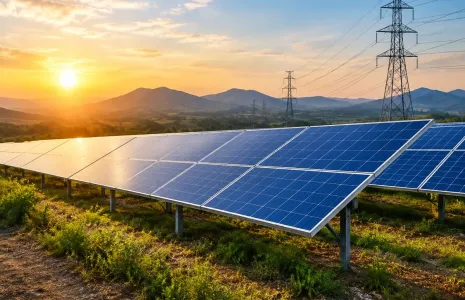
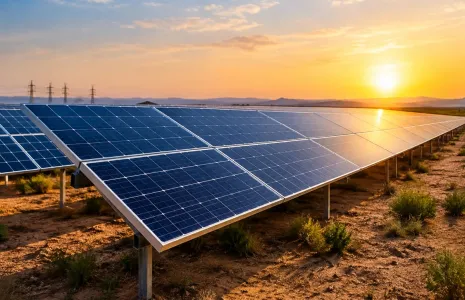
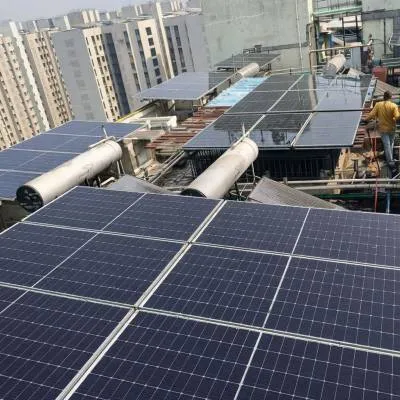
India has committed to ambitious targets before the world in the context of renewable energy.; Many felt that India was punching far above its weight. Solar projects set up in India have been largely on account of the creditable efforts of Central Public Sector Undertakings (CPSUs)—Solar Energy Corporation of India (SECI) and NTPC. In setting up of solar projects, the role of states has been largely limited to arranging the land. The same structure was conceptualised for a 750 MW solar project planned in Rewa in eastern Madhya Pradesh. Rewa Ultra Mega Solar Ltd (RUMSL) was set up as a 50:50 JV of SECI and MP Government organisation with a rather limited mandate.
The prevailing solar tariffs at that time were over Rs 5 per unit. The Central Government used to offer Viability Gap Funding (VGF), so that distribution companies (DISCOMs) could procure solar power at Rs 5/unit. Bidding used to be on VGF and the developer seeking the minimum VGF was awarded the project.
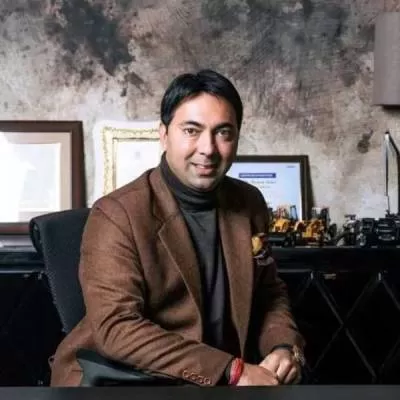
It is in this setting that Manu Srivastava, 1991 batch IAS officer, stepped in as Principal Secretary of Renewable Energy department in GoMP. Part of his responsibility was to form and head RUMSL. As an electrical engineer from IIT-Delhi, Manu had spent the last eight years in the energy sector, five in natural gas and three in electricity.
In his earlier tenure in the electricity sector, he had successfully conducted a solar energy tender, where no facilities were provided and solar energy was simply to be purchased at the grid, leading to a rate of Rs 5.05/unit. He was not comfortable with the idea of a target tariff of Rs 5/unit, with VGF from central government, even though the solar park was to provide ‘plug and play’ facilities. He initiated discussions as soon as he joined and offered concrete suggestions regarding the tender. He convinced the Central Ministry of Renewable Energy (MNRE) to let RUMSL handle the Rewa project independently, implying that the bid would be conducted by RUMSL and not by SECI as was the pattern throughout the country. MNRE put a condition that VGF would not be made available to RUMSL. The implication was that RUMSL had to achieve a tariff of Rs 5/unit or below.
RUMSL being a nascent organisation with no office or staff of its own, this was an onerous responsibility. It only had officers from various state government organisations working part-time for it.
Manu realised that he needed strong and creditable allies. He soon explored possibilities with the World Bank Group, which was keen on the solar sector in India. World Bank was looped in for concessional finance and IFC for transaction advisory services. RUMSL was the first agency in the solar sector to make such a move in collaboration with a multilateral.
Soon thereafter, GoI reduced the target tariff from Rs 5/unit to Rs 4.50/unit. Now, RUMSL had a stiffer challenge–to achieve a tariff of Rs 4.50/unit or lower.
One of the first challenges was to locate customers. MP DISCOMS were not in a position to take the entire power. Hence, customers outside MP had to be located. First breakthrough came in the form of Delhi Metro getting convinced with the approach of RUMSL, and developing sufficient foresight and confidence to sign into the project as one of the principal procurers of power.
Manu, aided by IFC, arranged pre-bid meetings with large number of international firms, as also their bankers, to understand their apprehensions regarding participating in a state-run project. Following these meetings, he had a clear understanding of the risks and uncertainties perceived by investors and lenders; he systematically moved ahead to address them.
One of the serious concerns of the bidders was whether they would get their dues from the state DISCOMs over the 25-year project period, especially because of the poor financial rating of MP DISCOMs. This problem is not faced by SECI and NTPC because of GoI-RBI-State Government Tripartite Arrangement, which ensures that DISCOMs regularly pay their bills. To address this problem, the MP government was persuaded to offer state guarantee to Rewa’s developers.
As the project moved ahead, RUMSL gathered more allies–PGCIL for linking with national grid, MPTransco for development of internal transmission and IREDA for developing an innovative payment security mechanism, as also Trilegal for legal services, PwC for managerial advice and Sgurr for engineering inputs. This broad team developed into ‘Team Rewa’.
Team Rewa took its pre-bid meetings seriously and accommodated as many requests of the prospective bidders as possible. Respecting the bidders’ suggestions led to improvements in project documents and strengthening of the contractual structure. The aim was to reduce the risks and uncertainties of investors and lenders. The broader goal was to attract investors with lower expectations of RoI, like pension funds, sovereign funds, etc. It would also enable the project developers to get cheaper sources of debt. It was hoped that these efforts would be rewarded with low rates.
The efforts of Team Rewa were justly rewarded. The project saw 20 bidders, including six international companies. While the aim was to get a tariff of Rs 4.50/unit, the first-year tariff closed at an astonishing Rs 2.97/unit! This was lower than the cost of power from coal – the first solar project in India to have achieved this feat. More importantly, the project established the principle that low rates can be achieved by careful project structuring without depending on subsidy. It is the only project in the country to supply energy to an institutional customer-Delhi Metro.
Looking at the success of the Rewa project, Government shelved the policy of giving VGF for solar projects. The focus shifted to better project structuring. Standard Bidding Guidelines were issued, incorporating the principles of Rewa project. Now all solar projects in India are bid on the basis of these principles, which, along with technological changes, has brought down solar tariff to around Rs 2/unit. Rewa project got World Bank President’s award. The project was dedicated to the nation by the PM. Rewa is adopted as a case study in Harvard and Singapore Management University.
There are learnings beyond solar energy from the project. Usually, government contracts are structured such that the Government bears minimum risk and all uncertainties are left to the supplier/developer, who loads these to the cost. The key is to lessen the investor risk. This would allow the project developers to get cheaper sources of debt, and funds with lower expectation of RoI, resulting in significantly lower prices. Encouraging partnerships with multilateral organisations helps in improving government projects and convincing investors about the strength of the project. Last but not the least, cooperative arrangements between federal and state governments can play an important role in meeting national commitments, leading to a win-win situation for all.
Manu Srivastava and his committed team demonstrated that out-of-the-box thinking and taking stakeholders on board can help make-it-happen.Author: Anil Swarup has served as the head of the Project Monitoring Group, which is currently under the Prime Minister’s Office. He has also served as Secretary, Ministry of Coal, and Secretary, Ministry of School Education.