Equipment

"Revolutionary Wireless Earbuds: Sync & Stream with Ease!"

The current upswing in road construction has seen the size of the motor grader market rise. Demand is being seen across both the heavier (170-180-200 hp) and lighter class (140-150 hp) of motor graders. The higher-powered machines are generally used for grading requirements of 160-200 cum/hr, wh...

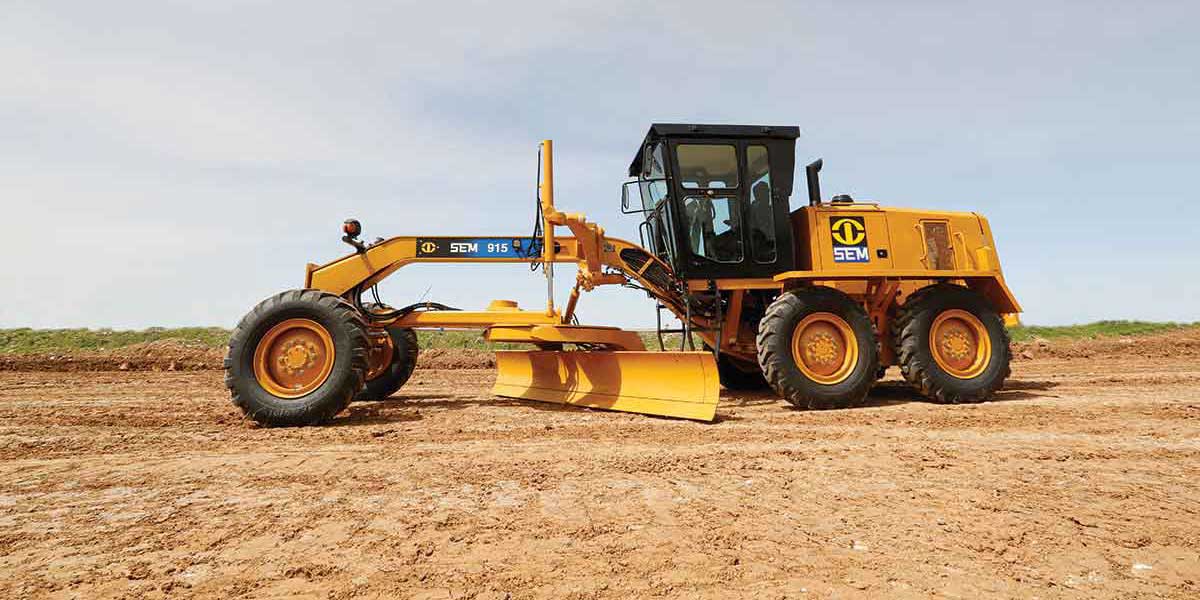
The current upswing in road construction has seen the size of the motor grader market rise. Demand is being seen across both the heavier (170-180-200 hp) and lighter class (140-150 hp) of motor graders. The higher-powered machines are generally used for grading requirements of 160-200 cum/hr, while the lighter units are for grading requirements of 100-120 cum/hr. A major chunk of the demand is coming from subcontractors. Motor graders are a highly-evolved technology product. The grader has a strong role in the pre-compaction stage and sub-base preparation with fine grading, spreading, and levelling the ground. It uses a hydraulic blade to push large amounts of soil and can be adjusted with a simple lever by the operator. The higher-powered machines are generally used for grading requirements of 160-200 cum/hour, while the lighter units are for grading requirements of 100-120 cum/hourGrowing market A report from Off-Highway Research revealed, “Sales of motor graders follow very closely the trends of expenditure on the construction of new roads and the maintenance of the road network, so demand for machines will largely depend on the speed at which existing and future road projects are executed. The backlog of pending road construction work in the country as well as the government’s ambitious infrastructure development plans, offer huge potential for growth in the motor grader demand.” Speaking on the current market size of motor graders in India, Vivek Hajela, Vice President and Head – Construction Equipment Business, Larsen & Toubro, said, “Motor graders are a highly-evolved technology product and now mandatory for the construction of highways. The grader has a strong role in the pre-compaction stage and sub-base preparation with fine grading, spreading, and levelling the ground. It uses a hydraulic blade to push large amounts of soil and can be adjusted with a simple lever by the operator. We can roughly divide the graders into three categories – small, medium, and large. Put together, the market size of graders in India is 1,600 numbers annually. Komatsu graders viz., GD535 and GD555 are popular models in the premium segment and have a pan-India presence with deployment in highways and expressways. The large-size Komatsu Grader models like GD705 and GD825 have been deployed for maintenance of haul roads in coal and mining projects.” The demand for motor graders is directly proportional to the construction of roads and highways. Both Central and State Governments have been giving impetus to roads and highways since the early 2000s when Golden Quadrilateral and North-South/East-West corridors construction was underway. Since then, the demand for motor graders has expanded. The construction of roads and highways has further expanded to Bharatmala, expressways, economic corridors, coastal roads, strategic roads at the border, etc., and now the announcement of the National Infrastructure Pipeline (NIP) encompasses all of them. During the past few years, government spending on infrastructure and construction activities is on the rise globally, especially in developing nations like India, China. The compact design of the grader is highly suitable for small to medium road projects in villages and cities and also makes them the most preferred choice of contractors for road projects like Pradhan Mantri Gram Sadak Soyjna (PMGSY) schemes, etc. in developing nations like India. According to Motor Intelligence report, “The motor graders market is projected to grow with a CAGR of more than 5 per cent during the forecast period”. The Asia-Pacific region remains the largest market for motor graders market. This growth can be attributed to the factors such as increasing construction activities in the countries like China, India, which are the fastest developing nations in the world. The government in the region is spending heavily on developing world-class facilities, which are driving the demand for motor graders.Wide range of motor graders

Next Story
Real Estate

RBI Rate Cut Boosts Confidence Across Housing Market

Industry Context and Market DynamicsThe real estate industry has welcomed the RBI’s rate cut as a timely boost to affordability and demand. With home prices having risen steadily across major markets, even a marginal reduction in interest rates meaningfully strengthens purchasing power, especially for first-time and mid-income buyers.Ashish Jerath, President – Sales & Marketing, Smartworld Developers, observes:“The RBI’s 25-basis-point cut, bringing the repo rate down to 5.25%, is a timely boost for the real estate sector. Lower interest rates reduce borrowing costs, enabling homeb..

Next Story
Infrastructure Transport

BMC Resumes Rs 170 Billion Road Works, Targets 80 per cent By Jan 2026

Following the withdrawal of the southwest monsoon in October, the Brihanmumbai Municipal Corporation (BMC) has restarted work on 645 roads—covering 297.49 kilometres—under its large-scale concretisation programme. Data shows that more than 60 per cent of the resumed works are located in the western suburbs. Officials said the civic body aims to complete concretisation on 80 per cent of the roads where fresh work has begun by January 2026. Launched in 2022, the Rs 170 billion project seeks to concretise 700 kilometres of roads across Mumbai. All civil works were halted during the monsoon ..

Next Story
Infrastructure Urban

India Pushes Digital Shift In Urban Land Mapping

The Department of Land Resources (DoLR) under the Ministry of Rural Development has convened a National Symposium on NAKSHA – the National Geospatial Knowledge-based Land Survey of Urban Habitations – to advance India’s transition to modern, technology-driven land mapping. Speaking at the inaugural session, Secretary Manoj Joshi underscored the urgent need to move revenue departments away from outdated, tape-based methods and rough hand-drawn sketches. He stressed that adopting latitude–longitude-based digital mapping and GIS-linked registration systems is essential for economic stabi..

Advertisement

Subscribe to Our Newsletter

Get daily newsletters around different themes from Construction world.

STAY CONNECTED

Advertisement

Advertisement

Advertisement

Advertisement

Open In App