Photo Courtesy:JCB
Construction equipment financiers are very optimistic about their prospects.
“We’re extremely bullish on lending in the construction equipment finance segment and expect the segment to grow at a better CAGR than the industry,” says BK Tripathi, Head, Construction Equipment Loans, IndusInd Bank, Consumer Finance Division.
“Against the backdrop of the Government of India’s huge spend on infrastructure under the PM Gati Shakti scheme, we have an ambitious plan for financing construction and mining equipment in ensuing years,” says Dhrubashish Bhattacharya, Head, MSME Business, Bank of Baroda.
“We expect the construction industry to boom looking at the capex plans of the Government, and of course we’d like to be a part of this growth,” says Senthil Kumar, Executive Vice President & CEO, Vehicle and Equipment Finance, Manappuram Finance. That said, Kumar believes larger infrastructure development projects will take time to materialise.
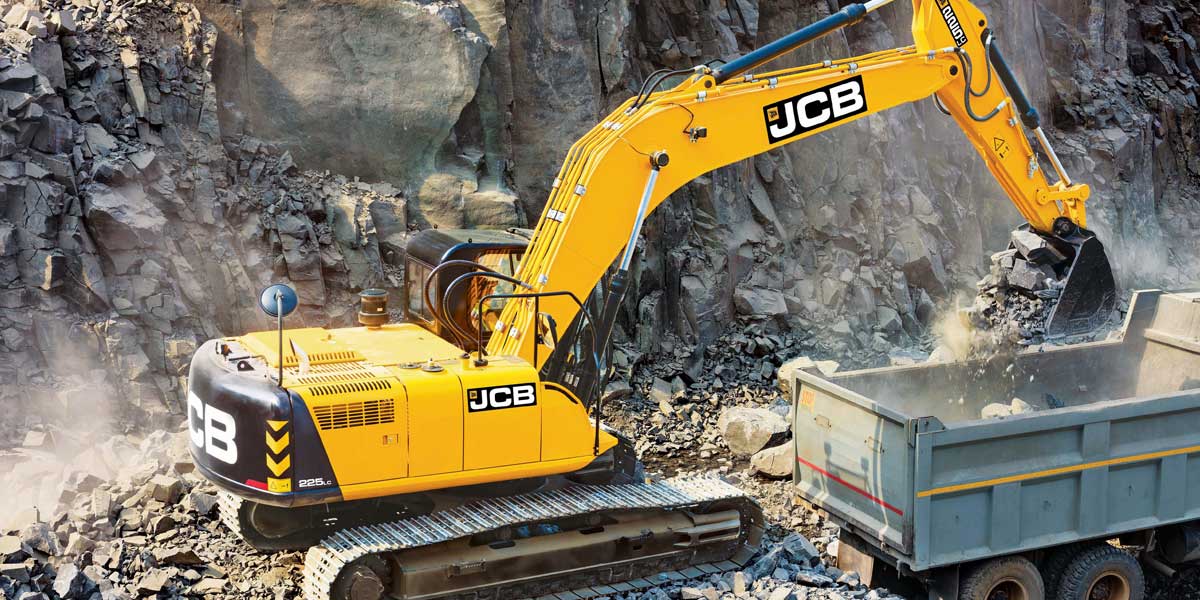
Sufficient finance is vital for the Indian construction industry. Consider the fact that 90-95 per cent of the machines sold by JCB are funded by banks and NBFCs, shares Deepak Shetty, CEO & MD, JCB India. “Banks and NBFCs play a major role in enabling the purchase of construction equipment. They regularly come up with various schemes that are ultimately for the benefit of our customers.”
So, what sort of construction equipment is it easiest to get finance for?
What’s being funded?
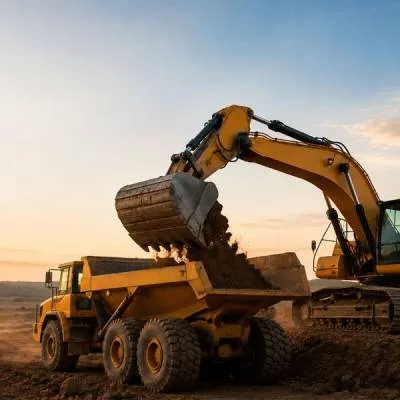
“NBFCs finance various types of construction equipment deployed in road, irrigation, mining and other activities,” says Deepak Cherukuri, National Credit Manager, Cholamandalam Investment and Finance Company. “These assets include excavators, backhoe loaders, dumpers and tippers. We derive comfort from funding assets that are economically viable and resaleable. Hence, we prefer assets with a good track record, those manufactured by reputed OEMs.”
“We prefer to finance commonly used assets like backhoes and excavators for projects in the rural sector rather than larger, more expensive assets like imported cranes,” says Kumar.
In backhoe loader and tipper funding, IndusInd Bank has by far been the market leader since 2015.
Some financiers are open to less used and/or imported assets.
“We have a significant presence in the financing of imported assets through a variety of offerings like letters of credit, buyers’ credit and, of course, term loans,” says Tripathi.
Who is a good client?
A preferred client is a business with “confirmed order books, experience in handling similar assets and a track record of completing similar works,” says Cherukuri.
“Our focus is largely in the strategic segment, targeting borrowers who currently have credit limits with us,” says Bhattacharya. “Our intent is to finance their fleet of equipment alongside the other limits that are running successfully. Our focus would be more on construction than mining.”
Some financiers are open about servicing first-time users and/or first-time buyers.
“We’re open to finance first-time buyers but would prefer to address borrowers with some industry experience and a good repayment track record,” says Kumar.
“We specialise in retail lending to customers, including first-time buyers, through our pan-India branch network spread across 620 cities and towns,” says Tripathi. “We also have a significant presence in lending to big corporates to cover their equipment purchases.”
“Ranging from first-time users and first-time buyers to large construction companies, we offer loans for the entire range of customer segments in the construction equipment sector,” says Vinod Chauhan, Senior Executive Vice President & Business Head - Construction Equipment Finance, Kotak Mahindra Bank. “We cover the entire country except Jammu & Kashmir and some parts of Northeast India. We provide complete financing solutions to the construction industry from equipment loans to finance for working capital requirements. In the past few years, we have expanded our presence to many rural and semi-urban areas as well.”
The role of vendors
Some vendors enter into agreements with financiers. For instance, JCB has strategic tie-ups with all the leading banks and NBFCs so customers can choose a financing partner as per their convenience.
“Over the past decades, we have shared a strong and healthy relationship with financial institutions and they have played a vital role in the growth of the sector,” says Shetty. “Our nationwide strong dealer network works together with our financing partners to ensure a seamless experience for customers while purchasing our products. We closely coordinate with one another, and look forward to further strengthening our partnerships with our financiers.”
“Tie-ups with construction OEMs allow us to offer tailored schemes based on the specific requirements of customers,” adds Tripathi.
Some vendors focus on connecting buyers with financiers.
“While we are not actively into equipment financing as an OEM, we always try to support customers who are struggling for funding and down payments by guiding and connecting them with finance companies and NBFCs offering a variety of construction equipment financing options, says Jalaj Gupta, Business Head, Mahindra Commercial Vehicles. “We have a big rural customer base for our products and our aim is to bring prosperity among this section, most of whom are new in the business or recently started. These are known as first-time users or first-time buyers. As they are new owners of the machine, they require time to understand the financial dynamics of the business. The options should be understood properly and then the right finance should be opted for.”
True, the right loan for the right client.
Disclaimer: The views expressed by Deepak Cherukuri are individual and do not represent the perspective of the organisation he works for. Impact of BSIV on machine finance
Speaking of the Mahindra backhoe loader EarthMaster and motor grader RoadMaster, Jalaj Gupta, Business Head, Mahindra Commercial Vehicles, says, “With BSIV, the cost attached to new machines is challenging the financing potential to small contractors as the operating economics have reduced. In the light of the inflated cost of the new machines, we are working towards increased tenures and higher funding to genuine customers through our tie-ups with major banks or NBFCs in India. The higher cost has also considerably boosted demand for rental equipment and usedequipment buybacks as well as exchanges.”Has the exit of a pioneer adversely impacted the financing industry? Experts weigh in.
A lot has happened in the equipment finance segment in the past year.
SREI, the pioneer of construction equipment finance with a wide network, has all but folded up. Fresh disbursements from that major stopped earlier this fiscal. Has that opened doors for other NBFCs and banks?
One view is that the exit of SREI created a gap in the construction and mining equipment financing sector.
“Given the restriction on fresh disbursements, there would have been negligible disbursements by SREI during FY2021 compared to Rs 9,555 crore and Rs 13,681 crore during FY2020 and FY2019 respectively, a large portion of which was towards construction and mining equipment,” points out Anil Gupta, Vice President & Co-Group Head, ICRA. “This situation of negligible disbursements is estimated to have continued in FY2022 after which the company was referred to the National Company Law Tribunal (NCLT) by RBI in September 2021.”
Gupta is certain that the exit of SREI from the construction and mining equipment segment would have created a void, as it was estimated to be one of the largest financiers in the segment. “However, given that its disbursements were gradually reducing prior to its failure and equipment suppliers as well as construction companies have tie-ups with other financiers, this is unlikely to have a sustained adverse impact on financing conditions,” he adds.
Other financiers in the construction and mining equipment segment include large banks such as ICICI, Kotak and IndusInd, as well as NBFCs like Tata Capital, Shriram Transport and Sundram Finance, among others.
Another view is that other players in the large financing market have successfully stepped in to bag a share of the pie, and this has more or less plugged the void created by SREI’s exit.
SREI was a pioneer in construction equipment finance and had a decent share in the industry, observes Deepak Cherukuri, National Credit Manager, Cholamandalam Investment and Finance Company. “However, given the large number of financiers in the market, its share could have been taken over by multiple NBFCs and private banks operating in the infrastructure finance industry.”
BK Tripathi, Head, Construction Equipment Loans, IndusInd Bank, Consumer Finance Division feels that SREI’s downfall started well before 2018, and that the void left by it has more or less been filled by other financiers. “SREI excelled mainly in retail lending and project funding. While retail lending has been addressed mainly by IndusInd, Chola and HDB, there is still some gap in project funding as banks foresee significant risks in that category. Some of the risks are cashflow delays by the principal, lack of transparency among borrowers, lack of owner equity, bidding for projects without scientific analysis of viability, execution delays and cost overruns because of reasons like land procurement by the principal, absence of a foolproof escalation clause, slow legal and arbitration processes, long-drawn liquidation, and DRI and NCLT proceedings.”
Mitigating these risks would encourage banks to aggressively fund the project segment, adds Tripathi.