

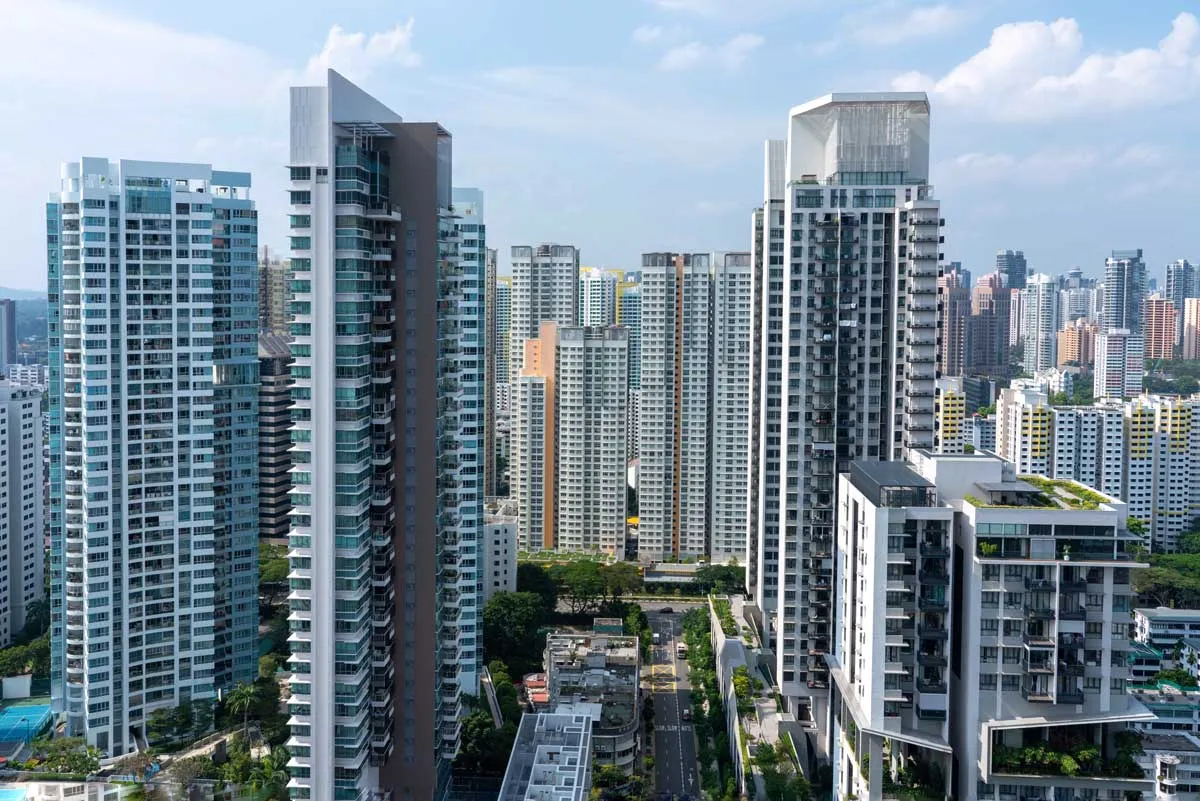
The Real Picture!
How did the Indian real-estate sector fare from FY2025-26? What were the factors at play and how was the impact felt by major players? What set the overperformers apart from the underperformers? Here is a comprehensive analysis – gleaned from management and stakeholder inputs – that brings together all the moving parts to provide some reasoned and rational answers.

Six Events That Shaped the Sector
The performance of Indian real-estate companies cannot be read from financials alone.
Six macro and regulatory
events between 2024 and 2026 reshuffled the deck – separating resilient platforms from fragile operators – as detailed below along with its direct financial impact on listed companies.
Supreme Court Environmental Clearance Freeze
- Period: August 2024-November 2025 (nine months)
- Type: Regulatory Disruption | Supply-Side Constraint
- Summary: Responding to a Vanashakti NGO petition, the Supreme Court effectively froze environmental clearances for real-estate projects across MMR and Maharashtra. CREDAI estimated that this added up to two years to project timelines for projects caught mid-process. Clearances only resumed in November 2025, restoring the situation to its August 2024 baseline.
- Impact: Lodha Developers (missed three quarters of MMR launches), Keystone Realtors, Marathon Nextgen, Man Infra got hurt. Any developer concentrated in Maharashtra was impacted.
- Recovery: Lodha has a Rs218 billion GDV (Gross Development Value) launch pipeline identified for FY27 with approvals in place or advanced stage. The backlog should clear through FY27.
- Perspective: “The Supreme Court brought the situation back to August 2024 levels in August 2025,” remarked Abhishek Lodha, MD & CEO, Lodha Developers, on April 27, 2026. “We all lost about nine months in getting back to the same starting point. And clearances then started by November 2025. So, we are very much past that issue.”
RBI Rate Cuts - 125 bps Over FY26 (Repo at 5.25 per cent)
- Period: January-December 2025 | Ongoing
- Type: Positive Macro | Demand + Developer Cost Tailwind
- Summary: After holding repo rates at 6.5 per cent through FY24, RBI shifted to an easing cycle in 2025, delivering 125 basis points of cuts across the year. Home loan rates fell from approximately 9 per cent to ~8 per cent for prime borrowers – a meaningful EMI reduction that brought mid-segment buyers back into the market. Impact: For developers, the impact was two-fold: lower cost of debt directly improving project-level margins, and improved home loan affordability driving booking velocity in the Rs50 lakh to Rs1.5 crore segment.
- Perspectives: According to Lodha, the average cost of debt fell 90 bps to 7.8 per cent. Net D/E ratio now 0.23x (from 3.5x at IPO in 2021). Cushman & Wakefield cited rate cuts as the primary driver of mid-segment buyer re-entry. Affordability improved across major markets. And as per Colliers, housing sales in H12026 remained firm despite geopolitical noise, supported in part by the cumulative 125 bps rate reduction.
Operation Sindoor - India-Pakistan Military Standoff
- Period: May 7-10, 2025 (Ceasefire); Diplomatic freeze ongoing
- Type: Geopolitical Shock | Short-Lived Sentiment Impact
- Summary: India launched precision strikes on terrorist camps in Pakistan and Pakistan-administered Kashmir. Pakistan retaliated with drone and artillery strikes. A ceasefire was announced within 72 hours, but diplomatic relations remained frozen through March 2026. The event created a brief but sharp sentiment shock.
- Impact: The sector impact was short-lived. Luxury closures and NRI remittances paused for two to four weeks. Recovery was swift in IT-driven cities (Bengaluru, Pune, Hyderabad) where end-users – not sentiment-driven investors – dominate demand. Border-adjacent markets (Rajasthan, Punjab) were more affected.
- Key finding: Post-ceasefire, demand decompressed quickly. Pune and Bengaluru outperformed national recovery due to GCC employment continuity –corporate hiring doesn’t pause for geopolitics.
GCC Boom - 300,000+ High-Skill Jobs Added in 2025 Alone
- Period: 2024-2026 | Ongoing Structural Trend
- Type: Structural Demand Driver | Multi-Year Positive
- Summary: Global Capability Centres accelerated their India footprint explosively. In 2025 alone, over 300,000 high-skill white-collar positions were added. GCCs drove approximately 40 per cent of the record 90 million sq ft of office leasing in CY25. The FY26-27 outlook projects 60-65 MSF of additional GCC absorption. This is the single biggest driver of premium residential demand in India today. GCC employees – with household incomes of Rs25-50 lakh annually – are the primary buyers of Rs1.5-5 crore homes in Bengaluru, Hyderabad, Pune and NCR.
- Impact: Geographic beneficiaries include Bengaluru (Prestige, Sobha, Brigade), Hyderabad, Pune (Mahindra), NCR (DLF, Signature Global, Godrej).
- Perspective: According to Lodha, GCCs added over 300,000 high-skill positions in India in 2025 alone. Wage growth across the economy has run at 9-10 per cent for many years.
PMAY-U 2.0 & Affordable Segment Structural Squeeze
- Period: September 2024 | Policy Launch
- Type: Mixed Signal - Good Policy, Execution Challenges
- Summary: The Government relaunched PMAY-U 2.0 with a target of 1 crore additional affordable homes over five years. However, rising land costs in Tier-1 cities made affordable housing economically unviable for listed developers operating under RERA margin requirements. In practice, branded developers quietly exited affordable segments in favour of mid-premium and luxury launches. The affordable segment in MMR and NCR is now largely left to unorganised, RERA-non-compliant builders, creating a regulatory vacuum the Government has yet to fill.
- Impact: Puravankara (affordable Provident brand), Shriram Properties (Chennai affordable), Marathon Nextgen (MMR affordable) got squeezed.
- Perspective: In September 2025, the Supreme Court called speculative investors ‘slow poison’ for real estate – an early signal of regulatory intent to curb investor-driven price inflation in the premium segment.
US-Iran War & Middle East Crisis - Construction Cost Shock
- Period: Early 2026 | Ongoing
- Type: Near-Term Headwind | Cost Inflation + NRI Sentiment
- Summary: Escalation in the US-Iran conflict pushed crude oil prices sharply higher, disrupting global supply chains. Construction input costs in India spiked 10-25 per cent, with the heaviest impact on gas-dependent materials. NRI buyers – who account for 18-20 per cent of primary residential sales –paused decisions amid Gulf-region uncertainty.
- Impact: Tiles, paints, PVC pipes, aluminium formwork, waterproofing (all gas-dependent) were the most affected materials. There was a moderate impact on windows, facade, gypsum, steel.
- Silver lining: Indians bought Rs84,000 crore (~AED 35-37 billion) worth of Dubai property in 2024. Middle East instability could redirect this capital back to India – a net positive for the premium segment over 12-24 months.
- Perspectives: “March, which was the peak of the Middle East news cycle, did see select deferral of closures as consumers looked at the situation around them,” remarked Abhishek Lodha. “We’ve already started seeing that housing has converted into becoming a more preferred asset class, given its lower volatility and resilience.” For its part, on May 4, 2026, Godrej Properties said, “The conflict in the Middle East caused some short-term disruption and could lift project costs by 5-6 per cent at most, but the overall margin hit should be small and manageable.”
Eight Key Trends From the Financials
These are not narratives – they are patterns that emerge directly from the financial data of 37 listed companies across three fiscal years. Each trend has a direct investment implication.
Revenue Acceleration,
Not Just Growth
The sector didn’t grow at a steady pace – it accelerated. Large-cap revenue growth went from 19.9 per cent in FY25 to 30.4 per cent in FY26. This acceleration is driven by project completions from the FY21-FY23 launch supercycle now hitting the P&L. Revenue is a lagging accounting indicator – booking velocity was actually moderating slightly even as delivered revenue surged.
Aggregate Revenue: Rs58,041 crore (FY24), Rs69,608 crore (FY25), Rs90,788 crore (FY26)
Two-Year CAGR: 25.1 per cent compounded
Large-Cap vs. Mid-Cap Structural Divergence
Large-caps grew 30.4 per cent in FY26; mid-caps (Rs300–Rs1,000 crore revenue) grew just 5.3 per cent. This is not cyclical; it is structural. RERA compliance costs, brand trust, land acquisition scale and access to institutional capital create moats that compound over time. The top five developers now capture an estimated 25-30 per cent of primary residential sales in the top six cities, up from approximately 15 per cent in 2021.
- Large-Cap Growth:
FY25: +19.9 per cent
FY26: +30.4 per cent (accelerating)
- Mid-Cap Growth:
FY25: +16.1 per cent
FY26: +5.3 per cent (decelerating)
• Implication: Expect further market share consolidation. Mid-caps that survive will need either geographic niche dominance or turnaround catalysts.
Premiumisation Is Structural, Not Cyclical
Homes above Rs1 crore now account for 63 per cent of total residential sales by value. The sub-3BHK segment grew at just 4 per cent CAGR while 3-4BHK grew at 15-20 per cent CAGR (according to Lodha). Ultra-luxury homes
(Rs50 crore+) nearly doubled their share of the MMR market – from
7 per cent to 13 per cent in two years. GCC income, stock market wealth and NRI demand have all converged on the premium segment simultaneously.
Companies that repositioned toward premium – Signature Global in NCR, Lodha in South & Central Mumbai, DLF in Gurugram super-luxury – saw margin expansion of 10-40 percentage points. Those that stayed affordable saw margin compression.
Margins Held Sector-Wide, But Range Exploded
The sector-wide net profit margin held remarkably stable: 22.2 per cent (FY24) 21.1 per cent (FY25) 21.3 per cent (FY26). But the dispersion between companies has widened dramatically.
- DLF: 42.4 per cent 53.9 per cent (+11.5 percentage points)
- Signature Global: 1.3 per cent 42.2 per cent (+40.9 percentage points) – the most dramatic in the sector
- Godrej Properties: 24.6 per cent 35.9 per cent (+11.3 percentage points)
- Prestige Estates: 20.7 per cent 10.3 per cent (–10.4 percentage points) – margin compression from expansion costs
- Nexus Select (REIT): 31.3 per cent 15.7 per cent (–15.6 percentage points) – structural REIT squeeze
Valor Estate: 368.9 per cent - 1.7 per cent – FY24 was entirely a one-time land gain; operational margin near zero
Revenue Lumpiness is the Mid-Cap’s Core Problem
Ind AS 115 requires revenue recognition only on project completion, not on booking or construction progress. Companies with one to three large projects (Ganesh Housing, Man Infra, Arvind SmartSpaces) show violent year-to-year revenue swings purely from accounting timing, not from business deterioration. This is the most important analytical insight in the entire dataset.
Case in point: Ganesh Housing’s FY26 revenue fell 46 per cent Y-o-Y, yet their EBITDA margin was 83.5 per cent and PAT margin was 58.7 per cent. Their interest coverage ratio averaged 93.59x with near-zero debt. The business is healthy; the accounting looked terrible because one large project completed in FY25 with no comparable completion in FY26.
Annuity Business Is Becoming a Core Strategy
The top developers are systematically building revenue streams that are independent of project completion cycles. This shift from pure residential development to platform-plus-annuity models is the defining strategic trend of FY26.
- DLF: DCCDL annuity revenue Rs7,400 crore (+15 per cent), EBITDA +50 per cent. Development business at zero gross debt, net cash Rs14,155 crore.
- Lodha: Targeting 10x annuity income by FY31. Data centre park (400 acre, AWS + STT anchors) will generate Rs120 billion+ from FY27. Annuity income Rs3 billion in FY26.
- Prestige: Office portfolio at 92 per cent occupancy, retail at 99 per cent. Aggressive annuity ramp to FY30.
- Anant Raj: Pivoting to data centres in NCR. Land-rich NCR developer finding the highest-value use for its land bank.
Geography Defines Destiny
Micro-market selection is the single biggest variable in developer performance. NCR (specifically Gurugram Sohna and Dwarka Expressway corridors) and MMR (Worli, BKC, Thane-Palava) were the two dominant residential growth markets. Bengaluru led in price appreciation at 24 per cent YoY. Hyderabad saw strong IT-driven demand.
- NCR winners: DLF (super-luxury Camellias), Signature Global (affordable-premium Sohna), Anant Raj (data centres), Godrej (new entry with Rs600 billion GDV pipeline)
- MMR winners: Lodha (South & Central Mumbai luxury, 40 per cent market share in Rs100 crore+ category), Keystone (Rustomjee premium), Raymond Realty (Thane brand play)
- Bengaluru winners: Prestige (dominant), Sobha, Brigade, Godrej
Debt Deleveraging by Leaders, Leverage Trap for Laggards
The top developers deleveraged while growing at 20-30 per cent CAGR – a combination that is historically rare in capital-intensive industries. This balance sheet discipline is now the clearest predictor of future margin expansion and strategic optionality.
- DLF Development: Zero gross debt. Net cash Rs14,155 crore.
- Lodha: Net D/E 0.23x (from 3.5x at IPO in April 2021). Cost of debt down 90 bps to 7.8 per cent.
- Oberoi Realty: Net cash balance sheet with strong investment property pipeline.
- Godrej Properties: Rs8,000 crore cash including Rs6,700 crore in RERA-ring-fenced accounts.
In contrast, Prestige, Puravankara and Keystone remain leveraged. As they expand into new cities (Prestige into NCR/Mumbai; Puravankara maintaining affordable exposure), interest costs continue to compress operating margins.
What Management Said
These insights, on various issues, synthesised from Q4 FY26 earnings calls conducted in April-May 2026, represent the most investment-relevant statements made by management teams.
Lodha Developers - Abhishek Lodha, MD & CEO | April 27, 2026
- Overall performance context: In fiscal 2021, which was the peak of COVID, we did Rs60 billion of presales. In FY26, we did Rs205 billion, a 28 per cent CAGR. More important, PAT has grown more than 6x over the same period, touching Rs34.3 billion this year with a 20 per cent margin. Net debt, which stood at 3.5x equity at IPO, is now at 0.23x. We have grown at scale while simultaneously deleveraging. That combination, we believe, is genuinely rare in this sector.
- The Middle East conflict and construction costs: Our assessment of the impact of construction cost increases has been currently running at approximately 3-5 per cent of overall construction cost. The highest affected categories are gas-dependent: tiles, paints, PVC pipes, aluminium formwork and certain waterproofing elements. This impact of 3-5 per cent, if it persists through the entire three-year construction cycle, would give an impact on margin of about 1.7 per cent. If it runs for six months, the impact is roughly 0.35 per cent of sales value. Overall, our assessment is that the impact of the Middle East crisis on margin is very, very nominal.
- NCR entry strategy: NCR is India’s second largest housing market. It has historically lacked the kind of large trusted developers that can set a new benchmark for quality and customer experience, excluding DLF. We think there is a large and significant opportunity in the NCR, if we can pull off our operational and brand capabilities in the same way we have done in other markets. We entered Bengaluru in FY23 on a pilot basis. Three years later, Bengaluru contributed about Rs24 billion in presales – over 12 per cent of our total.
- The Palava Data Centre opportunity: We have 400 acre of shovel-ready land at Palava for which we have secured two anchor operators, AWS and STT. The last transaction with STT was at approximately Rs210-230 million per acre, up 8x in land value in four years. The cost of constructing a power shell in Palava is about 30 per cent of that in the US or Europe. This is one of the most outstanding data centre opportunities globally.
- FY27 guidance: Rs240 billion presales | 32-34 per cent embedded EBITDA margin | 20 per cent PAT CAGR to FY31 DLF Limited | May 14, 2026
- Key highlights: FY26 sales bookings: Rs20,143 crore | Net profit: Rs4,415 crore | Net margin: 53.9 per cent. Development business achieved zero gross debt – a historic milestone.
Net cash position:
- Rs14,155 crore. Record collections: Rs13,500 crore (+15 per cent YoY). DCCDL (annuity portfolio): Revenue Rs7,400 crore (+15 per cent), EBITDA +50 per cent, Net Profit Rs2,726 crore (+38 per cent). Portfolio: 50 MSF at 95 per cent occupancy. Dividend raised 33 per cent to Rs8/share – reflects balance sheet confidence. Q4 FY26: Revenue fell 31 per cent Y-o-Y to Rs2,172 crore – purely a timing issue from project completion cycle, not a demand signal.
- Note on margin: DLF’s FY26 reported net margin of 53.9 per cent reflects a high-quality project mix (super-luxury Camellias, Dahlias in Gurugram) and the annuity income flowing through DCCDL. The dip in Q4 standalone revenue is a completion-cycle phenomenon.
Prestige Estates Projects - Irfan Razack, Chairman | May 2026
- Record FY26 performance: FY26 has been our best year ever with annual sales of over Rs30,000 crore, up 76 per cent Y-o-Y; collections of Rs18,500 crore, up 53 per cent Y-o-Y; and PAT growth of 113 per cent Y-o-Y to Rs1,312 crore. We launched over 31 million sq ft during the year with a sales velocity of 63 per cent.
- Geographic diversification: Bengaluru, NCR and Mumbai are all contributing meaningfully. Office portfolio at 92 per cent occupancy and retail near 99 per cent full. FY25 revenues were suppressed by approval delays in Bengaluru; FY26 showed the catch-up effect in full.
- Margin compression: Prestige’s net margin fell from 20.7 per cent (FY24) to 10.3 per cent (FY26). Aggressive multi-city expansion into NCR and
Mumbai requires elevated
land costs, new team overhead and navigating unfamiliar regulatory environments. Management guides margin recovery from FY27 as new city operations mature. • FY27 guidance: 15-20 per cent growth in pre-sales and collections
Godrej Properties | May 4, 2026
- FY26 results: FY26 was Godrej Properties’ best ever year for bookings, collections, operating cash flow, business development and earnings, with bookings up 16 per cent to Rs34,171 crore 105 per cent of guidance. We added Rs42,100 crore of future sales potential in FY26, more than 200 per cent of guidance. April demand remained reasonable, with cautious consumers but still healthy conversions.
- Middle East impact: The conflict in the Middle East caused some short-term disruption and could lift project costs by 5-6 per cent at most, but the overall margin hit should be small and manageable. Construction spending will keep rising, but not as sharply as last year, as more projects move into cash-generative stages.
- Cash position: ~Rs8,000 crore including Rs6,700 crore in RERA accounts.
- Strategy shift: Moving from very aggressive expansion to steadier 20 per cent annual growth – BD capex will moderate in FY27/FY28, generating higher FCF.
• FY27 guidance: Rs39,000 crore+ residential bookings | Rs24,000 crore+ collections
Signature Global |
May 14, 2026
- FY26 highlights: All-time high profit for FY26. Revenue: Rs2,596 crore. Net Profit: Rs1,095 crore. Net margin: 42.2 per cent. Presales: Rs82.5 billion (Rs8,250 crore). 30 per cent + CAGR in sales since FY22. Realisation per sq ft crossed Rs15,000 mark, a 20 per cent+ increase vs. prior year. Driven by premiumisation and demand for high-quality inventory in Gurugram.
- Strategic move: Partnership with RMZ Group for mixed-use commercial project in Sector 71, Gurugram (capital value: Rs150 billion+). Marks Signature’s diversification into commercial/annuity from pure residential.
- Reason for any pre-sales dip vs. FY25: Excessive rains and NGT restrictions delayed completions. Some revenue slipped into FY27. Net debt at historic low level.
Man Infra | May 14, 2026
- Headline numbers looked alarming: Q4 FY26 net sales collapsed 50.47 per cent Y-o-Y to Rs145.52 crore. Full-year revenue: Rs630 crore (down from Rs1,263 crore in FY24).
- Crucial context: PAT margin improved to 25.30 per cent vs. 23 per cent in FY25 – the profitability per rupee of revenue actually improved. Net cash position: Net D/E of -0.28 (company holds more cash than debt).
Revenue decline was driven by project execution timing –FY24 had unusually high completions; no comparable pipeline completing in FY26.
- FY27 guidance: Real estate sales of Rs2,500 crore+ (a 4x jump from FY26); launch pipeline of Rs5,600 crore GDV.
- Vision 2031 target: Rs35,000+ crore GDV. The company views FY26 as the revenue trough of its cycle.
- Key analytical insight: This is a company at the bottom of its project completion cycle. The trough revenue with improving margins and positive FY27 guidance is the signature of a timing issue, not a structural problem.
Ganesh Housing |
May 30, 2026
- Headline numbers look catastrophic: FY26 revenue fell 46 per cent Y-o-Y, Q4 FY26 revenue fell 62 per cent Y-o-Y.
- The reality: FY26 EBITDA margin: 83.5 per cent. FY26 PAT margin: 58.7 per cent. Interest coverage ratio: 93.59x (averaged over recent years). Near-zero debt. Comfortable liquidity:
- Current assets Rs1,540 crore vs. Current Liabilities Rs255 crore.
- What happened? One large Ahmedabad IT-SEZ project that drove FY25’s peak revenue of Rs959 crore completed and handed over. No comparable project reached completion in FY26. This is pure Ind AS 115 revenue recognition timing.
- Strategic pivot: The rebrand from ‘Ganesh Housing Corporation Ltd’ to ‘Ganesh Housing Ltd’ signals an intentional expansion into commercial real estate alongside residential. The annuity income from the IT SEZ will begin flowing in FY27.
- Key insight: When you see an 83.5 per cent EBITDA margin business showing a 46 per cent revenue decline, you are looking at a timing issue, not a business failure.
Keystone Realtors (Rustomjee) | May 12, 2026
- FY26 results: Q4 FY26 revenue surged 172 per cent but profits remained thin. Full-year PAT: Rs95 crore (down from Rs188 crore in FY25 and Rs111 crore in FY24). Revenue is heavily backend-loaded – Q1-Q3 showed near-zero profitability, with Q4 contributing the vast majority of annual revenue.
- Root causes: High land acquisition costs in MMR, elevated debt servicing costs and project delivery timelines stretched by EC clearance delays. Rustomjee brand remains strong in MMR; the issue is financial structure, not market positioning.
- Management commentary: Operational performance improved significantly in Q4 on project execution, but FY26 margin trajectory remains weak vs. MMR peers.
Top Performers
These are ranked by two-year revenue CAGR (FY24, FY26),
with reasons grounded in management commentary and verified financial data.
* Special Mention | Raymond Realty - The Demerger Rocket
Two-Year Performance:
Rs3 crore (FY24) Rs2,991 crore (FY26) | Effectively infinite CAGR
Net Profit: Rs-44 crore (FY24) Rs305 crore (FY26) |
Margin: 10.2 per cent
Raymond Realty receives a special mention due to its near-zero FY24 base (fresh demerger).
It demerged from Raymond Ltd in FY24 carrying just Rs3 crore in revenue from the textile business’s real-estate arm. Within two years, it became a Rs2,991 crore entity, entirely through the monetisation of the iconic Thane Milltown land bank. The brand arbitrage here is extraordinary: Raymond’s
60+ year textile heritage gave consumers a level of trust in a developer with near-zero track record. The Thane micro-market was perfectly positioned – affordable premium with excellent connectivity via Thane station. No new land acquisition costs (100 per cent inherited). This represents the most compelling case of brand + land bank value creation in the Indian real-estate cycle.
Shraddha Prime Projects
|Two-Year Revenue CAGR: +146 per cent
Revenue Trajectory: Rs 84 crore (FY24), Rs156 crore (FY25), Rs508 crore (FY26)
Net Profit: Rs7 crore (FY24), Rs53 crore (FY26)
This is an MMR micro-market specialist (Dombivali, Navi Mumbai suburbs) with near-zero institutional competition in its specific zone. Revenue tripled in two years as it captured the
gap left by larger developers exiting the affordable-to-mid segment. Consistent RERA compliance built buyer trust that differentiates it from unorganised competition. This is a classic RERA beneficiary story – the compliance investment that small players avoid is exactly the moat that protects Shraddha.
Mahindra Lifespace Developers |
Two-Year Revenue
CAGR: +136 per cent
Revenue Trajectory: Rs212 crore (FY24), Rs372 crore (FY25),
Rs1,178 crore (FY26)
Net Profit: Rs98 crore (FY24),
Rs298 crore (FY26)
There has been a strategic ramp-up after the quiet FY22–FY23 years. The Mahindra brand brought GCC employees in Pune, Chennai and Bengaluru as primary buyers; these are
Rs30-50 lakh income households seeking trusted brand delivery.
A unique second profit pool in Industrial Parks (IC&IC business) – Mahindra World City in Chennai and Jaipur – provides consistent annuity income independent of residential cycles. Phase 2 land at these parks is now being activated at higher valuations.
Signature Global|Two-Year Revenue CAGR: +45 per cent | Margin: 1.3 per cent 42.2 per cent Revenue Trajectory: Rs1,241 crore (FY24), Rs2,498 crore (FY25), Rs2,596 crore (FY26) Net Profit: Rs16 crore (FY24), Rs101 crore (FY25), Rs1,095 crore (FY26) This is the most dramatic margin expansion story in the sector. Gurugram Sohna corridor was perfectly positioned for NCR’s premiumisation wave. Revenue realisation crossed Rs15,000/sq ft in FY26, a 20 per cent+ Y-o-Y increase. Net debt at historic low. RMZ Group JV for mixed-use commercial project at Sector 71, Gurugram, marks the next strategic phase. The FY26 pre-sales were slightly lower vs. FY25 due to NGT restrictions and rains delaying project completions. Management expects a catch-up in FY27.
Hubtown | Two-Year Revenue CAGR: +58 per cent Revenue Trajectory: Rs258 crore (FY24), Rs408 crore (FY25), Rs644 crore (FY26) Net Profit: -Rs86 crore (FY24), Rs46 crore (FY25), Rs164 crore (FY26) – Full turnaround This Mumbai mid-cap flipped from a Rs86 crore loss in FY24 to Rs164 crore profit in FY26. Revenue grew 58 per cent CAGR. Benefited from MMR’s supply-demand imbalance, particularly in Andheri, Ghatkopar and Thane. Also, a RERA consolidation beneficiary as unorganised competition vacated these micro-markets. Low debt base meant that RBI’s 125 bps rate cuts directly improved project margins without legacy refinancing costs.
TARC Ltd | Two-Year Revenue CAGR: +72 per cent Revenue Trajectory: Rs111 crore (FY24) Rs34 crore (FY25) Rs330 crore (FY26) Net Profit: -Rs77 crore (FY24), - Rs231 crore (FY25), Rs19 crore (FY26) This NCR-focused luxury developer survived the NBFC crisis of 2019-2021 through asset sales and restructuring. The Rs-231 crore loss in FY25 was the bottom of a multi-year recovery process as stuck projects were resolved and deliveries began. When NCR’s luxury market revived in FY25-FY26, TARC had premium product ready in the Gurugram and New Gurgaon markets. The FY26 trajectory – from deep losses to first profit – is the clearest signal of a business at the start of its upswing.
Kalpataru Ltd | Two-Year Revenue CAGR: +33 per cent Revenue Trajectory: Rs1,930 crore (FY24), Rs2,222 crore (FY25), Rs3,436 crore (FY26) Net Profit: -Rs108 crore (FY24), Rs25 crore (FY25), Rs80 crore (FY26) – Loss-to-profit This multi-city developer (MMR, Pune, NCR) turned losses into profits while growing 78 per cent in two years. Unique in the sector for having a large MMR redevelopment pipeline – buying ageing buildings with society consent to develop fresh inventory. This model provides lower land acquisition costs than outright purchase and is increasingly important as greenfield land in MMR becomes scarce. Active deleveraging through FY25-FY26 will improve margins further in FY27.
Underperformers — Real Reasons vs. Accounting Optics A critical distinction made throughout this section: some underperformers have genuine structural or operational problems; others are healthy businesses that appear weak due to Ind AS 115 revenue recognition timing. Understanding which is which is the most important analytical skill in this sector.
TYPE A • Structural/Operational Issues
These companies have genuine business-level challenges, not merely accounting timing.
Valor Estate – Revenue Doubled, Profit Fell
98 per cent
Revenue: Rs357 crore (FY24),
Rs1,133 crore (FY25), Rs1,593 crore (FY26) +111 per cent CAGR
Net Profit: Rs1,317 crore (FY24), -Rs118 crore (FY25), Rs27 crore (FY26)
This is the most important cautionary tale in the dataset. Revenue grew +111 per cent CAGR while profit collapsed 98 per cent. The reason: FY24’s Rs1,317 crore profit was almost entirely a one-time land/asset sale gain, not operational income. Strip that out and the core development business makes just Rs27 crore on Rs1,593 crore revenue (1.7 per cent operating margin). The underlying business has almost no operational profitability. Revenue growth is real but it is not translating to earnings. High land costs in MMR are consuming every rupee of gross margin. This is a company that is growing revenue while earning almost nothing – the worst combination for a capital-intensive business.
Keystone Realtors (Rustomjee) – Revenue Growing, Profits Thinning Revenue: Rs2,222 crore (FY24), Rs2,004 crore (FY25), Rs2,635 crore (FY26) • +9 per cent CAGR Net Profit: Rs111 crore (FY24), Rs188 crore (FY25), Rs95 crore (FY26) The Rustomjee brand is strong in MMR but the financial structure is under stress. Revenue is heavily Q4-loaded – Q1-Q3 FY26 showed near-zero profitability with Q4 surging 172 per cent as projects were recognised. High debt servicing costs are squeezing margins. Land acquisition costs in MMR are the highest in India. The management acknowledged improved Q4 execution but the full-year margin trajectory remains weak versus peers operating in the same market.
Prestige Estates – Margin Compression From Aggressive Expansion Revenue CAGR: +27 per cent (Rs7,877 crore, Rs12,685 crore) – strong growth Net Profit: Rs1,629 crore (FY24), Rs617 crore (FY25), Rs1,305 crore (FY26) – fall despite revenue surge While the revenue is growing strongly, almost doubling, absolute profit is lower than FY24. Prestige’s margin halved from 20.7 per cent to 10.3 per cent. The cause – as per the management – is intentional: aggressive multi-city expansion into NCR and Mumbai from a Bengaluru base requires elevated land acquisition costs, new team overhead and navigating unfamiliar regulatory environments. The management guides that FY27 margins will improve as new markets mature and the overhead base gets absorbed. This is a strategic investment, not incompetence. But investors are right to scrutinise whether the new market returns will justify the margin sacrifice.
TYPE B • Accounting Timing Issues – Healthy Businesses That Look Weak The following companies are not in distress. They are victims of Ind AS 115 revenue recognition timing, which creates year-to-year swings that can look catastrophic but are entirely predictable when you understand their project completion schedules.
Man Infra – Revenue Halved, Business Is Fine Revenue: Rs1,263 crore (FY24), Rs1,108 crore (FY25), Rs630 crore (FY26), -29 per cent CAGR PAT Margin: FY26: 25.3 per cent | Net D/E: -0.28 (net cash company) Q4 FY26 revenue fell 50 per cent YoY, which looks terrible. But PAT margin improved to 25.3 per cent, net debt is negative (more cash than debt) and FY27 guidance is Rs2,500 crore+ in real-estate sales with a Rs5,600 crore GDV launch pipeline. FY24 had unusually high project completions (a one-off peak), with no comparable project reaching completion in FY26. This is a company at the trough of its completion cycle. The trough combined with improving margins and positive management guidance is the classic setup of a recovery, not a deterioration.
Ganesh Housing – Revenue -62 per cent, EBITDA Margin 83.5 per cent Revenue FY26: Rs511 crore (down 46 per cent Y-o-Y from Rs959 crore in FY25) FY26 EBITDA Margin: 83.5 per cent | PAT Margin: 58.7 per cent | Interest Cover: 93.59x This is the most counter-intuitive data point in the entire dataset. Revenue fell 62 per cent YoY in Q4. Full-year revenue fell 46 per cent. And yet the EBITDA margin was 83.5 per cent and PAT margin was 58.7 per cent. One large Ahmedabad IT-SEZ project peaked in FY25, completed, and there was no comparable project completing in FY26. The underlying business is debt-free, ultra-profitable and is now pivoting to commercial real estate (the rebrand from Ganesh Housing Corporation to ‘Ganesh Housing Ltd marks this intentional strategic shift). Annuity income from the IT SEZ will begin flowing through FY27. Rule of thumb: When you see a 50 per cent+ revenue decline combined with 80 per cent+ EBITDA margin, you are almost always looking at an Ind AS 115 timing issue, not business failure.
Marathon Nextgen – Affordable Segment Squeeze + SRA Delays Revenue: Rs705 crore (FY24), Rs580 crore (FY25), Rs496 crore (FY26), -16 per cent CAGR This is an MMR-based developer (Bhandup, Mulund, Panvel, Vikhroli) with meaningful affordable and SRA redevelopment exposure. The affordable segment in MMR is structurally pressured: rising land prices + construction costs + limited FSI mean development margins don’t work at current land costs. SRA and MHADA redevelopment pipelines are regulatory-heavy – a single approval delay can push revenue recognition by 12-18 months. No major new launches have replaced the completed inventory. This sits between Type A (some structural pressure from the business model) and Type B (timing delays in SRA approvals).
Fy27 Outlook – Guidance + Macro Synthesis This is synthesised from management guidance provided and sector forecasts from Colliers, Cushman & Wakefield, Anarock and GRI Hub (2026).
Management Guidance Summary • FY27
Industry Projections FY27
- Residential: 0.3-0.4 million units expected, maintaining FY26 pace. Premium segment (Rs1 crore+) now 63 per cent of market by value — expected to hold.
- Office leasing: 60-65 MSF projected GCC absorption alone. Pan-India target 90+ MSF. Grade-A vacancy staying rangebound with rents firming 5-10 per cent vs. 2024. • Data centres: India emerging as the second-largest data centre market in APAC. Multiple residential developers (Lodha, Anant Raj) converting land banks to DC parks at 8-10x land appreciation.
- Retail: Malls at near-full occupancy (Nexus: 95 per cent+, Phoenix: 95 per cent +). Cap rate pressure continuing – growth coming from new asset additions, not same-store NOI improvement.
- Prices: Weighted average residential prices expected to grow 5-10 per cent Y-o-Y. Bengaluru led CY25 at 24 per cent; MMR at 20 per cent. Moderation expected as interest rates stabilise.
- Key Risks to Monitor in FY27 • High Risk • Middle East Escalation: If the US-Iran conflict extends into H2FY27, construction cost inflation of 25 per cent becomes structural rather than transitory. Every developer flagged this as their primary near-term watch item.
- Medium Risk • Regulatory Approvals: Supreme Court EC clearance took nine months to resolve in FY25. Any repeat intervention would stall FY27 launches, especially in Maharashtra. BBMP in Bengaluru also added new approval layers in 2025.
- Medium Risk • NRI Demand Softness: Gulf-based NRIs (18-20 per cent of premium sales) remain cautious through H1FY27. Dual pressure: Middle East instability and INR appreciation risk vs. Gulf currencies.
- Upside • Dubai Capital Redirect: Indians parked Rs84,000 crore in Dubai property in 2024. Middle East instability may redirect this capital to India over 12-24 months – a significant net positive for premium residential.
- Upside • Rate Cuts Continue: Repo at 5.25 per cent, with further cuts expected. Each 25 bps cut improves EMI affordability and developer margins. Mid-segment re-entry is already visible.
Eight Key Takeaways
The sector grew 56 per cent in two years – but 80 per cent went to eight companies: This isn’t a rising tide. It’s a brand-driven, luxury-led, execution-quality tide. Top-20 revenues grew from Rs58,041 crore (FY24) to Rs90,788 crore (FY26). But the vast majority of that growth was captured by the top eight developers. The era of ‘buy any real-estate stock and win’ is definitively over.
- Revenue in real estate is an accounting event, not a business event: Ganesh Housing’s revenue fell 62 per cent; margin was 83.5 per cent. Man Infra’s revenue halved; margin improved to 25.3 per cent. These are healthy businesses that look bad due to Ind AS 115 revenue recognition on project completion. Always ask before judging any real-estate company’s performance: Is this a completion timing issue or a fundamental deterioration?
- The Supreme Court’s nine-month clearance freeze was the biggest story nobody told: From August 2024 to November 2025, environmental clearances for real-estate projects in Maharashtra were effectively frozen by the Supreme Court. This single event explains most of the FY25 revenue misses and FY26 recovery surges in MMR-focused developers. Lodha lost three quarters of launch windows. Marathon and Keystone saw project timelines extend. The freeze ended – and FY27 launch pipelines are the largest ever.
GCCs are the new engine of Indian real estate: 300,000+ high-skill jobs added in 2025 alone. GCC employees with Rs25-50 lakh household incomes are buying Rs1.5-5 crore homes in Bengaluru, Hyderabad, Pune and NCR. They also drove 40 per cent of the record 90 MSF of office easing in CY25. No single force is doing more for both residential premiumisation and commercial real-estate absorption simultaneously. - The best developers are now debt-free while growing at 20-30 per cent CAGR: DLF: Net cash Rs14,155 crore. Lodha: D/E 0.23x, down from 3.5x at IPO in 2021. Godrej: Rs8,000 crore cash. Oberoi: Net cash. Growing fast and deleveraging simultaneously is historically rare in capital-intensive sectors. This combination is now the clearest predictor of future margin expansion and strategic optionality.
The Middle East crisis is a near-term cost shock, not a structural threat: Construction cost inflation of 10-25 per cent, NRI closures deferred in March 2026. But every CEO – Lodha, Godrej, Prestige – said the margin impact is ‘manageable’ (1.7 per cent max over three years for Lodha). The deeper opportunity: Indians bought Rs84,000 crore of Dubai property in 2024. Middle East instability may redirect that capital back to India – a net positive for the premium segment over the next 12-24 months. - The next wave is data centres + annuity — developers are already building it: Lodha: 1 gw data centre park at Palava, AWS and STT anchored, income starts FY29. DLF: DCCDL 50 MSF office portfolio at 95 per cent occupancy, EBITDA +50 per cent. Anant Raj: NCR land-to-data-centre pivot. Godrej, Prestige, Brigade all building annuity portfolios. In five years, the top Indian developers will look more like global REIT platforms than pure residential builders. The land bank + brand combination is the foundation of this transformation.
- Raymond Realty proves the brand + land rule: A textile company with prime land in Thane and 60 years of brand equity became a Rs3,000 crore real-estate powerhouse in two years –without spending a rupee on new land acquisition. The Raymond Milltown brand in Thane delivered consumer trust that takes most developers a decade to build. Watch for similar demerger plays. Tata, Godrej and Mahindra all hold legacy land banks with attached brand equity. The template has now been proven.
Lodha Developers
Lodha Developers (formerly Macrotech Developers, officially rebranded in June 2025) is India’s largest listed real estate developer by revenue, headquartered in Mumbai. Founded in 1995 and now spanning over three decades of development history, the company develops residential and commercial properties across the Mumbai Metropolitan Region (MMR), Pune, Bengaluru, and Hyderabad, in addition to an international presence in London. It sells properties under the Lodha, CASA by Lodha, and Crown–Lodha Quality Homes brands, catering to affordable, mid-income, and luxury housing segments.
Lodha Developers has evolved from being a primarily affordable housing developer into a full-spectrum residential platform. The company has been a pioneer in integrating township-scale living with retail, commercial, and social infrastructure. Its Palava City project near Mumbai stands as one of the largest planned townships in Asia. In recent years, Lodha has accelerated its premium and ultra-luxury offerings while strengthening its pan-India platform, including a landmark entry into the Delhi-NCR market through joint development agreements with local partners, targeting Rs3,600 crore in projects on Dwarka Expressway and Golf Course Extension Road in Gurugram.
Revenue has grown consistently from Rs10,316 crore in FY24 to Rs13,780 crore in FY25 to Rs16,676 crore in FY26 — a 2-year CAGR of approximately 27 per cent. Net profit has surged from Rs1,554 crore (FY24) to Rs2,767 crore (FY25) to Rs3,431 crore (FY26), delivering a net profit margin of 20.6 per cent. The company reported a 42 per cent jump in Q1 FY26 profit to Rs675 crore, with FY26 pre-sales target of Rs21,000 crore largely achieved. The company has delivered over 110 million square feet of real estate and has a pipeline of approximately 130 million square feet in execution and planning.
Prestige Estates Projects
Prestige Estates Projects, headquartered in Bengaluru, is a diversified real estate developer with a 38-year track record across residential, commercial, retail, and hospitality segments. Founded in 1986 by Irfan Razack, the company has delivered 313 projects spanning 206 million square feet and has an active pipeline of 128 projects across 195 million square feet. It is among the most geographically diversified Indian real estate developers, with presence across Bengaluru, Hyderabad, Chennai, Mumbai, Goa, and Delhi-NCR.
Originally a South India residential developer rooted in Bengaluru, Prestige Estates has systematically evolved into a national platform. It expanded into commercial leasing through Prestige Tech Parks and into retail through The Forum group of malls. Its hotel and hospitality portfolio adds an annuity income dimension. More recently, the company has aggressively entered Mumbai and Delhi-NCR — markets that historically belonged to Mumbai-based and NCR-based developers — reflecting a structural shift toward pan-India scale.
Revenue grew 72.6 per cent from Rs7,349 crore (FY25) to Rs12,685 crore (FY26), making Prestige the largest single-year revenue gainer among all top developers. Net profit doubled from Rs617 crore (FY25) to Rs1,305 crore (FY26). Record pre-sales of Rs30,024 crore in FY26 — up 76 per cent from the prior year — set the foundation for future revenue recognition. The company has guided Rs35,000–36,000 crore of pre-sales for FY27 and plans to invest Rs15,000 crore in construction during FY27, including Rs9,500–10,000 crore for housing and Rs4,500–5,000 crore for commercial.
DLF Limited
DLF Limited, headquartered in New Delhi and founded in 1946, is India’s most profitable listed real estate company and its largest by market capitalisation. DLF has been the architect of Gurugram’s (Gurgaon’s) modern urban landscape, developing premium residential communities, grade-A commercial office parks (through its annuity-income arm DLF Cyber City Developers Ltd), and retail destinations across the National Capital Region, Mumbai, and Goa. The company operates across luxury, ultra-luxury, and commercial leasing segments, commanding India’s most premium residential pricing power.
DLF transformed from a mass-market developer in the 1950s–1990s into a luxury and ultra-luxury residential specialist. The company pioneered the concept of large integrated townships in India with DLF City in Gurugram and has since cemented its leadership in the super-premium housing tier. Its REIT vehicle, Embassy Office Parks, while separately listed, reflects DLF’s strong commercial leasing heritage. The most recent milestone is The Dahlias — DLF’s ultra-luxury villa project in DLF 5 — which generated Rs18,569 crore in sales over 18 months, with apartment prices reaching Rs135 crore, proving the depth of India’s high-net-worth housing demand.
DLF’s net profit margin of 53.9 per cent in FY26 — Rs4,415 crore on revenue of Rs8,194 crore — is the highest of any listed real estate company in India. Net profit has grown from Rs2,724 crore (FY24) to Rs4,367 crore (FY25) to Rs4,415 crore (FY26), with margin stability across years demonstrating structural quality rather than cyclicality. Revenue grew 2.5 per cent in FY26, a deliberate function of project launch timing rather than demand weakness. DLF has indicated a guidance of Rs20,000 crore in sales bookings for FY27, backed by a medium-term pipeline of over Rs1,14,500 crore.
Oberoi Realty
Oberoi Realty, incorporated in 1998 and headquartered in Mumbai, is one of India’s premier luxury real estate developers with an exclusive focus on the Mumbai Metropolitan Region. Operating through its real estate and hospitality segments, the company develops and sells premium residential, commercial, retail, and social infrastructure projects, and owns the Westin Hotel at its flagship Goregaon development. Oberoi Realty is known for setting luxury benchmarks in the Mumbai market through meticulous design, construction quality, and pricing discipline.
Starting as a residential developer in Mumbai’s western suburbs, Oberoi Realty has evolved into a vertically integrated developer-cum-operator with annuity income from Commerz office towers and retail at Oberoi Mall. It has expanded its premium residential footprint into Borivali (Elysian), Mulund (Sky City), and Thane (Enigma), while also venturing into ultra-luxury territory with Three Sixty West in Worli — one of Mumbai’s most prestigious addresses. The company’s EBITDA margins consistently trend above 55 per cent, among the highest in the sector.
Oberoi Realty’s net profit margin of 41.7 per cent in FY26 — Rs2,507 crore on revenue of Rs6,009 crore — places it firmly among India’s top-tier margin earners in real estate. Net profit has grown steadily from Rs1,927 crore (FY24) to Rs2,226 crore (FY25) to Rs2,507 crore (FY26), reflecting compounding quality. Pre-sales stood at Rs5,447 crore in FY26. EBITDA margins remained stable at 57.4 per cent in Q3 FY26, even as the company did not launch any new projects during the quarter, demonstrating margin resilience independent of launch activity.
Brigade Enterprises
Brigade Enterprises, founded in 1986 and headquartered in Bengaluru, is South India’s most diversified real estate developer, operating across residential, commercial leasing, retail, and hospitality segments. The company has a strong institutional quality culture backed by partnerships with international developers and investors. Brigade’s diversified portfolio insulates it from cyclicality in any single asset class, making it one of the most stable and predictable mid-to-large-cap real estate businesses in India.
Brigade began as a Bengaluru residential developer and has since expanded across residential townships (Brigade Exotica, Brigade Orchards), grade-A commercial campuses (Brigade Gateway, Brigade Tech Park), retail (Orion Malls), and hospitality (Sheraton Grand Bengaluru). More recently, Brigade has expanded into Hyderabad and Chennai and is evaluating opportunities in Mumbai. Its residential pre-sales of Rs7,424 crore in FY26 rank it among the top developers nationally by new bookings, even as it maintains a significant annuity income base.
Revenue grew from Rs4,897 crore (FY24) to Rs5,074 crore (FY25) to Rs5,697 crore (FY26). Net profit grew from Rs401 crore (FY24) to Rs680 crore (FY25) to Rs725 crore (FY26), with a steady 12.7 per cent net margin in FY26. Three-year net profit CAGR stands at approximately 34 per cent. While margins are lower than pure-play luxury developers, Brigade’s diversified revenue streams — including recurring commercial leasing income — provide earnings quality and stability that peers in the residential-only segment cannot match.
SOBHA
SOBHA, headquartered in Bengaluru, has been active in the residential, contractual, commercial and non-residential real estate segments since 1995.
SOBHA’s unique backward integration model gives it complete in-house capabilities across the entire construction value chain. This integrated approach enables the company to maintain consistent quality, superior finishes and timely execution across its projects. Over the years, SOBHA has partnered with organisations including Infosys, Lulu Group, TCS, Bosch, Taj Hotels and ITC Hotels. Across 589 developments, the company has delivered 152.69 million square feet of built-up area in 28 cities across 14 states. Sustainability is integral to SOBHA’s development philosophy. Sobha City in Kerala was recognised as India’s first Net Water Positive operational project.
Godrej Properties
Godrej Properties, founded in 1990 and headquartered in Mumbai, is the real estate development arm of the Godrej Group — one of India’s most trusted and diversified conglomerates with over 125 years of history. The company develops residential, commercial, and township projects across all major Indian cities including Mumbai, NCR, Bengaluru, Pune, Hyderabad, and Ahmedabad. Godrej Properties is India’s top developer by sales bookings in FY26 and occupies a unique position as a brand-backed pan-India developer operating across all price segments.
Godrej Properties transformed from a project-based residential developer into India’s most geographically diversified listed developer through a combination of joint development agreements with landowners (its primary growth vehicle), outright land acquisitions, and the Godrej Group brand as a unique competitive advantage. The company has systematically expanded from its Western India stronghold into NCR, Bengaluru, Pune, and Hyderabad over the past decade, leveraging the trust that the Godrej brand commands with customers and land-owning families alike.
Godrej Properties reported revenue of Rs5,131 crore in FY26 with a net profit of Rs1,841 crore — a 35.9 per cent margin that is among the highest for high-volume developers. Net profit has grown from Rs747 crore (FY24) to Rs1,389 crore (FY25) to Rs1,841 crore (FY26), a near 2.5x improvement over two years. The combined sales bookings of India’s 28 major listed developers rose 17 per cent to Rs1.95 trillion in FY26 — Godrej Properties retained the #1 position in pre-sales among all listed developers for FY26.
Puravankara Limited
Puravankara Limited, founded in 1975 and headquartered in Bengaluru, is one of South India’s most established residential developers with a 50-year legacy. The company develops residential apartments, villas, and plotted developments under the Puravankara brand for premium housing and the Provident Housing brand for affordable and mid-income segments. More recently, it has expanded through Purva Land (plotted developments) and its WorldHome Collection for ultra-luxury properties, with geographic presence in Bengaluru, Chennai, Kochi, Mumbai, Hyderabad, and Goa.
From a Bengaluru-centric affordable developer, Puravankara has evolved into a full-spectrum, multi-city developer. The launch of its Provident Housing brand enabled it to capture the affordable segment at scale, while the WorldHome Collection positions it at the luxury end. A significant strategic pivot came with its FY26 entry into commercial mixed-use through Purva Zentech Park in Bengaluru, where it leased 1.2 lakh square feet of retail space to IKEA — marking its entry into large-format commercial leasing. The company also re-entered Mumbai through an ultra-luxury project, ‘Purva Clermont’, under the WorldHome brand.
Revenue surged 85.7 per cent from Rs2,014 crore (FY25) to Rs3,740 crore (FY26), recovering strongly after a dip from Rs2,185 crore in FY24. Net profit turned positive after a Rs183 crore loss in FY25, reaching Rs57 crore in FY26 — a genuine turnaround story. While the 1.5 per cent NP margin is thin, it reflects a company in recovery mode with significant deferred deliveries and cost normalisation still in progress. Pre-sales guidance for FY27 is set at Rs11,200 crore across Southern and Western regions, with Q1 FY27 collections already rising 40 per cent Y-o-Y to Rs1,199 crore.
Kalpataru
Kalpataru, headquartered in Mumbai, focuses on the development of luxury, premium and aspirational residential projects, as well as commercial, retail, integrated township, lifestyle gated community and redevelopment projects.
Kalpataru’s journey has been built on serving diverse aspirations while maintaining a consistent commitment to quality and execution. The company benefits from the Kalpataru Group’s 57-year legacy, reputation, end-to-end execution capabilities and innovation.
Kalpataru has completed 83 projects aggregating more than 23.3 million square feet of developable area. It also has 31 ongoing and forthcoming projects spread across approximately 43 million square feet in Mumbai, Thane, Panvel, Pune, Lonavala, Nagpur, Noida and Hyderabad.
Raymond Realty
Raymond Realty, headquartered in Mumbai, was established in 2019 and is part of the iconic Raymond Group. The company has developed a portfolio spanning aspirational, premium and super-premium residential brands, along with commercial projects, with a strong presence across the Mumbai Metropolitan Region (MMR).
Raymond Realty was formed following the demerger of the real estate arm of the textile major. Since its inception, the company has built its business around superior design, timely execution and customer-centric innovation. It currently holds 100 acre of owned land and has entered into eight Joint Development Agreements, strengthening its development portfolio across the region.
Raymond Realty’s revenue increased from Rs3 crore to Rs3,000 crore within two years. Its owned land and Joint Development Agreement portfolio together represent an estimated gross development value of Rs52,000 crore.
Keystone Realtors (Rustomjee)
Keystone Realtors, incorporated in 1995 and known commercially as Rustomjee, is one of Mumbai’s most recognized real estate brands with a 30-year track record across premium residential, redevelopment, and commercial projects. Headquartered in Mumbai, the company operates primarily within the Mumbai Metropolitan Region — across Andheri, Bandra, Virar, Thane, and Khar — and has delivered projects spanning residential apartments, townships, and commercial complexes for over 4,00,000 Mumbaikars.
From a suburban Mumbai developer, Rustomjee has repositioned itself as a premium and luxury residential brand, winning significant redevelopment mandates in high-density Mumbai neighbourhoods where landholding patterns favour experienced developers with execution track records. The company has increasingly focused on slum rehabilitation (SRA) projects and co-operative housing society redevelopment — two segments that drive significant GDV in Mumbai with lower land cost exposure.
Revenue grew 31.5 per cent from Rs2,004 crore (FY25) to Rs2,635 crore (FY26). However, net profit nearly halved from Rs188 crore (FY25) to Rs95 crore (FY26), compressing the NP margin from 9.4 per cent to 3.6 per cent. This profit squeeze despite strong revenue growth signals rising project costs, higher selling expenses in Mumbai’s competitive micro-markets, or timing differences in project-level cost recognition. Pre-sales guidance for FY26 was set at Rs4,000 crore — the company targets Rs1,000 crore in operating cash flow in FY27 and aims to build a Rs100 crore annuity income by 2030.
Signature Global
Signature Global, headquartered in Gurugram, has been active in the commercial and residential real estate sectors across NCR and Gurugram since 2014. The company is backed by marquee institutional investors such as Nomura, HDFC and IFC, the lending arm of the World Bank.
Signature Global has evolved from affordable housing into the mid-income, premium residential and branded residences segments. Its growth has been driven by a focus on quality, timely execution, customer trust, innovation and strong corporate governance. The company follows a disciplined land acquisition strategy that supports faster project launches, efficient capital deployment and sustained growth across high-potential micro-markets in Delhi-NCR.
As of FY26, Signature Global has delivered 17.9 million square feet of real estate and has a robust development pipeline of more than 53 million square feet.
Anant Raj Limited
Anant Raj Limited, founded in 1969 and headquartered in New Delhi, is one of Delhi-NCR’s oldest and most established real estate and infrastructure development companies. The company develops residential townships, group housing, commercial developments, IT parks, malls, office complexes, affordable housing, data centres, hospitality, and serviced apartments — a rare breadth of verticals under a single listed entity. It has significant land holdings across Delhi, Haryana, Himachal Pradesh, and Andhra Pradesh that provide long-term development optionality.
From a traditional Delhi-NCR developer of commercial and IT parks, Anant Raj has undergone a strategic transformation in recent years to become a significant player in the data centre infrastructure segment — a high-growth, high-margin secular trend driven by India’s digital economy. The company’s Anant Raj Cloud business in India is now a standalone growth engine, and in June 2026, the company incorporated Anant Raj Cloud Singapore Pte. Ltd. — marking an international expansion into the global data centre value chain. Simultaneously, its core real estate business has delivered consistent revenue growth.
Revenue grew from Rs1,483 crore (FY24) to Rs2,060 crore (FY25) to Rs2,512 crore (FY26) — a 2-year CAGR of approximately 30 per cent. Net profit grew from Rs271 crore (FY24) to Rs426 crore (FY25) to Rs557 crore (FY26), with a 22.2 per cent NP margin that is among the highest in its revenue tier. EPS grew from Rs8.02 (FY25) to Rs10.55 (FY26) — a 31.6 per cent improvement. Strong management and analyst consensus has driven a ‘Strong Buy’ rating from 3 analysts, with an average target of Rs716–732.
Shriram Properties Limited
Shriram Properties Limited (SPL), founded in 1995 and headquartered in Bengaluru, is one of South India’s leading residential real estate developers with a focus on the mid-market and mid-premium segments. Listed in December 2021, the company operates primarily in Bengaluru, Chennai, Pune, and West Bengal. SPL has demonstrated a consistent delivery track record, having completed 50 projects covering 30.8 million square feet, primarily in Bengaluru and Chennai. It has an active development pipeline of 42 projects with an aggregate potential of 36 million square feet as of December 2025.
Shriram Properties has evolved from a Bengaluru-only developer into a South India platform. Backed by the Shriram Group’s pan-India brand recognition and customer trust, SPL has positioned itself as the aspirational choice for first-time and upgrade homebuyers in the Rs50 lakh to Rs2 crore segment — the largest volume bracket in Indian residential real estate. In FY25, marking its 25th year, the company unveiled a new brand identity aimed at capturing the NextGen buyer demographic and expanding its premium product portfolio. This brand evolution coincides with its most ambitious growth phase.
Revenue surged 54 per cent from Rs823 crore (FY25) to Rs1,267 crore (FY26), crossing the Rs1,000 crore milestone for the first time. This milestone is significant as it marks SPL’s entry into the large-cap developer category by revenue. Net profit grew from Rs75 crore (FY24) to Rs77 crore (FY25) to Rs101 crore (FY26), with a 8.0 per cent NP margin. The company has ambitiously targeted tripling revenue to Rs3,000 crore and doubling sales bookings to Rs5,000 crore by FY27 — a target that would require sustained high-velocity execution.
Mahindra Lifespaces Developers
Mahindra Lifespaces Developers, headquartered in Mumbai, was established in 1994. Its development portfolio includes premium residential projects, value homes under the ‘Mahindra Happinest®’ brand, integrated cities under the ‘Mahindra World City’ brand, and industrial clusters under the ‘Origins by Mahindra’ brand.
The company has expanded its footprint across seven cities, covering completed, ongoing and forthcoming residential projects. It also develops and manages integrated developments and industrial clusters across four locations. With a 100 per cent green portfolio since 2014, Mahindra Lifespaces is working towards carbon neutrality by 2040 and supports research on green buildings suited to India’s climatic conditions. The company is committed to building only Net Zero homes from 2030 onwards.
Mahindra Lifespaces has a residential development footprint of 55.50 million square feet of saleable area. Its integrated developments and industrial clusters cover more than 5,500 acres of ongoing and forthcoming projects under development or management.
Ashiana Housing Limited
Ashiana Housing Limited, founded in 1986 and headquartered in New Delhi, is a 45+ year-old residential real estate company with a distinctive specialisation in senior living homes, affordable housing, and planned residential communities in Tier 1.5 and Tier 2 cities. The company is India’s undisputed leader in the organised senior living segment, with 9 projects covering 6,098 units across Jaipur, Bhiwadi, Halol, Pune, Lavasa, and other markets. It has delivered over 1 lakh homes across its lifetime, with a low debt-to-equity ratio of 0.20x.
From a Rajasthan-focused affordable developer in the 1980s–2000s, Ashiana Housing has evolved through a carefully executed premium journey — senior living as a category-defining move in the 2010s, followed by a systematic expansion into Mumbai and Bengaluru. The company has surpassed its FY26 pre-sales target of Rs2,000 crore, driven by the Ashiana Aaroham project. It recently entered Chennai through a land acquisition, marking its first Southern India entry. The company’s ‘Purpose Led Profitable Growth’ strategy targets Rs10,000–11,000 crore in cumulative revenue for FY25–FY30 with approximately Rs2,000 crore in cumulative earnings.
FY26 marked a breakthrough year: revenue more than doubled from Rs529 crore (FY25) to Rs1,143 crore (FY26) — a 116.1 per cent surge — crossing the Rs1,000 crore mark for the first time. Net profit exploded from Rs18 crore (FY25) to Rs118 crore (FY26), a 556 per cent improvement. The Q3 FY26 net profit rose 420 per cent Y-o-Y to Rs57 crore, demonstrating strong intra-year momentum. The 10.3 per cent NP margin on Rs1,143 crore represents a significant margin expansion from the single-digit levels of prior years, driven by operating leverage as delivery velocity accelerated.
Sunteck Realty
Sunteck Realty, headquartered in Mumbai, has been active in luxury residential, commercial and retail real estate since 2005. Its city-centric development portfolio spans more than 50 million square feet across over 30 development projects. Standout developments include Signature Island in the Bandra Kurla Complex and Sunteck City in the Oshiwara District Centre, Goregaon.
Sunteck Realty’s growth has been driven by strategic location selection, craftsmanship, sustainable growth, and a commitment to unparalleled financial prudence. The company has also maintained one of the lowest net debt-to-equity ratios in the industry.
Sunteck Realty has a development pipeline with an estimated gross development value of Rs42,700 crore.
Ajmera Realty & Infra India
Ajmera Realty & Infra India Limited (ARIIL), founded in 1968 and headquartered in Andheri (West), Mumbai, is one of India’s oldest real estate developers with a legacy spanning over 55 years. Having delivered 100+ projects covering more than 20 million square feet and serving 46,000+ customers, ARIIL operates across affordable, mid-income, and premium housing segments with key presence in Mumbai and Bengaluru, and an international presence in Bahrain and the UK. The company is backed by the Ajmera Group, a prominent family-run business conglomerate.
From a mass-market developer of the 1970s–1990s, Ajmera Realty has strategically repositioned itself toward premium and luxury redevelopment in Mumbai — particularly in the Andheri, Vikhroli, Ghatkopar, and Borivali micro-markets where ageing housing stock creates significant redevelopment potential. The company launched ‘One Kalyan’ with Mehta Group in 2025 and accelerated its redevelopment pipeline with acquisitions in Andheri West, Versova, and Yogi Nagar (Borivali). A key milestone was securing a Rs500 crore structured loan from Standard Chartered Bank and ICICI Bank for its Manhattan project in Mumbai — reflecting institutional confidence in the company’s execution capabilities.
Revenue grew 47.7 per cent from Rs738 crore (FY25) to Rs1,090 crore (FY26), with Q4 FY26 particularly strong — sales of Rs431 crore in Q4 alone were 3x the Rs151 crore of Q4 FY25. Net profit grew from Rs104 crore (FY24) to Rs126 crore (FY25) to Rs157 crore (FY26), with a 14.4 per cent NP margin. FY26 pre-sales stood at Rs2,300 crore across Mumbai, Bengaluru, and Pune. The company has a significant untapped development potential at Ajmera I-Land in Bhakti Park, Wadala (Central Mumbai) — arguably its most valuable remaining land asset.
Top 18
Listed Real Estate Companies-2026 (in Rs Crore)
|
Sr No. |
Company |
Sales |
Net
Profit |
|||||||||
|
2025-26 |
2024-25 |
2023-24 |
2025-26 |
2024-25 |
2023-24 |
|||||||
|
1 |
Lodha
Developers |
16,676 |
13,780 |
10,316 |
3,431 |
2,767 |
1,554 |
|||||
|
2 |
Prestige
Estates |
12,685 |
7,349 |
7,877 |
1,305 |
617 |
1,629 |
|||||
|
3 |
DLF |
8,194 |
7,994 |
6,427 |
4,415 |
4,367 |
2,724 |
|||||
|
4 |
Oberoi
Realty |
6,009 |
5,286 |
4,496 |
2,507 |
2,226 |
1,927 |
|||||
|
5 |
Brigade
Enterprises |
5,697 |
5,074 |
4,897 |
725 |
680 |
401 |
|||||
|
6 |
SOBHA |
5,190 |
4,039 |
3,097 |
193 |
95 |
49 |
|||||
|
7 |
Godrej
Properties |
5,131 |
4,923 |
3,036 |
1,841 |
1,389 |
747 |
|||||
|
8 |
Puravankara |
3,740 |
2,014 |
2,185 |
57 |
-183 |
42 |
|||||
|
9 |
Kalpataru |
3,436 |
2,222 |
1,930 |
80 |
25 |
-108 |
|||||
|
10 |
Raymond
Realty |
2,991 |
565 |
3 |
305 |
18 |
-44 |
|||||
|
11 |
Keystone
Realtors |
2,635 |
2,004 |
2,222 |
95 |
188 |
111 |
|||||
|
12 |
Signature
Global |
2,596 |
2,498 |
1,241 |
1,095 |
101 |
16 |
|||||
|
13 |
Anant Raj |
2,512 |
2,060 |
1,483 |
557 |
426 |
271 |
|||||
|
14 |
Shriram
Properties |
1,267 |
823 |
865 |
101 |
77 |
75 |
|||||
|
15 |
Mahindra
Lifespaces |
1,178 |
372 |
212 |
298 |
61 |
98 |
|||||
|
16 |
Ashiana
Housing |
1,143 |
529 |
944 |
118 |
18 |
83 |
|||||
|
17 |
Sunteck
Realty |
1,124 |
853 |
565 |
202 |
150 |
71 |
|||||
|
18 |
Ajmera
Realty |
1,090 |
738 |
700 |
157 |
126 |
104 |
|||||
|
Company |
Presales
Target |
Y-o-Y
Growth |
Key
Metric |
Key
Driver |
|
|||||||
|
Lodha
Developers |
Rs240 Bn |
+17 per
cent |
20 per
cent PAT CAGR |
Strong
pre-sales pipeline; EC issue resolved |
|
|||||||
|
Godrej
Properties |
Rs390 Bn+ |
+14 per
cent |
FCF
improvement |
BD capex
moderating; higher FCF |
|
|||||||
|
Prestige
Estates |
+15–20 per
cent |
+53 per
cent |
Margin
recovery |
New
cities to mature; annuity ramp |
|
|||||||
|
DLF |
Rs150 Bn+ |
+11 per
cent |
DCCDL Rs8,500
Cr |
Zero debt
Dev Co; |
|
|||||||
|
Man Infra |
Rs25 Bn |
4x |
Rs5,600
Cr GDV |
Pipeline
launch; trough recovery |
|
|||||||
Fastest
Growing Listed Real Estate Companies - Large Category
Fastest
Growing Listed Real Estate Companies-2026 more than Rs5,000 crore
|
Rank |
Company |
Revenue
(Rs crore) |
Profits
(Rs crore) |
||||
|
2026 |
2026 |
2025 |
2024 |
2026 |
2025 |
2024 |
|
|
1 |
SOBHA |
5,190.00 |
4,039.00 |
3,097.00 |
193.00 |
95.00 |
49.00 |
|
2 |
Lodha
Developers |
16,676.00
|
13,780.00
|
10,316.00
|
3,431.00 |
2,767.00 |
1,554.00 |
|
2 |
Godrej
Properties |
5,131.00 |
4,923.00 |
3,036.00 |
1,841.00 |
1,389.00 |
747.00 |
|
4 |
Prestige
Estates |
12,685.00
|
7,349.00 |
7,877.00 |
1,305.00 |
617.00 |
1,629.00 |
|
5 |
Oberoi
Realty |
6,009.00 |
5,286.00 |
4,496.00 |
2,507.00 |
2,226.00 |
1,927.00 |
|
6 |
Brigade
Enterprises |
5,697.00 |
5,074.00 |
4,897.00 |
725.00 |
680.00 |
401.00 |
Fastest
Growing Listed Real Estate Companies - Medium Category
Fastest
Growing Listed Real Estate Companies-2026
Medium Rs1000 crore to Rs5000 crore
|
Rank |
Company |
Revenue
(Rs crore) |
Profits
(Rs crore) |
||||
|
2026 |
2026 |
2025 |
2024 |
2026 |
2025 |
2024 |
|
|
1 |
Raymond
Realty |
2,991.00 |
565.00 |
3.00 |
305.00 |
18.00 |
-44.00 |
|
2 |
Signature
Global |
2,596.00 |
2,498.00 |
1,241.00 |
1,095.00 |
101.00 |
16.00 |
|
3 |
Mahindra
Lifespaces |
1,178.00 |
372.00 |
212.00 |
298.00 |
61.00 |
98.00 |
|
4 |
Kalpataru |
3,436.00 |
2,222.00 |
1,930.00 |
80.00 |
25.00 |
-108.00 |
|
5 |
Sunteck
Realty |
1,124.00 |
853.00 |
565.00 |
202.00 |
150.00 |
71.00 |
|
6 |
Ashiana
Housing |
1,143.00 |
529.00 |
944.00 |
118.00 |
18.00 |
83.00 |
|
7 |
Puravankara |
3,740.00 |
2,014.00 |
2,185.00 |
57.00 |
-183.00 |
42.00 |
|
7 |
Anant
Raj |
2,512.00 |
2,060.00 |
1,483.00 |
557.00 |
426.00 |
271.00 |
|
7 |
Shriram
Properties |
1,267.00 |
823.00 |
865.00 |
101.00 |
77.00 |
75.00 |
|
10 |
Ajmera
Realty |
1,090.00 |
738.00 |
700.00 |
157.00 |
126.00 |
104.00 |
|
11 |
Keystone
Realtors |
2,635.00 |
2,004.00 |
2,222.00 |
95.00 |
188.00 |
111.00 |
Fastest Growing
Real Estate Companies - Small Category
Fastest
Growing Real Estate Companies-2026 Small Rs300 crore to Rs1000 crore
|
Rank |
Company |
Revenue
(Rs crore) |
Profits
(Rs crore) |
||||
|
2026 |
2026 |
2025 |
2024 |
2026 |
2025 |
2024 |
|
|
1 |
Shraddha
Prime |
508.00 |
156.00 |
84.00 |
53.00 |
25.00 |
7.00 |
|
2 |
Hubtown |
644.00 |
408.00 |
258.00 |
164.00 |
46.00 |
-86.00 |
|
3 |
Arihant
Foundation Housing |
420.00 |
206.00 |
124.00 |
59.00 |
43.00 |
14.00 |
|
4 |
Nila
Infrastructures |
323.00 |
247.00 |
185.00 |
23.00 |
20.00 |
11.00 |
|
5 |
Sri
Lotus Developers and Realty |
769.00 |
548.00 |
453.00 |
243.00 |
228.00 |
120.00 |
|
6 |
Arvind
Smartspaces |
564.00 |
713.00 |
341.00 |
103.00 |
119.00 |
51.00 |
|
7 |
Elpro
International |
528.00 |
390.00 |
257.00 |
87.00 |
66.00 |
85.00 |
|
8 |
AGI
Infra |
353.00 |
325.00 |
292.00 |
95.00 |
67.00 |
52.00 |
|
9 |
Suraj
Estate |
556.00 |
549.00 |
412.00 |
90.00 |
100.00 |
67.00 |
|
10 |
TARC |
330.00 |
34.00 |
111.00 |
19.00 |
-231.00 |
-77.00 |
|
11 |
Vascon
Engineers |
949.00 |
1,077.00 |
764.00 |
49.00 |
130.00 |
68.00 |
|
12 |
Arkade
Developers |
816.00 |
683.00 |
635.00 |
5.00 |
157.00 |
123.00 |
|
13 |
Arihant
Superstructures |
551.00 |
499.00 |
504.00 |
46.00 |
55.00 |
69.00 |
|
13 |
Marathon
Nextgen |
496.00 |
580.00 |
705.00 |
206.00 |
191.00 |
169.00 |
|
15 |
Generic
Engineer |
305.00 |
302.00 |
289.00 |
9.00 |
12.00 |
11.00 |
|
16 |
Ganesh
Housing |
511.00 |
959.00 |
891.00 |
316.00 |
598.00 |
461.00 |
|
17 |
Man
Infra |
630.00 |
1,108.00 |
1,263.00 |
211.00 |
313.00 |
303.00 |
The Growth Blueprint
India's fastest-growing developers reveal the strategies powering their rise.Pradeep Aggarwal, Founder & Chairman, Signature Global (India)
Pradeep Aggarwal, Founder & Chairman, Signature Global (India) attributes its success “to offering the right home at the right location, in the right size and at the right price, thus enabling thousands of families to fulfil their homeownership aspirations while benefiting from significant value appreciation over time.”
This right sizing has yielded a dramatic increase in margins, from 1.3 per cent to 42.2 per cent in recent years, and net profit, from Rs 16 crore in FY24 to Rs 1,095 crore in FY26, an all-time high.
“Our deep understanding of customer aspirations, coupled with our unwavering commitment to corporate governance, transparency, accountability and timely execution, has earned the trust of homebuyers and stakeholders alike,” says Aggarwal.
Kamal Khetan, Chairman and Managing Director, Sunteck Realty
Kamal Khetan, Chairman and Managing Director, Sunteck Realty says, the company has “built a strong platform by identifying high-potential micro-markets ahead of the curve, creating a diversified luxury portfolio, and maintaining one of the strongest balance sheets in the industry.”
Going forward, Khetan said the focus would be scaling responsibly, deepening its presence in the ultra-luxury residential segment, and creating enduring value for customers, partners and shareholders, backed by prudent capital allocation, strong institutional partnerships and a relentless focus on design and execution
Harmohan Sahni, CEO, Raymond Realty Harmohan Sahni, CEO, Raymond Realty, cited its “disciplined, asset-light model and agile capital structure”, which paves the way to “unlock high-value opportunities while maintaining capital efficiency.”
“With a focus on scalable growth and strong execution capability, we continue to create long-term value for our stakeholders and strengthen our presence across the sector,” says Sahni.
Priyansh Kapoor, MD & CEO at Arvind SmartSpaces
“We set out to build quality developments, grow responsibly and create long-term value for all our stakeholders,” says Priyansh Kapoor, MD & CEO at Arvind SmartSpaces.
Arun Rajan, Chief Executive Officer, Arihant Foundations & Housing
“Arihant’s growth is built on discipline and trust,” says Arun Rajan, Chief Executive Officer, Arihant Foundations & Housing. “We choose our locations carefully, structure our projects conservatively, and partner with institutions who share our standards. Chennai rewards credibility earned over decades — our customers and investors know we deliver what we commit.”
Parag Munot, Managing Director, Kalpataru
“At Kalpataru, growth has always been about creating long-term value for customers, partners, and the communities we are part of,” says Parag Munot, Managing Director, Kalpataru.
As the company looks ahead, Munot says, “it remains focused on building homes people are proud to own and a company that continues to earn their trust for generations to come.”
“As people’s aspirations evolve, so do we,” he continues. “We see every shift in the market as an opportunity to improve the way we design, build, and deliver homes. While we continue to embrace new ideas and technologies, our commitment to transparency and delivering value remains unchanged.”
Amit Kumar Sinha, MD and CEO, Mahindra Lifespaces
Amit Kumar Sinha, MD and CEO, Mahindra Lifespaces says, “the business entered a new phase of momentum after 2020, anchored in a long-term vision to scale 14x over this decade, of which we have already delivered 5x, underscoring the strength of our strategy and execution.”
Mahindra Lifespaces brings the Mahindra Group’s philosophy of ‘Rise’ to India’s real estate and infrastructure industry. Its next chapter of growth “is focused on premiumisation driven by disciplined capital deployment, and strong on-ground execution,” says Sinha.
Manoj B Vadodaria, Chairman & Managing Director, Nila Infrastructures
“Deep alignment with the nation's urban growth narrative,” is what Manoj B Vadodaria, Chairman & Managing Director, Nila Infrastructures, cites as the company’s growth driver. “We’ve successfully carved out a unique high-margin niche by combining strict financial discipline with execution excellence in civic urban infrastructure, public-private partnerships (PPP), and affordable housing.”
Related Stories


Gold Stories



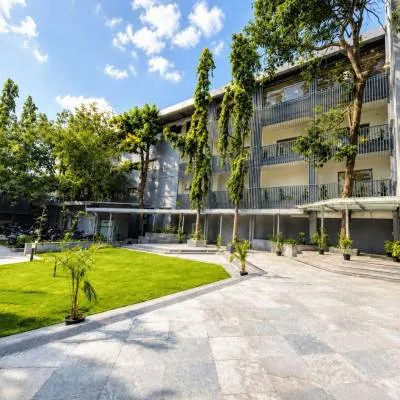
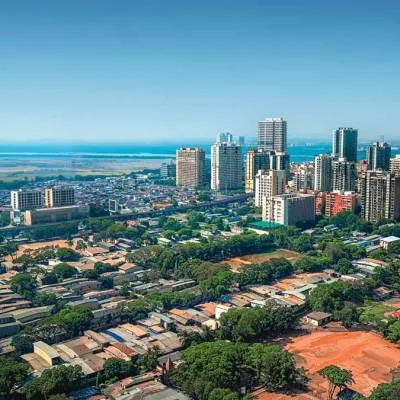

Schindler named among Forbes’ World’s Best Employers 2026
Schindler has been named among Forbes’ World’s Best Employers 2026, a global ranking recognising companies for their workplace environments.Compiled by Forbes in partnership with Statista, the ranking is based on independent employee feedback, including whether employees would recommend their organisation to friends and family.The company said the recognition reflected its focus on creating a workplace where employees can develop their expertise and build careers. ..

India needs an export-execution mindset: Vishesh Jain
Interview with Vishesh Jain, Founder & CEO, EximpleWhat gaps in India’s global trade ecosystem led you to build Eximple, and what problem did you see businesses struggling with most?Eximple came out of a problem that all three founders had seen from different choke points in the trade ecosystem. India has millions of MSMEs and manufacturers, and many of them can make products that are genuinely competitive on quality. Yet only a small fraction is able to build meaningful international businesses. In our experience, the gap is usually not manufacturing capability; it is the ability to exe..

Nuvoco reports 13.5% revenue growth in Q2 FY27
Nuvoco Vistas Corp. Ltd. reported consolidated revenue of Rs 27.9 billion for Q2 FY27, up 13.5% year on year. Cement sales volume rose 9% to 4.7 million tonnes (MMT), while EBITDA increased 11% to Rs 4.11 billion.The company said it began its cement operations in 2014 with a 2.3 MMT per annum (MMTPA) operation at Nimbol. It now aims to reach 35 MMTPA of cement capacity by FY28, nearly 15 times its initial capacity. Its portfolio spans cement, ready-mix concrete and modern building materials.On sustainability and cost efficiency, Nuvoco partnered with CleanMax for a 46.4 MW wind-solar hybrid re..
Related Articles
Latest Updates












