

Terex Launches CTL 712-45 Luffing Jib Crane at Conexpo
Equipment

Terex Launches CTL 712-45 Luffing Jib Crane at Conexpo

Terex Tower Cranes, Raimondi, CTL 712-45, luffing jib crane, Conexpo 2026, tower crane technology, high-rise construction equipment

Body:
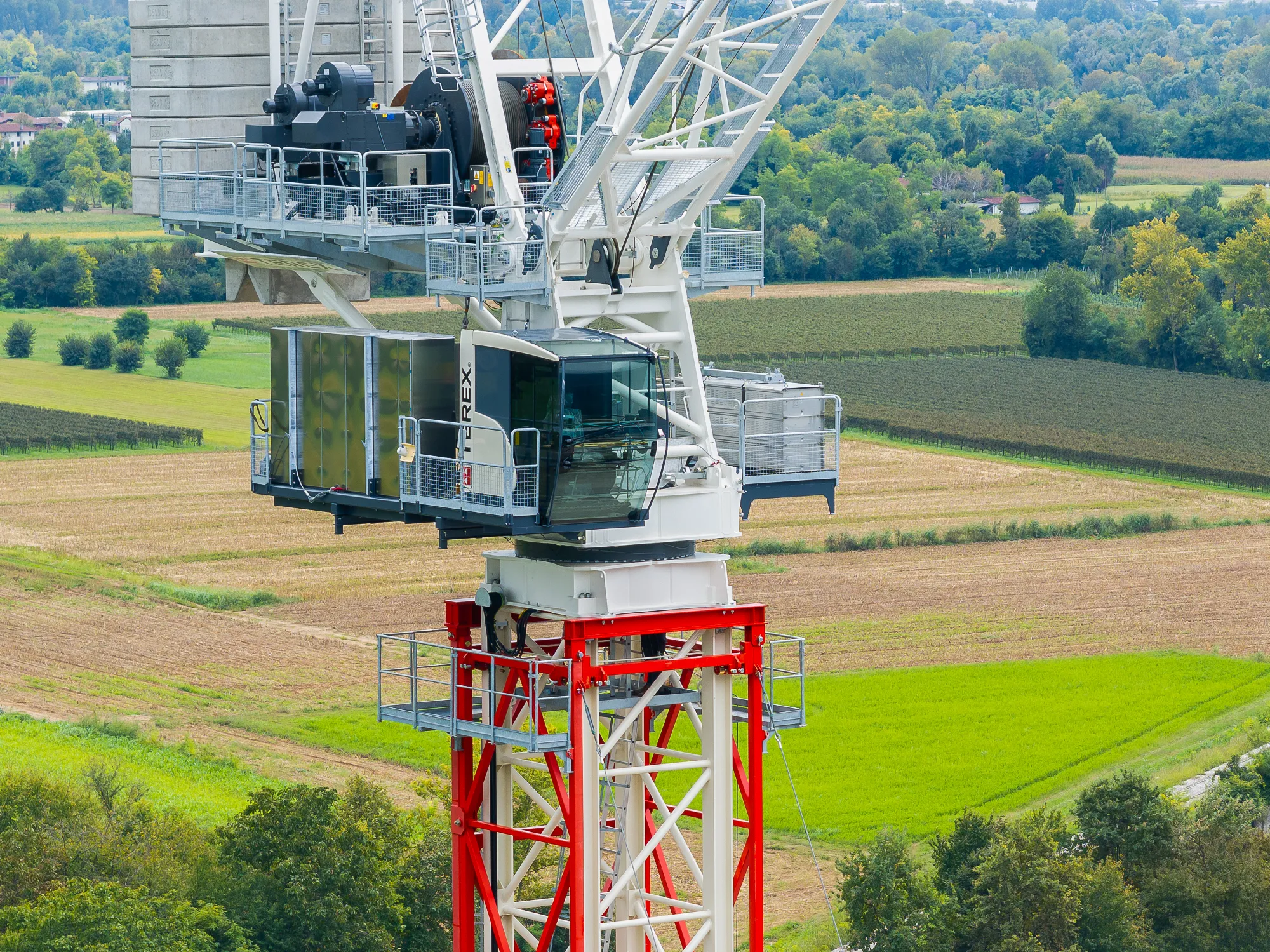
Terex Tower Cranes, now part of Raimondi, recently introduced the CTL 712-45 luffing jib crane at CONEXPO-CON/AGG 2026 in Las Vegas, expanding its portfolio of high-capacity lifting solutions for large-scale construction projects.

The new crane is designed to enhance performance, control and operational efficiency on complex high-rise developments. According to the company, the CTL 712-45 integrates advanced control technologies aimed at delivering precise load handling while improving safety and productivity on site.

The crane features a 70 m jib length and a tip load capacity of 5.8 tonnes, supported by a 134 kW hoist winch capable of reaching a maximum lifting speed of 226 m per minute in single fall. It can be installed on an HD23 mast, enabling a 63.4 m tower height in standard configuration and up to 131.2 m height under hook at maximum radius.

Fully electric in operation, the CTL 712-45 offers energy-efficient performance with reduced noise and lower environmental impact, making it suitable for urban construction environments and sustainable projects.

The model also focuses on lifecycle efficiency with simplified assembly procedures. Standardised pins and bolts, reduced tooling requirements and ground-level primary assembly help accelerate installation while improving worker safety. The crane’s design reduces the number of cables and connections, simplifying maintenance and servicing activities.

Operational precision is supported by the T-Line auto-levelling system, which maintains consistent load height during jib luffing, and T-Torque inverter technology, which enables smooth and adjustable slewing control. These systems allow operators to handle loads accurately across complex lifting operations.

The company reported strong early feedback from customers, particularly highlighting the crane’s streamlined erection process, ease of maintenance and the operator-focused S-Space cabin design. Terex Tower Cranes stated that the CTL 712-45 builds on the success of the CTL 702-32 and strengthens its offering for global high-rise construction projects.

Terex Tower Cranes, Raimondi, CTL 712-45, luffing jib crane, Conexpo 2026, tower crane technology, high-rise construction equipment Body: Terex Tower Cranes, now part of Raimondi, recently introduced the CTL 712-45 luffing jib crane at CONEXPO-CON/AGG 2026 in Las Vegas, expanding its portfolio of high-capacity lifting solutions for large-scale construction projects. The new crane is designed to enhance performance, control and operational efficiency on complex high-rise developments. According to the company, the CTL 712-45 integrates advanced control technologies aimed at delivering precise load handling while improving safety and productivity on site. The crane features a 70 m jib length and a tip load capacity of 5.8 tonnes, supported by a 134 kW hoist winch capable of reaching a maximum lifting speed of 226 m per minute in single fall. It can be installed on an HD23 mast, enabling a 63.4 m tower height in standard configuration and up to 131.2 m height under hook at maximum radius. Fully electric in operation, the CTL 712-45 offers energy-efficient performance with reduced noise and lower environmental impact, making it suitable for urban construction environments and sustainable projects. The model also focuses on lifecycle efficiency with simplified assembly procedures. Standardised pins and bolts, reduced tooling requirements and ground-level primary assembly help accelerate installation while improving worker safety. The crane’s design reduces the number of cables and connections, simplifying maintenance and servicing activities. Operational precision is supported by the T-Line auto-levelling system, which maintains consistent load height during jib luffing, and T-Torque inverter technology, which enables smooth and adjustable slewing control. These systems allow operators to handle loads accurately across complex lifting operations. The company reported strong early feedback from customers, particularly highlighting the crane’s streamlined erection process, ease of maintenance and the operator-focused S-Space cabin design. Terex Tower Cranes stated that the CTL 712-45 builds on the success of the CTL 702-32 and strengthens its offering for global high-rise construction projects.

Next Story
Infrastructure Urban

Centre Clears Power Distribution Upgrade for Uttar Pradesh

The Central Government has approved power distribution projects worth Rs 407.39 billion for Uttar Pradesh under the Revamped Distribution Sector Scheme (RDSS). The investment will be used to modernise the state's electricity distribution infrastructure and strengthen network capacity across urban and rural areas. The package targets one of the country's largest distribution networks as the state experiences rapid urbanisation and rising electricity consumption. Planned interventions include the strengthening of distribution lines, modernisation of substations, replacement of ageing electrical ..

Next Story
Infrastructure Energy

India Data Centres To Consume 191 TWh By 2040 Driving Renewables

A Wood Mackenzie report says India's operational data centre capacity is projected to increase more than fivefold to 12 gigawatt (GW) by 2030 from 2.2 GW in 2025 as artificial intelligence (AI) and cloud computing drive demand. It projects electricity consumption to rise from 10 terawatt-hour (TWh) in 2025 to 191 TWh by 2040. The study forecasts a compound annual growth rate of around 40 per cent and notes AI-dedicated capacity will surge nearly 24-fold from 275 megawatt (MW) in 2025 to 6,546 MW by 2030. The report places India's digital economy at Rs 32 trillion (tn) in 2025 and says it contr..

Next Story
Infrastructure Transport

Hydrogen Train Completes 1,200 Kilometres Of Trials

India's first hydrogen train was flagged off between Jind and Sonipat on July 17 and has travelled over 1,200 kilometres in trials, saving diesel consumption of more than 3,200 litres, a Railway Ministry press release said. The deployment marks the introduction of a zero-emission fuel cell train into route testing and represents a milestone in domestic rail innovation. The train generates electricity onboard through a chemical reaction between hydrogen and oxygen, producing electricity to propel the vehicle while emitting only water vapour as a by-product. There is no smoke and no tailpipe car..

Advertisement

Subscribe to Our Newsletter

Get daily newsletters around different themes from Construction world.

STAY CONNECTED

Advertisement

Advertisement

Advertisement