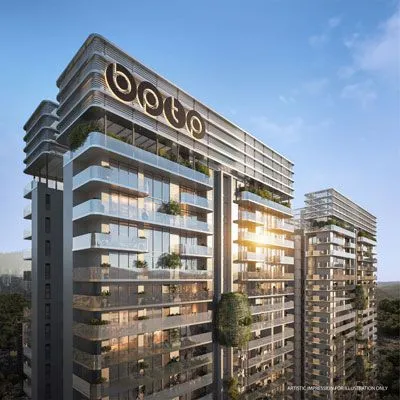


GFRG demonstrated at IIT-Madras campus
Real Estate

GFRG demonstrated at IIT-Madras campus

With the idea of demonstrating this building system using the technology developed, a two-storey glass fibre-reinforced gypsum (GFRG) demonstration building of 1,981 sq ft was constructed at the IIT-Madras campus in 2013. Dr A Meher Prasad, Professor, Structural Engineering Division, Department of Civil Engineering, IIT Madras, shares more…

The entire superstructure was completed and rendered fit for occupation within 29 days after the laying of the foundation. There was a saving of over 50 per cent in embodied energy for GFRG construction. The demo building was constructed using glass fibre-reinforced gypsum panels, originally designed for use as walls by Rapid Building Systems, Australia. The IIT-Madras research group extended the application of this product for the entire building system – including floors, roofs and staircases – thus significantly reducing the consumption of reinforced cement concrete (RCC). The team also collaborated in the indigenous development of an excellent waterproofing material, which is essential for prolonged durability of GFRG panels, especially in the case of roofs and toilets.

Cost comparison
Currently, the cost of GFRG construction stands at Rs, 1,600 to 1,700 per sq. ft. The GFRG demo building inside the IIT-Madras campus, covering a total plinth area of about 1,981 sq ft, costed about Rs 23 lakh A comparison of the cost of this building with a conventional building of the same plan showed that the demo building was 25 per cent cheaper compared to the latter.

- SERAPHINA D’SOUZA

With the idea of demonstrating this building system using the technology developed, a two-storey glass fibre-reinforced gypsum (GFRG) demonstration building of 1,981 sq ft was constructed at the IIT-Madras campus in 2013. Dr A Meher Prasad, Professor, Structural Engineering Division, Department of Civil Engineering, IIT Madras, shares more… The entire superstructure was completed and rendered fit for occupation within 29 days after the laying of the foundation. There was a saving of over 50 per cent in embodied energy for GFRG construction. The demo building was constructed using glass fibre-reinforced gypsum panels, originally designed for use as walls by Rapid Building Systems, Australia. The IIT-Madras research group extended the application of this product for the entire building system – including floors, roofs and staircases – thus significantly reducing the consumption of reinforced cement concrete (RCC). The team also collaborated in the indigenous development of an excellent waterproofing material, which is essential for prolonged durability of GFRG panels, especially in the case of roofs and toilets. Cost comparison Currently, the cost of GFRG construction stands at Rs, 1,600 to 1,700 per sq. ft. The GFRG demo building inside the IIT-Madras campus, covering a total plinth area of about 1,981 sq ft, costed about Rs 23 lakh A comparison of the cost of this building with a conventional building of the same plan showed that the demo building was 25 per cent cheaper compared to the latter. - SERAPHINA D’SOUZA

Related Stories

Gold Stories
Next Story
Infrastructure Urban

KONE Opens India's First Digital Experience Centre in Pune

KONE, a global elevator and escalator manufacturer, has inaugurated its first Digital Experience Centre (DEC) in India, located in Pune. The facility aims to showcase how artificial intelligence (AI), connectivity and data-driven technologies can enhance customer experiences and improve building operations.The centre was inaugurated by Jussi Herlin, Executive Vice Chair, KONE Corporation; Philippe Delorme, President and CEO, KONE; and Nandan Nilekani, Co-founder and Chairman of the Board, Infosys.Designed as an interactive customer environment, the facility demonstrates digital solutions cover..

Next Story
Infrastructure Urban

CII GreenCo Launches Circularity Guidelines for Indian Industry

The Confederation of Indian Industry (CII) GreenCo Council has launched the CII GreenCo Circularity Guidelines – Pilot Version at the 17th CII GreenCo Waste & Resource Management Summit 2026 in Chennai. The initiative aims to strengthen resource efficiency, waste reduction and circular economy practices across Indian manufacturing and process industries.The guidelines introduce a structured framework with circularity indices covering raw materials, consumables, packaging and other resource inputs. These indicators will help industries assess existing practices, identify opportunities to ..

Next Story
Infrastructure Energy

Global Electronics Association Launches IPC-1783-CO2E Standard

The Global Electronics Association has introduced IPC-1783-CO2E, a new international standard aimed at improving consistency, transparency and comparability in product carbon footprint reporting across the electronics manufacturing industry.The standard, titled International Standard for Data Collection and Reporting of CO2 Equivalent (CO2e) Emissions for the Electronics Manufacturing Supply Chain, provides industry-specific guidance for collecting, estimating and reporting carbon emissions data.With increasing regulatory requirements and customer expectations, electronics manufacturers face c..

Advertisement

Subscribe to Our Newsletter

Get daily newsletters around different themes from Construction world.

STAY CONNECTED

Advertisement

SPECIAL OFFER
QR Code