Maharashtra Transfers 118 Acres In Malad For Dharavi Rehabilitation
Real Estate

Maharashtra Transfers 118 Acres In Malad For Dharavi Rehabilitation

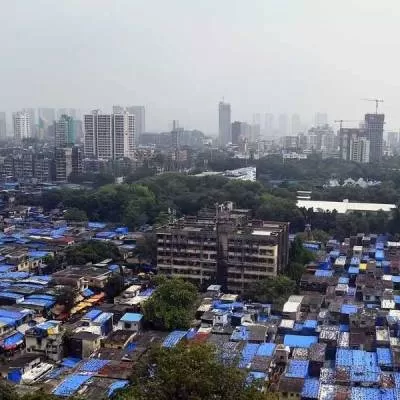
The Maharashtra government has handed over 118 acres of land in Malad, Mumbai, to be used for the rehabilitation of residents affected by the Dharavi redevelopment project. The transfer is intended to provide space for temporary and permanent housing solutions while redevelopment proceeds at the original site. Officials described the move as a step towards enabling the systematic relocation and upliftment of residents who have long lived in informal settlements. The land transfer forms part of a broader urban renewal effort.

Placing rehabilitation sites within the city aims to reduce disruption to livelihoods and social networks by keeping communities close to employment and urban services. The Malad land is expected to allow planners to design housing that complies with building regulations and urban design standards, improving safety and living conditions. Coordination between state authorities and municipal agencies will be necessary to integrate the site with transport links and utilities. Stakeholders must coordinate to deliver timely utility connections.

The rehabilitation effort is likely to focus on ensuring access to basic services such as water, sanitation and healthcare as well as creating open spaces and community facilities. Attention to construction quality and maintenance arrangements will be important to ensure that new housing endures and serves residents for the long term. Resident consultation and fair allotment processes will be key to minimising grievances during relocation. Inclusive design is necessary to address diverse household needs.

Authorities will need to publish detailed plans and timelines and to provide transparent information on eligibility and compensation so that affected families can plan effectively. Civil society groups and urban planners said ongoing oversight and participatory mechanisms are essential to balance redevelopment goals with social justice. The success of the relocation will be measured by improved living conditions and the preservation of livelihoods. Monitoring will be required.

The Maharashtra government has handed over 118 acres of land in Malad, Mumbai, to be used for the rehabilitation of residents affected by the Dharavi redevelopment project. The transfer is intended to provide space for temporary and permanent housing solutions while redevelopment proceeds at the original site. Officials described the move as a step towards enabling the systematic relocation and upliftment of residents who have long lived in informal settlements. The land transfer forms part of a broader urban renewal effort. Placing rehabilitation sites within the city aims to reduce disruption to livelihoods and social networks by keeping communities close to employment and urban services. The Malad land is expected to allow planners to design housing that complies with building regulations and urban design standards, improving safety and living conditions. Coordination between state authorities and municipal agencies will be necessary to integrate the site with transport links and utilities. Stakeholders must coordinate to deliver timely utility connections. The rehabilitation effort is likely to focus on ensuring access to basic services such as water, sanitation and healthcare as well as creating open spaces and community facilities. Attention to construction quality and maintenance arrangements will be important to ensure that new housing endures and serves residents for the long term. Resident consultation and fair allotment processes will be key to minimising grievances during relocation. Inclusive design is necessary to address diverse household needs. Authorities will need to publish detailed plans and timelines and to provide transparent information on eligibility and compensation so that affected families can plan effectively. Civil society groups and urban planners said ongoing oversight and participatory mechanisms are essential to balance redevelopment goals with social justice. The success of the relocation will be measured by improved living conditions and the preservation of livelihoods. Monitoring will be required.

Next Story
Infrastructure Urban

Vedanta Secures AA+ Rating from ICRA

Vedanta Group has received its highest domestic credit rating in over a decade after ICRA upgraded the long-term ratings of Vedanta Limited and Vedanta Aluminium Metal Limited to AA+ with a Stable outlook. Talwandi Sabo Power Limited was also upgraded to AA-/Stable from A+/Watch Developing, while the group’s short-term rating was reaffirmed at A1+.The rating action marks Vedanta’s highest domestic credit rating since 2014. Vedanta Limited and Vedanta Aluminium Metal Limited, two of the largest entities emerging from the demerger, together account for over 75 per cent of the group’s long-..

Next Story
Infrastructure Urban

Netrasemi Launches Edge AI Chip A2000

Fabless semiconductor startup Netrasemi has launched its flagship Edge AI system-on-chip, A2000, after achieving successful silicon bring-up. Fabricated at TSMC’s 12 nm technology node, the chip is designed for on-device AI, smart vision, real-time video analytics and secure edge computing.A2000 features Netrasemi’s in-house Neural Processing Unit, Vision Processing Unit, Image Signal Processor, crypto engines and other hardware acceleration IP cores. It also uses the company’s patented heterogeneous graph-stream parallel processing architecture.The chip targets applications such as smar..

Next Story
Infrastructure Energy

Sigenergy Launches AI Agent For Energy Systems

Sigenergy has introduced SigenAgent, described as the energy industry’s first all-domain AI agent, during its ‘AI in All’ event. The platform is designed to move solar-and-storage systems from reactive hardware to autonomous, goal-driven energy systems for households and businesses.SigenAgent works through a continuous loop of perception, reasoning and action. It analyses real-time factors such as weather patterns, electricity prices and grid conditions to determine and execute the most efficient operating strategy. Users can set broad goals, such as reducing electricity bills or securin..

Advertisement

Subscribe to Our Newsletter

Get daily newsletters around different themes from Construction world.

STAY CONNECTED

Advertisement

Advertisement

Advertisement

-->