
Personalisation is a key feature of smart offices
Real Estate

Personalisation is a key feature of smart offices

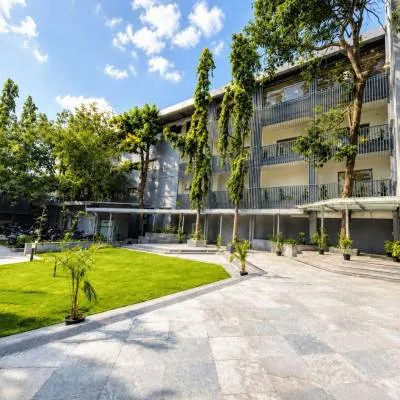
In this age of smart offices, people have higher expectations from their workspaces, including the option to personalise HVAC and light settings for their workstations. Rajinder Kumar & Associates (RKA) has implemented this level of personalisation in the 54-acre HCL Technologies campus in Noida.

Signify’s Interact Office platform for large offices, launched in India early this year, enables employees to personalise the intensity and colour of light at their workstation, thereby enhancing their productivity, shares Sumit Padmakar Joshi, Vice-Chairman and Managing Director, Signify Innovations India (previously Philips Lighting).

Siemens offers ‘Comfy’, a workplace experience app to bridge the gap between rising expectations of employees and the physical workplace.

“Workers also expect lights, window shades and HVAC to adjust per occupancy and the weather and circadian lighting systems that mimic natural daylight,” adds Bipratip Dhar, Principal Architect, Epsilon Architecture. “We use network-connected lights powered by ethernet cables connected to sensors to empower clients to monitor temperature, light and occupancy. Thermostats, virtual reality cameras, smart switches, dimmers and relays are some other components of the smart lighting and HVAC systems making up a smart office.”

To this, Rahul Kumar, Principal Architect, RKA adds carbon dioxide air sensor levels that help monitor air quality in the office and the importance of green plants for contributing to worker wellbeing and office smartness. “Keeping wellbeing in mind, it is important to think of other ways of air circulation other than HVAC,” he says. “Chilling temperatures aren’t the best for the body so wherever possible we incorporate fans and other methods.”

- CHARU BAHRI

In this age of smart offices, people have higher expectations from their workspaces, including the option to personalise HVAC and light settings for their workstations. Rajinder Kumar & Associates (RKA) has implemented this level of personalisation in the 54-acre HCL Technologies campus in Noida. Signify’s Interact Office platform for large offices, launched in India early this year, enables employees to personalise the intensity and colour of light at their workstation, thereby enhancing their productivity, shares Sumit Padmakar Joshi, Vice-Chairman and Managing Director, Signify Innovations India (previously Philips Lighting). Siemens offers ‘Comfy’, a workplace experience app to bridge the gap between rising expectations of employees and the physical workplace. “Workers also expect lights, window shades and HVAC to adjust per occupancy and the weather and circadian lighting systems that mimic natural daylight,” adds Bipratip Dhar, Principal Architect, Epsilon Architecture. “We use network-connected lights powered by ethernet cables connected to sensors to empower clients to monitor temperature, light and occupancy. Thermostats, virtual reality cameras, smart switches, dimmers and relays are some other components of the smart lighting and HVAC systems making up a smart office.” To this, Rahul Kumar, Principal Architect, RKA adds carbon dioxide air sensor levels that help monitor air quality in the office and the importance of green plants for contributing to worker wellbeing and office smartness. “Keeping wellbeing in mind, it is important to think of other ways of air circulation other than HVAC,” he says. “Chilling temperatures aren’t the best for the body so wherever possible we incorporate fans and other methods.” - CHARU BAHRI

Next Story
Infrastructure Transport

MMRDA advances 250 m on Orange Gate–Marine Drive tunnel

The Mumbai Metropolitan Region Development Authority (MMRDA) has completed 250 m of underground tunnelling for the Orange Gate–Marine Drive Urban Road Tunnel using India’s largest slurry shield tunnel boring machine (TBM) deployed for an urban road project.The project involves twin tunnels extending over 7 km beneath critical transport corridors, including Central Railway, Western Railway and Metro Line 3. The work requires high-precision engineering to navigate densely developed urban infrastructure.Once completed, the tunnel is expected to reduce travel time between Orange Gate and Marin..

Next Story
Infrastructure Urban

Hindustan Zinc Pays Rs 188.46 Billion in FY26

Hindustan Zinc contributed Rs 188.46 billion to the public exchequer in FY 2025-26, according to its 9th Tax Transparency Report. The contribution, equivalent to 46 per cent of the company’s revenue, included direct and indirect taxes, government royalties, dividends to the Government of India, withholding taxes and other statutory levies.The company’s five-year cumulative contribution to the exchequer stood at Rs 915.72 billion. In FY26, Hindustan Zinc reported revenue of Rs 408.44 billion, EBITDA of Rs 221.62 billion and profit after tax of Rs 138.32 billion. It also achieved its highest..

Next Story
Infrastructure Urban

World of Concrete India 2026 Opens in Mumbai

Informa Markets in India will host the 12th edition of World of Concrete India 2026 from 3–5 June 2026 at the Bombay Exhibition Centre, Mumbai. The specialised B2B exhibition will bring together manufacturers, suppliers, contractors, developers, architects, consultants, infrastructure companies, project leaders and government stakeholders.The event is expected to feature over 350 brands and more than 18,000 trade professionals. It will cover concrete and cement, dry mortar, precast technologies, formwork, construction chemicals, industrial and commercial flooring, scaffolding, safety solutio..

Advertisement

Subscribe to Our Newsletter

Get daily newsletters around different themes from Construction world.

STAY CONNECTED

Advertisement

Advertisement

Advertisement