Phase I Of Wayanad Township Inaugurated, Keys Handed To 178 Families
Real Estate

Phase I Of Wayanad Township Inaugurated, Keys Handed To 178 Families

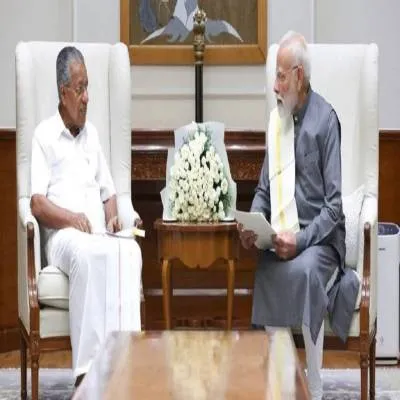
Phase I of the Wayanad township was inaugurated and keys were handed to 178 families as the state set new housing and relief measures. Chief Minister Pinarayi Vijayan characterised the initiative as an act of compassion and said it showed the Kerala model of solidarity amid obstacles including denial of Central assistance and attempts to undermine the rehabilitation. He credited unity and support for making the project a reality.

The government said it had provided Rs6,000 as monthly rent for all disaster survivors and allocated Rs172 million (Rs172 mn) for livelihood support and Rs20 million (Rs20 mn) to assist 21 children who lost their parents. In addition, 858 families were to receive food coupons of Rs1,000 per month. The Chief Minister’s Distress Relief Fund received Rs7.7398 billion (Rs7.7398 bn) for the project while the State decided to assume loan arrears totalling Rs187.5 million (Rs187.5 mn) for 555 disaster victims after the Union government did not provide support. The township was built by the Uralungal Labour Contract Society, which deployed thousands of workers with precise planning.

The township includes community facilities and infrastructure such as a community hall, a disaster shelter, a football ground, a disaster memorial, shops, a materials depot, a water reservoir and sewage treatment plants along with an underground electricity distribution network and drainage. It includes a water tank with a capacity of 0.95 million litres (0.95 mn litres) and a solar power plant of two kilowatt (kW) capacity in each house. The layout is planned in five zones and is built in 35 clusters of eight to 10 houses, each cluster around a green courtyard. Individual owners will receive separate title deeds for their houses.

Construction of houses for remaining beneficiaries was nearing completion with keys expected before the next monsoon and a revival plan for affected businesses is being implemented. The Revenue Minister K. Rajan said the township exemplified the Left Democratic Front government’s approach of delivering beyond ceremonials. Officials said the project combined relief measures with long term livelihood and infrastructure support.

Phase I of the Wayanad township was inaugurated and keys were handed to 178 families as the state set new housing and relief measures. Chief Minister Pinarayi Vijayan characterised the initiative as an act of compassion and said it showed the Kerala model of solidarity amid obstacles including denial of Central assistance and attempts to undermine the rehabilitation. He credited unity and support for making the project a reality. The government said it had provided Rs6,000 as monthly rent for all disaster survivors and allocated Rs172 million (Rs172 mn) for livelihood support and Rs20 million (Rs20 mn) to assist 21 children who lost their parents. In addition, 858 families were to receive food coupons of Rs1,000 per month. The Chief Minister’s Distress Relief Fund received Rs7.7398 billion (Rs7.7398 bn) for the project while the State decided to assume loan arrears totalling Rs187.5 million (Rs187.5 mn) for 555 disaster victims after the Union government did not provide support. The township was built by the Uralungal Labour Contract Society, which deployed thousands of workers with precise planning. The township includes community facilities and infrastructure such as a community hall, a disaster shelter, a football ground, a disaster memorial, shops, a materials depot, a water reservoir and sewage treatment plants along with an underground electricity distribution network and drainage. It includes a water tank with a capacity of 0.95 million litres (0.95 mn litres) and a solar power plant of two kilowatt (kW) capacity in each house. The layout is planned in five zones and is built in 35 clusters of eight to 10 houses, each cluster around a green courtyard. Individual owners will receive separate title deeds for their houses. Construction of houses for remaining beneficiaries was nearing completion with keys expected before the next monsoon and a revival plan for affected businesses is being implemented. The Revenue Minister K. Rajan said the township exemplified the Left Democratic Front government’s approach of delivering beyond ceremonials. Officials said the project combined relief measures with long term livelihood and infrastructure support.

Related Stories

Gold Stories

Next Story
Infrastructure Urban

KONE Opens India's First Digital Experience Centre in Pune

KONE, a global elevator and escalator manufacturer, has inaugurated its first Digital Experience Centre (DEC) in India, located in Pune. The facility aims to showcase how artificial intelligence (AI), connectivity and data-driven technologies can enhance customer experiences and improve building operations.The centre was inaugurated by Jussi Herlin, Executive Vice Chair, KONE Corporation; Philippe Delorme, President and CEO, KONE; and Nandan Nilekani, Co-founder and Chairman of the Board, Infosys.Designed as an interactive customer environment, the facility demonstrates digital solutions cover..

Next Story
Infrastructure Urban

CII GreenCo Launches Circularity Guidelines for Indian Industry

The Confederation of Indian Industry (CII) GreenCo Council has launched the CII GreenCo Circularity Guidelines – Pilot Version at the 17th CII GreenCo Waste & Resource Management Summit 2026 in Chennai. The initiative aims to strengthen resource efficiency, waste reduction and circular economy practices across Indian manufacturing and process industries.The guidelines introduce a structured framework with circularity indices covering raw materials, consumables, packaging and other resource inputs. These indicators will help industries assess existing practices, identify opportunities to ..

Next Story
Infrastructure Energy

Global Electronics Association Launches IPC-1783-CO2E Standard

The Global Electronics Association has introduced IPC-1783-CO2E, a new international standard aimed at improving consistency, transparency and comparability in product carbon footprint reporting across the electronics manufacturing industry.The standard, titled International Standard for Data Collection and Reporting of CO2 Equivalent (CO2e) Emissions for the Electronics Manufacturing Supply Chain, provides industry-specific guidance for collecting, estimating and reporting carbon emissions data.With increasing regulatory requirements and customer expectations, electronics manufacturers face c..

Advertisement

Subscribe to Our Newsletter

Get daily newsletters around different themes from Construction world.

STAY CONNECTED

Advertisement

SPECIAL OFFER
QR Code