Real estate players in a huge soup because of CoVID-19
02 Apr 2020
6 Min Read
Editorial Team
Share
Amid the ongoing Coronavirus crisis, the lockdown announcement has stalled construction activities. Although the Finance Minister has announced a Construction Workers' Fund , in India, with construction activities coming to a standstill, there is a lot of concern about the plight of construction workers in the cafe of the COVID-19 storm and the consequent lockdown.
The worry is the damage that incomplete and unfinished work across construction sites will cause, as also time that will be lost. Given this situation, the option to uplift lockdown on construction workers, obviously with safety measures being strictly implemented, is one that needs to be considered by the authorities, believes Dr Niranjan Hiranandani, Co-Founder and Managing Director, Hiranandani Group, and President, ASSOCHAM and NAREDCO. “The human resource is largely still at construction sites, and instead of keeping them in a ‘lockdown’ situation, giving them some activity will also keep them occupied – as also help avoid major economic losses as a result of stoppage of work at sites,” he adds.
To delve deeper into the outcome of the COVID-19 crisis on the real estate and building industry and how the industry is coping in the current scenario, CONSTRUCTION WORLD hosted a video interview with Dr Hiranandani.
Excerpts:
How the Hiranandani Group is managing its workforce: “It is a difficult task that we have to take up, and really, with the current situation, we have no choice. We have about 4,000 workers on site and we are trying to take care of all of them, to ensure they all have food and provide all the essentials; we are sanitising all the areas of the sites, teaching the labourers social distancing, which is difficult but we have been ultimately been able to do it. We check the temperatures of the workers on a daily basis. Most of the labourers are bored because they have nothing to do in these confined spaces. And if we leave them out, they are likely to leave the place.”
The outcome of the crisis on the real estate and building industry: “We are not able to judge that yet. The first thing is to see that we are able to save the country. The focus of the Prime Minister and the country is to take care of that first. Secondly, speaking about the economic situation, there are certain measures taken in terms of finance matters, however I feel that not enough has been done. Real estate players are already in a huge soup because they are not able to pay the salaries of workers, although the intent of the developer is to pay salaries. This will impact the economy of the real estate industry in the months to come. It is important to see how the next day of the lockdown pans out.”
A post-Coronavirus recovery process for the building industry: Firstly, liquidity is an issue. Banks are the only ones flushed with liquidity. NBFCs and companies are devoid of liquidity. So, it is important to see that liquidity is available in all segments. All credit limits outstanding as on March 2020 should be reconsidered – this was also done in 2008. We need to do that again. Secondly, while I commend the efforts of the government, one thing it has just not paid attention to is the demand side of the economy. The government needs to reduce GST at least between 25 and 50 per cent in the next 6-12 months. That is the need of the hour.”
Take on real estate prices considering a sizeable unsold inventory: You cannot sell real it at less than 10 per cent of the Ready Reckoner Rate. If they reduce real estate prices, both the buyer and the seller will have to pay a tax amount of about 35 per cent of the Ready Reckoner value and the price at which you are getting the product. So, reducing the Ready Reckoner less than 10 per cent does not make sense. Also, speaking about the notion of unsold inventory, for empty flats – on one side we want to increase the housing stock and on the other hand, if your house is empty for more than two years you have to pay notional rent. The law itself is a contradiction. So the government has to amend its law; it needs to make the first move. The Ready Reckoner rates need to be revised. The governments are also bleeding because of the Ready Reckoner rates because they are paying a high cost. Let me give an example: I went to Alibaug to buy a piece of land from a farmer. We finalised the deal and I gave him Rs 5 lakh as an advance. After two weeks, he says he does not want to sell his land and asks me to have my money back as I had not signed any agreement. The reason he tells me – around the vicinity, the government has bought land for three times the rate. And so he tells me I should give him at least two times the rate. But why? When that is not the rate going on in that place? So, the government paying so much does not make sense because it is your and my money that is going into these projects.”
Bounce back time: “I think it will take about a year to come into the complete mode and recover after the closure of the Conoravirus.”
Dr Niranjan Hiranandani will also be a guest panellist in Construction World's webinar on ‘The Architect Challenge’ on Tuesday, April 7. If you haven't registered yet, do so here.
For many in the architecture and design community too, the rapid spread of COVID-19 has caused them to reevaluate their life’s work, and it might mean that architects have to design for a world that will never be quite the same. Read more on the COVID-19 impact on the architecture industry here.
Amid the ongoing Coronavirus crisis, the lockdown announcement has stalled construction activities. Although the Finance Minister has announced a Construction Workers' Fund , in India, with construction activities coming to a standstill, there is a lot of concern about the plight of construction workers in the cafe of the COVID-19 storm and the consequent lockdown.
The worry is the damage that incomplete and unfinished work across construction sites will cause, as also time that will be lost. Given this situation, the option to uplift lockdown on construction workers, obviously with safety measures being strictly implemented, is one that needs to be considered by the authorities, believes Dr Niranjan Hiranandani, Co-Founder and Managing Director, Hiranandani Group, and President, ASSOCHAM and NAREDCO. “The human resource is largely still at construction sites, and instead of keeping them in a ‘lockdown’ situation, giving them some activity will also keep them occupied – as also help avoid major economic losses as a result of stoppage of work at sites,” he adds.
To delve deeper into the outcome of the COVID-19 crisis on the real estate and building industry and how the industry is coping in the current scenario, CONSTRUCTION WORLD hosted a video interview with Dr Hiranandani.
Excerpts:
How the Hiranandani Group is managing its workforce: “It is a difficult task that we have to take up, and really, with the current situation, we have no choice. We have about 4,000 workers on site and we are trying to take care of all of them, to ensure they all have food and provide all the essentials; we are sanitising all the areas of the sites, teaching the labourers social distancing, which is difficult but we have been ultimately been able to do it. We check the temperatures of the workers on a daily basis. Most of the labourers are bored because they have nothing to do in these confined spaces. And if we leave them out, they are likely to leave the place.”
The outcome of the crisis on the real estate and building industry: “We are not able to judge that yet. The first thing is to see that we are able to save the country. The focus of the Prime Minister and the country is to take care of that first. Secondly, speaking about the economic situation, there are certain measures taken in terms of finance matters, however I feel that not enough has been done. Real estate players are already in a huge soup because they are not able to pay the salaries of workers, although the intent of the developer is to pay salaries. This will impact the economy of the real estate industry in the months to come. It is important to see how the next day of the lockdown pans out.”
A post-Coronavirus recovery process for the building industry: Firstly, liquidity is an issue. Banks are the only ones flushed with liquidity. NBFCs and companies are devoid of liquidity. So, it is important to see that liquidity is available in all segments. All credit limits outstanding as on March 2020 should be reconsidered – this was also done in 2008. We need to do that again. Secondly, while I commend the efforts of the government, one thing it has just not paid attention to is the demand side of the economy. The government needs to reduce GST at least between 25 and 50 per cent in the next 6-12 months. That is the need of the hour.”
Take on real estate prices considering a sizeable unsold inventory: You cannot sell real it at less than 10 per cent of the Ready Reckoner Rate. If they reduce real estate prices, both the buyer and the seller will have to pay a tax amount of about 35 per cent of the Ready Reckoner value and the price at which you are getting the product. So, reducing the Ready Reckoner less than 10 per cent does not make sense. Also, speaking about the notion of unsold inventory, for empty flats – on one side we want to increase the housing stock and on the other hand, if your house is empty for more than two years you have to pay notional rent. The law itself is a contradiction. So the government has to amend its law; it needs to make the first move. The Ready Reckoner rates need to be revised. The governments are also bleeding because of the Ready Reckoner rates because they are paying a high cost. Let me give an example: I went to Alibaug to buy a piece of land from a farmer. We finalised the deal and I gave him Rs 5 lakh as an advance. After two weeks, he says he does not want to sell his land and asks me to have my money back as I had not signed any agreement. The reason he tells me – around the vicinity, the government has bought land for three times the rate. And so he tells me I should give him at least two times the rate. But why? When that is not the rate going on in that place? So, the government paying so much does not make sense because it is your and my money that is going into these projects.”
Bounce back time: “I think it will take about a year to come into the complete mode and recover after the closure of the Conoravirus.”
Dr Niranjan Hiranandani will also be a guest panellist in Construction World's webinar on ‘The Architect Challenge’ on Tuesday, April 7. If you haven't registered yet, do so here. For many in the architecture and design community too, the rapid spread of COVID-19 has caused them to reevaluate their life’s work, and it might mean that architects have to design for a world that will never be quite the same. Read more on the COVID-19 impact on the architecture industry here. We also conducted our first webinar on ‘Infrastructure: National Infrastructure Pipeline – the Rs 102 trillion opportunity’, where our esteemed panellists shared their views on the way forward for India’s infrastructure. Also view our complete webinar calendar and previous webinars here.
Adani begins construction of Dharavi rehabilitation homes
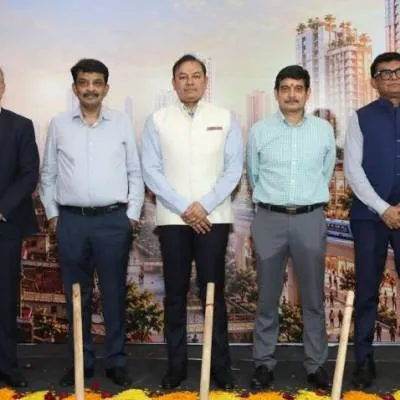
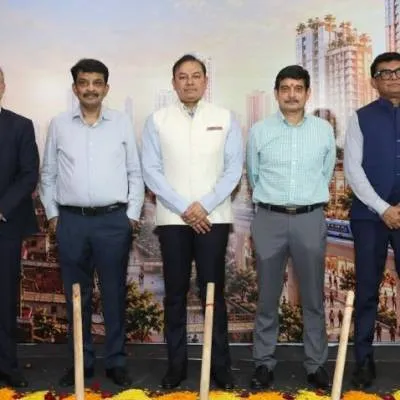
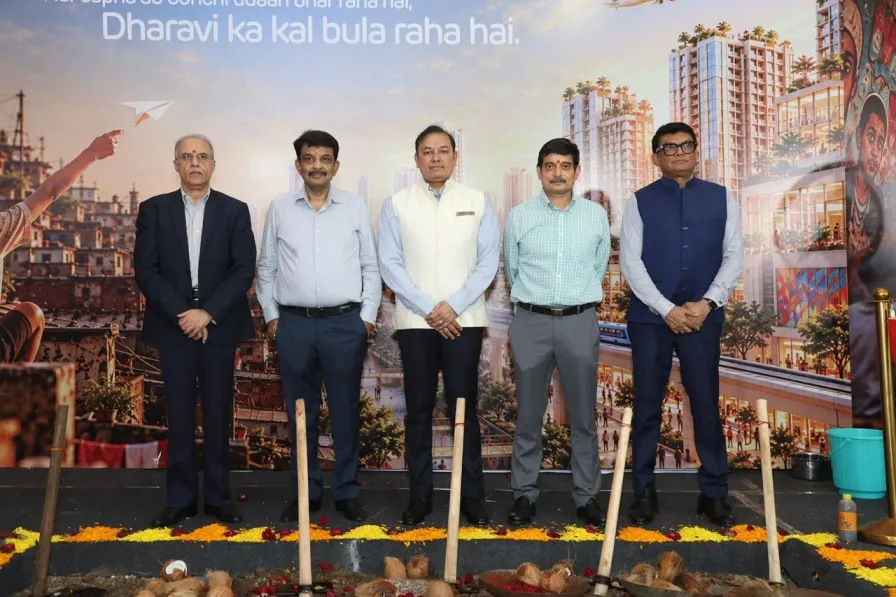
Construction of rehabilitation homes for eligible Dharavi residents has commenced at the 22-acre Matunga railway site, following a Bhoomi Poojan ceremony performed by Pranav Adani, Director, Adani Enterprises (AEL). The project, being implemented by Adani Navbharat Developers (ANDPL), envisages 10 towers comprising 10,432 rehabilitation apartments and 1,379 commercial and industrial units.Under the in-situ rehabilitation scheme, eligible residents will receive homes measuring 350 sq ft. Residents from Sectors 6 and 1 will be accommodated at Matunga first, followed by nearly 4,500 apartments fo..
Adani begins construction of Dharavi rehabilitation homes
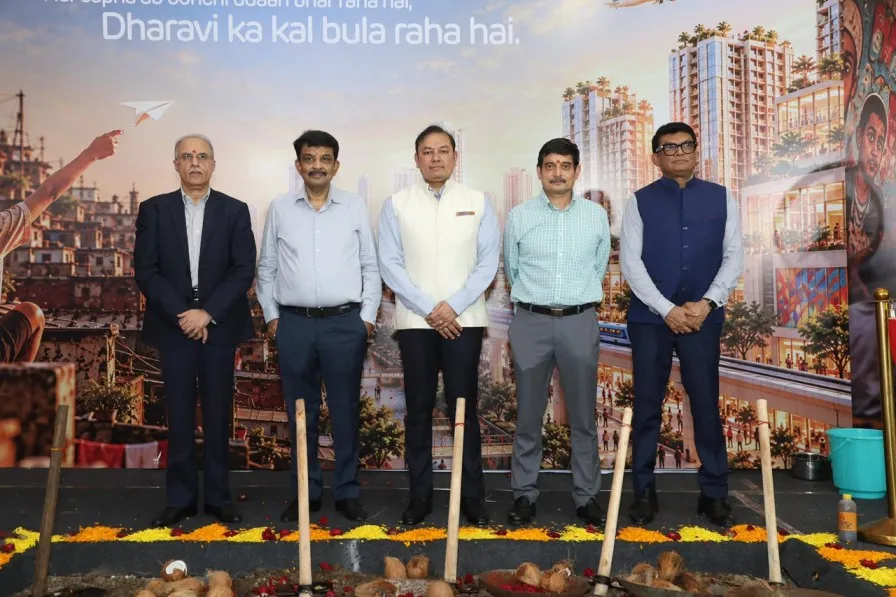
Construction of rehabilitation homes for eligible Dharavi residents has commenced at the 22-acre Matunga railway site, following a Bhoomi Poojan ceremony performed by Pranav Adani, Director, Adani Enterprises (AEL). The project, being implemented by Adani Navbharat Developers (ANDPL), envisages 10 towers comprising 10,432 rehabilitation apartments and 1,379 commercial and industrial units.Under the in-situ rehabilitation scheme, eligible residents will receive homes measuring 350 sq ft. Residents from Sectors 6 and 1 will be accommodated at Matunga first, followed by nearly 4,500 apartments fo..
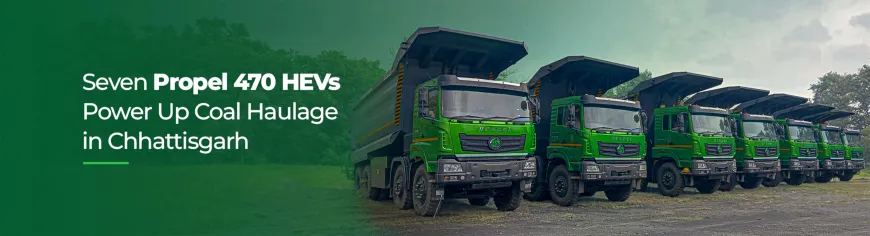
Seven Propel 470 HEV electric tippers go to work on coal haulage in Chhattisgarh
Propel EV, the electric mobility division of Propel Industries and India's No. 1 electric tipper brand, has deployed seven 470 HEV electric trucks with a leading coal-haulage contractor at one of India's largest opencast coal mines in Chhattisgarh. The trucks are in daily operation, moving coal on continuous haul cycles in one of the most demanding applications in Indian mining.Why Electric - and Why CoalCoal haulage runs round the clock: heavy loads, long haul cycles, steep ramps and abrasive dust. It is also where diesel hurts most. Engines run continuously, fuel is the largest single operat..