
Can India Build the Infrastructure for Its AI Ambition?
Technology

Can India Build the Infrastructure for Its AI Ambition?

Did you know that our cities lose up to 30% or more of their water as it is distributed across them? The causes include old and leaking pipes that have aged or broken, illegal, unauthorised and unmetered water connections, and sometimes the long distances over which pipelines are laid for distribution. But this is not about water; it is about how saving this water could help cities generate the resources required to harness the AI-powered data centre opportunity writes PRATAP PADODE.

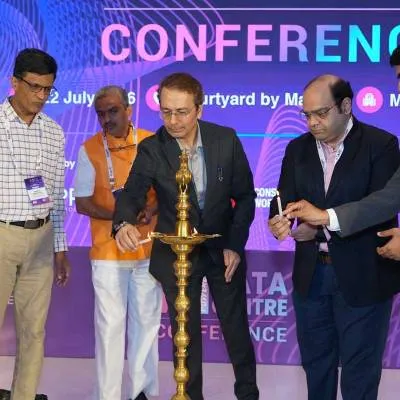
In late July, we held our AI-Powered Data Centre Conference, and the verdict was clear: India has the demand, the talent, the digital momentum, the market and, increasingly, the policy intent.

We must only ensure that we also have the infrastructure discipline.

Can we build data centres without worsening urban water stress?

Can we power AI without overloading the grid?

Can we attract global capital while protecting national data interests?

Mumbai’s municipal corporation imposed a 10% water cut after observing that daily water demand is about 4,665 MLD, while supply is about 4,100 MLD, leaving a shortfall of 565 MLD. At the same time, reports indicate that more than 900 MLD of treated water may be lost through leakages and illegal connections—more than the city’s demand-supply gap itself. If we can fix this leakage too—pun intended—we could home in on the data centre opportunity, which could bring a huge inflow of foreign capital. In other words, data centre growth could be seen as a trigger to modernise urban infrastructure.

To provide some perspective, India hosts nearly 20% of the world’s data but accounts for only about 3% of global data centre capacity. Our data centre capacity grew from about 375 MW in 2020 to around 1.5 GW by 2025. In the first half of 2026, capacity surged by 59%, taking the total to 1.8 GW. This is estimated to rise to 6.5 GW by 2030. Their construction could add ₹1.5 trillion in investment towards civil construction, along with a much higher investment in MEP, power and cooling technologies and solutions.

Last month, we conducted around five round tables to evaluate and discuss the adoption of construction technology and the challenges it faces. We invited senior developers, contractors, builders, technology experts, architects, designers, digital transformation engineering firms, BIM and automation experts, design-build firms, and others.

Although we have trained talent domestically, over 90% of the work in digital technology is being carried out for overseas clients. The challenges include attracting young talent to the industry, the ability to pay, low margins, and inadequate recognition of wastage as a significant cost.

The industry uses a considerable amount of technology in its operations. The use of WhatsApp for exchanging documents, voice notes, images and videos is intense. Digital technologies such as BIM and digital twins are used for design, but on a lesser scale during execution, where adoption is more dependent on the client’s mandate.

Precast technologies, on the other hand, have not yet reached the inflection point at which they become a ‘no-brainer’. It appears that when public and private sector clients begin to realise the advantages of precision in procurement, and the time and resources saved by avoiding delays, digital technologies will increasingly become a necessity.

As towers go higher and budgets rise even further, the risks of wastage and the cost of inefficiency will become untenable. For mass housing projects in India—those exceeding 500 units, such as PMAY housing clusters in Maharashtra, Gujarat and Telangana—it has been found that precast construction can reduce overall project costs by 8% to 15% at scale.

To delve deeper, ASAPP Info Global is organizing the ConTech Show on August 19-20 in Mumbai. Experts from 3D printing , precast, AI, automation, drones, etc will exhibit while experts from startup finding, EPC, engineering, design, contracting, data centre / airport / tunnels/ construction, etc will speak at the Construction Technology Summit.

Click here to register or call

- Pratap Padode, Founder, ASAPP Info Global Group and President, FIRST Construction Council


Did you know that our cities lose up to 30% or more of their water as it is distributed across them? The causes include old and leaking pipes that have aged or broken, illegal, unauthorised and unmetered water connections, and sometimes the long distances over which pipelines are laid for distribution. But this is not about water; it is about how saving this water could help cities generate the resources required to harness the AI-powered data centre opportunity writes PRATAP PADODE.In late July, we held our AI-Powered Data Centre Conference, and the verdict was clear: India has the demand, the talent, the digital momentum, the market and, increasingly, the policy intent.We must only ensure that we also have the infrastructure discipline.Can we build data centres without worsening urban water stress?Can we power AI without overloading the grid?Can we attract global capital while protecting national data interests?Mumbai’s municipal corporation imposed a 10% water cut after observing that daily water demand is about 4,665 MLD, while supply is about 4,100 MLD, leaving a shortfall of 565 MLD. At the same time, reports indicate that more than 900 MLD of treated water may be lost through leakages and illegal connections—more than the city’s demand-supply gap itself. If we can fix this leakage too—pun intended—we could home in on the data centre opportunity, which could bring a huge inflow of foreign capital. In other words, data centre growth could be seen as a trigger to modernise urban infrastructure.To provide some perspective, India hosts nearly 20% of the world’s data but accounts for only about 3% of global data centre capacity. Our data centre capacity grew from about 375 MW in 2020 to around 1.5 GW by 2025. In the first half of 2026, capacity surged by 59%, taking the total to 1.8 GW. This is estimated to rise to 6.5 GW by 2030. Their construction could add ₹1.5 trillion in investment towards civil construction, along with a much higher investment in MEP, power and cooling technologies and solutions.Last month, we conducted around five round tables to evaluate and discuss the adoption of construction technology and the challenges it faces. We invited senior developers, contractors, builders, technology experts, architects, designers, digital transformation engineering firms, BIM and automation experts, design-build firms, and others.Although we have trained talent domestically, over 90% of the work in digital technology is being carried out for overseas clients. The challenges include attracting young talent to the industry, the ability to pay, low margins, and inadequate recognition of wastage as a significant cost.The industry uses a considerable amount of technology in its operations. The use of WhatsApp for exchanging documents, voice notes, images and videos is intense. Digital technologies such as BIM and digital twins are used for design, but on a lesser scale during execution, where adoption is more dependent on the client’s mandate.Precast technologies, on the other hand, have not yet reached the inflection point at which they become a ‘no-brainer’. It appears that when public and private sector clients begin to realise the advantages of precision in procurement, and the time and resources saved by avoiding delays, digital technologies will increasingly become a necessity.As towers go higher and budgets rise even further, the risks of wastage and the cost of inefficiency will become untenable. For mass housing projects in India—those exceeding 500 units, such as PMAY housing clusters in Maharashtra, Gujarat and Telangana—it has been found that precast construction can reduce overall project costs by 8% to 15% at scale.To delve deeper, ASAPP Info Global is organizing the ConTech Show on August 19-20 in Mumbai. Experts from 3D printing , precast, AI, automation, drones, etc will exhibit while experts from startup finding, EPC, engineering, design, contracting, data centre / airport / tunnels/ construction, etc will speak at the Construction Technology Summit.Click here to register or call- Pratap Padode, Founder, ASAPP Info Global Group and President, FIRST Construction Council

Next Story
Infrastructure Energy

Websol Energy Q1 FY27 Revenue Rises 70% to Rs 3.73 billion

Websol Energy System Limited reported revenue from operations of Rs 372.60 crore in Q1 FY27, up 70% from Rs 218.75 crore in Q1 FY26.EBITDA increased 21% year-on-year to Rs 125.58 crore from Rs 103.48 crore, while profit after tax rose 16% to Rs 77.79 crore from Rs 67.18 crore. EBITDA margin stood at 34%, compared with 47% in the corresponding quarter last year, while PAT margin declined to 21% from 30%.Solar cell production increased to 259 MW during the quarter from 126 MW a year earlier, with capacity utilisation at 92%. Module production rose to 103 MW from 50 MW, while module capacity util..

Next Story
Real Estate

Lemon Tree Hotels Signs 100-Room Premier Property in Madurai

Lemon Tree Hotels Limited has signed a new 100-room Lemon Tree Premier property in Madurai, strengthening its presence across Tamil Nadu’s commercial and leisure markets.The property will be managed by Carnation Hotels Private Limited, a wholly owned subsidiary of Lemon Tree Hotels. Following the signing, the group’s Tamil Nadu portfolio comprises eight properties, including five operational hotels and three upcoming developments.The hotel will feature 100 rooms along with a restaurant, banquet facilities, a meeting room, fitness centre and swimming pool. It will cater to both business and..

Next Story
Infrastructure Transport

Jonjua Overseas Signs MoU for Rooftop Helipad in Himachal

Jonjua Overseas Limited has signed a Memorandum of Understanding (MoU) with entrepreneur Anjali Sharma for cooperation and facilitation in developing a private rooftop helipad near the National Highway at Rampur BSR, Himachal Pradesh.The proposed helipad is aimed at improving connectivity and accessibility in the remote Himalayan region. The project is expected to support local communities while strengthening access for tourism, emergency services and economic activities.Development and operation of the proposed rooftop helipad will be subject to statutory, regulatory, aviation, safety, enviro..

Advertisement

Subscribe to Our Newsletter

Get daily newsletters around different themes from Construction world.

STAY CONNECTED

Advertisement

Advertisement

Advertisement