India to Spotlight AI Impact and Sovereign Models at Global Summit
Technology

India to Spotlight AI Impact and Sovereign Models at Global Summit

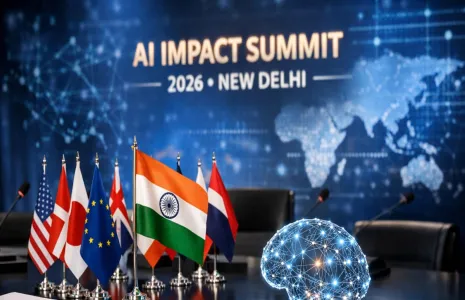
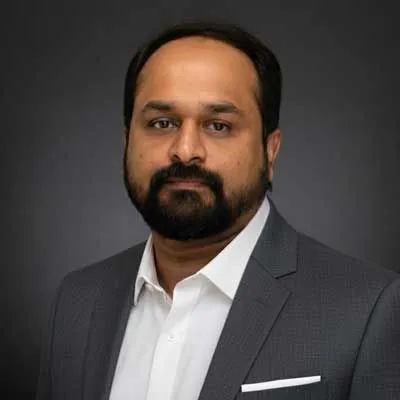
Union Minister for Electronics and Information Technology, Railways and Information & Broadcasting, Ashwini Vaishnaw, recently outlined India’s expanding role in artificial intelligence, semiconductors and deep-tech innovation during interactions on the sidelines of the World Economic Forum Annual Meeting 2026 at Davos.

The Minister said the upcoming AI Impact Summit will focus on three core objectives: impact, accessibility and safety. The Summit aims to demonstrate how AI can improve efficiency and productivity, create economic multipliers, and deliver affordable solutions for India and the Global South. He added that India also plans to develop its own regulatory and safety frameworks to address concerns around AI governance.

Highlighting India’s growing startup ecosystem, Shri Vaishnaw noted that the country has nearly 200,000 startups, with increasing momentum in deep tech. He said 24 Indian startups are designing semiconductor chips, with most already securing venture capital funding.

On semiconductors, the Minister outlined a phased manufacturing roadmap, beginning with the widely used 28nm–90nm segment and progressing to advanced nodes. India is targeting 7nm technology by 2030 and 3nm by 2032, supported by partnerships with global players and the launch of indigenous chip manufacturing units this year.

He emphasised that India is working across the entire AI stack—from applications and models to chips, data centres and energy. Small, efficient and sovereign AI models form a key part of this strategy, with around 12 focused models being developed to deliver low-cost AI services at scale.

Shri Vaishnaw also highlighted confirmed AI infrastructure investments of around USD 70 billion and stressed the importance of energy readiness, including private sector participation in nuclear energy to support data-intensive AI systems.

During Davos, the Minister met senior leaders from Google Cloud and Meta to discuss collaboration on AI infrastructure, startup partnerships and safeguards against deepfakes and AI-generated content.

He concluded that AI will evolve over multiple decades, offering India significant opportunities in innovation, skilling and global leadership, with the government acting as a key demand generator in sectors such as healthcare, agriculture and weather forecasting.

Union Minister for Electronics and Information Technology, Railways and Information & Broadcasting, Ashwini Vaishnaw, recently outlined India’s expanding role in artificial intelligence, semiconductors and deep-tech innovation during interactions on the sidelines of the World Economic Forum Annual Meeting 2026 at Davos. The Minister said the upcoming AI Impact Summit will focus on three core objectives: impact, accessibility and safety. The Summit aims to demonstrate how AI can improve efficiency and productivity, create economic multipliers, and deliver affordable solutions for India and the Global South. He added that India also plans to develop its own regulatory and safety frameworks to address concerns around AI governance. Highlighting India’s growing startup ecosystem, Shri Vaishnaw noted that the country has nearly 200,000 startups, with increasing momentum in deep tech. He said 24 Indian startups are designing semiconductor chips, with most already securing venture capital funding. On semiconductors, the Minister outlined a phased manufacturing roadmap, beginning with the widely used 28nm–90nm segment and progressing to advanced nodes. India is targeting 7nm technology by 2030 and 3nm by 2032, supported by partnerships with global players and the launch of indigenous chip manufacturing units this year. He emphasised that India is working across the entire AI stack—from applications and models to chips, data centres and energy. Small, efficient and sovereign AI models form a key part of this strategy, with around 12 focused models being developed to deliver low-cost AI services at scale. Shri Vaishnaw also highlighted confirmed AI infrastructure investments of around USD 70 billion and stressed the importance of energy readiness, including private sector participation in nuclear energy to support data-intensive AI systems. During Davos, the Minister met senior leaders from Google Cloud and Meta to discuss collaboration on AI infrastructure, startup partnerships and safeguards against deepfakes and AI-generated content. He concluded that AI will evolve over multiple decades, offering India significant opportunities in innovation, skilling and global leadership, with the government acting as a key demand generator in sectors such as healthcare, agriculture and weather forecasting.

Next Story
Infrastructure Urban

9th India–Myanmar Joint Trade Committee Meeting Held in Nay Pyi Taw

The ninth meeting of the India–Myanmar Joint Trade Committee (JTC) was held in Nay Pyi Taw, Myanmar, with a focus on strengthening bilateral trade and deepening economic cooperation. The meeting was co-chaired by U Minn Minn, Deputy Minister, Ministry of Commerce of the Republic of the Union of Myanmar, and Nitin Kumar Yadav, Additional Secretary, Department of Commerce, Ministry of Commerce and Industry, Government of India.Representatives from relevant ministries and stakeholder departments from both countries participated in the discussions. The meeting covered a broad range of issues aim..

Next Story
Infrastructure Urban

DGCA Launches Digital Pilot Licence Services for ATPL

The Directorate General of Civil Aviation (DGCA) has launched Electronic Personnel Licence (EPL) services for the Airline Transport Pilot Licence (ATPL), marking a significant step in the regulator’s ongoing digital transformation of aviation licensing in India. The service was inaugurated at an event held at the DGCA headquarters.Inaugurating the EPL ATPL service, Director General of Civil Aviation Faiz Ahmed Kidwai said the initiative represents a major advancement in strengthening India’s civil aviation regulatory framework through secure, modern and future-ready digital systems. He con..

Next Story
Infrastructure Urban

Cabinet Extends Atal Pension Yojana and Support Till 2030–31

The Union Cabinet, chaired by Prime Minister Narendra Modi, has approved the continuation of the Atal Pension Yojana (APY) up to the financial year 2030–31, along with the extension of government funding support for promotional and developmental activities and gap funding to ensure the scheme’s long-term sustainability.Under the approved framework, APY will continue to receive government support aimed at expanding its reach among unorganised and low-income workers. This includes funding for awareness campaigns, capacity-building initiatives and other developmental activities to strengthen ..

Advertisement

Subscribe to Our Newsletter

Get daily newsletters around different themes from Construction world.

STAY CONNECTED

Advertisement

Advertisement

Advertisement

Advertisement

Open In App