

India's Rs 25.6 bn Push To Build Core EV Technology
Technology

India's Rs 25.6 bn Push To Build Core EV Technology

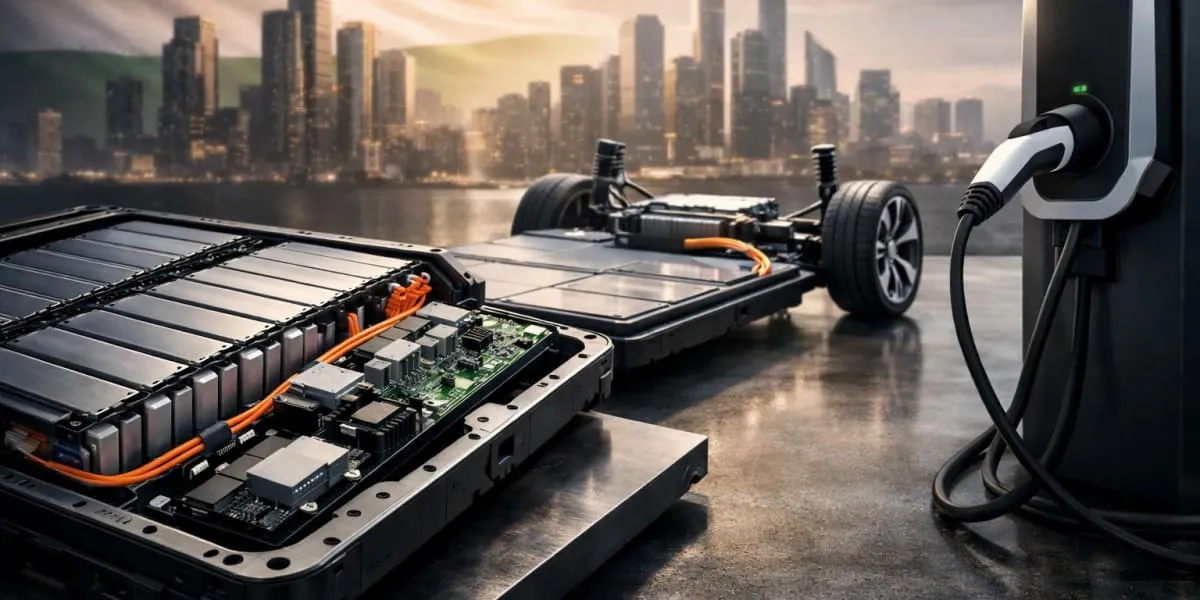
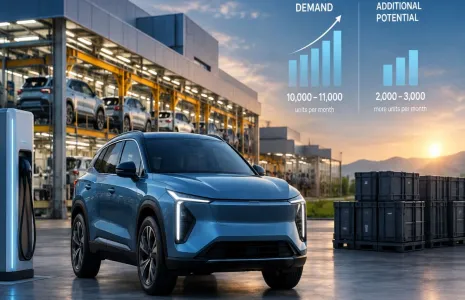
India's electric vehicle market is entering a phase focused on technology ownership rather than volume. Industry estimates indicate sales crossed two million units in FY25 and stakeholders say domestic capability in core systems will determine competitiveness. Piyush Verma, co-founder and chief technology officer of Naxatra Labs (Naxatra), said government schemes such as PM E-Drive, ACC PLI and Auto PLI indicate a strategic shift to indigenous innovation.

Manufacturers are building products for Indian operating conditions instead of adapting imported designs. Verma noted that an electric three-wheeler carrying heavy loads on broken roads in 45-degree heat needs different performance from vehicles designed for other cities. Naxatra develops motors and controllers in India for two-wheelers, three-wheelers and industrial applications, and OEMs are replacing imported powertrains with local alternatives.

Abiram Menon, co-founder and chief executive officer of Magron (Magron), characterised the nearly Rs 25.6 bn commitment to core EV technology as a decisive shift from incentivising adoption to owning intellectual property. He said past practice of assembling imported kits left critical technology overseas and that future mobility companies must be ecosystem-first, designing vehicles, batteries and energy management together.

Localisation remains incomplete because magnet supply chains, semiconductor-grade power electronics and precision manufacturing equipment require sustained investment. Verma urged patient capital, faster testing and certification and more willingness among vehicle manufacturers to qualify Indian suppliers. Sanyam Gandhi, whole-time director of Chartered Speed (Chartered Speed), said indigenous capability in motors, motor controllers and battery management systems would lower import dependence and improve resilience.

Stakeholders highlighted export potential and the role of public transport in scaling adoption. Verma suggested that ruggedisation and cost discipline make Indian powertrains competitive in Africa, Southeast Asia and Latin America, while Naveen Gupta, founder of TrevMobility (TrevMobility), emphasised closer collaboration across the ecosystem. Government schemes such as PM e-Bus Sewa and PM E-Drive were credited with supporting electric buses, charging infrastructure and higher local value addition.

India's electric vehicle market is entering a phase focused on technology ownership rather than volume. Industry estimates indicate sales crossed two million units in FY25 and stakeholders say domestic capability in core systems will determine competitiveness. Piyush Verma, co-founder and chief technology officer of Naxatra Labs (Naxatra), said government schemes such as PM E-Drive, ACC PLI and Auto PLI indicate a strategic shift to indigenous innovation. Manufacturers are building products for Indian operating conditions instead of adapting imported designs. Verma noted that an electric three-wheeler carrying heavy loads on broken roads in 45-degree heat needs different performance from vehicles designed for other cities. Naxatra develops motors and controllers in India for two-wheelers, three-wheelers and industrial applications, and OEMs are replacing imported powertrains with local alternatives. Abiram Menon, co-founder and chief executive officer of Magron (Magron), characterised the nearly Rs 25.6 bn commitment to core EV technology as a decisive shift from incentivising adoption to owning intellectual property. He said past practice of assembling imported kits left critical technology overseas and that future mobility companies must be ecosystem-first, designing vehicles, batteries and energy management together. Localisation remains incomplete because magnet supply chains, semiconductor-grade power electronics and precision manufacturing equipment require sustained investment. Verma urged patient capital, faster testing and certification and more willingness among vehicle manufacturers to qualify Indian suppliers. Sanyam Gandhi, whole-time director of Chartered Speed (Chartered Speed), said indigenous capability in motors, motor controllers and battery management systems would lower import dependence and improve resilience. Stakeholders highlighted export potential and the role of public transport in scaling adoption. Verma suggested that ruggedisation and cost discipline make Indian powertrains competitive in Africa, Southeast Asia and Latin America, while Naveen Gupta, founder of TrevMobility (TrevMobility), emphasised closer collaboration across the ecosystem. Government schemes such as PM e-Bus Sewa and PM E-Drive were credited with supporting electric buses, charging infrastructure and higher local value addition.

Next Story
Infrastructure Urban

SCLR Extension Nears Completion Linking BKC With Signal-Free Route

The Santacruz-Chembur Link Road (SCLR) extension towards Bandra-Kurla Complex (BKC) via the Mumbai University campus has entered its final stage, bringing motorists closer to a direct, signal-free connection between the Western Express Highway and the city’s commercial district. The elevated connector is being built as an arm from the SCLR alignment and will link the western suburbs with BKC without surface signals. The link is designed to reduce journey times for commuters travelling from the western suburbs to BKC and to improve access to eastern Mumbai. By carrying through traffic above s..

Next Story
Infrastructure Transport

Raiganj MP Seeks Bengal Only Highway Link To Siliguri

Raiganj Member of Parliament Kartik Chandra Paul met Union Minister for Road Transport and Highways Nitin Gadkari in New Delhi to press for a new stretch of national highway in North Dinajpur district. He urged approval for a Bengal-to-Bengal link that would connect National Highways 12 and 27 to allow vehicles bound for Siliguri to avoid the current route through Kishanganj in neighbouring Bihar. He also submitted a proposed alignment of the new road to the ministry for consideration. At present vehicles from Raiganj travel along NH-12 and join NH-27 at Purnia More in Dalkhola, a route that p..

Next Story
Infrastructure Transport

Airport Kilambakkam Metro Line To Be Extended To Chengalpattu

Chennai Metro Rail (CMRL) has invited tenders for two detailed project reports that would extend its rail network to Chengalpattu in the south and extend Corridor-5 to Wimco Nagar in the north as part of a second wave of expansion beyond the operator's corridors under construction. The move signals an acceleration of planning for suburban links and interchange nodes. The larger of the two studies covers a roughly 27km extension from the planned Kilambakkam metro station to Chengalpattu under Corridor-1, Phase I. CMRL floated the tender at an estimated cost of Rs 21.6 mn. The proposed line woul..

Advertisement

Subscribe to Our Newsletter

Get daily newsletters around different themes from Construction world.

STAY CONNECTED

Advertisement

Advertisement

Advertisement