Ambuja Cements Partners With Leilac For Low Carbon Project
ECONOMY & POLICY

Ambuja Cements Partners With Leilac For Low Carbon Project

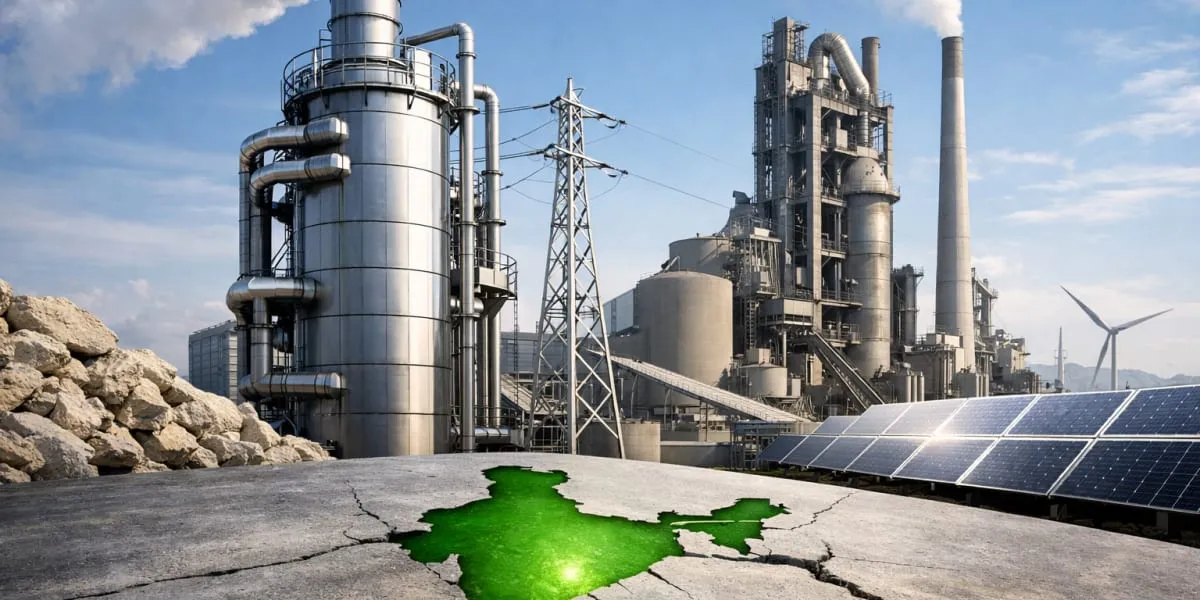
Ambuja Cements has entered a partnership with UK based clean technology company Leilac to develop a commercial scale low carbon cement production project at its Sanghipuram plant in Gujarat's Kutch district. The collaboration will assess Leilac's carbon capture and hybrid electrification technology at the company's six point six million tonnes per annum (mn t per annum) Sanghi facility. The initiative is presented as part of Ambuja Cements' long term decarbonisation strategy aligned with its Science Based Targets initiative validated commitment to achieve net zero emissions by 2050.

The project is designed to reduce process carbon emissions, lower fuel consumption and increase the use of renewable electricity across manufacturing operations. Ambuja Cements indicated it is continuing efforts to increase electrification of cement manufacturing processes and to expand the use of renewable energy across its operations. The transition is supported by nearly one gigawatt of captive green power capacity which the company said would underpin higher electrification.

Ambuja Cements said combining greater electrification with carbon capture technologies would help improve the economics of capture projects and make large scale deployment more commercially viable for the cement sector. The company described the demonstration as a commercial scale pilot aimed at showing a low cost route to lower carbon cement production that could be replicated across the industry. The assessment at the Sanghi plant will measure emissions reduction, energy performance and integration with existing operations.

Ambuja Cements stated that a successful demonstration would allow the facility to be scaled up seven to eight times and to capture more than one mn t of carbon dioxide annually, a scale that would place it among the largest industrial carbon capture facilities globally. The partnership follows growing pressure on cement manufacturers to tackle emissions from one of the most carbon intensive industrial processes. The company said the collaboration reflects its commitment to evaluating next generation technologies and to pursue sustainable long term growth.

Ambuja Cements has entered a partnership with UK based clean technology company Leilac to develop a commercial scale low carbon cement production project at its Sanghipuram plant in Gujarat's Kutch district. The collaboration will assess Leilac's carbon capture and hybrid electrification technology at the company's six point six million tonnes per annum (mn t per annum) Sanghi facility. The initiative is presented as part of Ambuja Cements' long term decarbonisation strategy aligned with its Science Based Targets initiative validated commitment to achieve net zero emissions by 2050. The project is designed to reduce process carbon emissions, lower fuel consumption and increase the use of renewable electricity across manufacturing operations. Ambuja Cements indicated it is continuing efforts to increase electrification of cement manufacturing processes and to expand the use of renewable energy across its operations. The transition is supported by nearly one gigawatt of captive green power capacity which the company said would underpin higher electrification. Ambuja Cements said combining greater electrification with carbon capture technologies would help improve the economics of capture projects and make large scale deployment more commercially viable for the cement sector. The company described the demonstration as a commercial scale pilot aimed at showing a low cost route to lower carbon cement production that could be replicated across the industry. The assessment at the Sanghi plant will measure emissions reduction, energy performance and integration with existing operations. Ambuja Cements stated that a successful demonstration would allow the facility to be scaled up seven to eight times and to capture more than one mn t of carbon dioxide annually, a scale that would place it among the largest industrial carbon capture facilities globally. The partnership follows growing pressure on cement manufacturers to tackle emissions from one of the most carbon intensive industrial processes. The company said the collaboration reflects its commitment to evaluating next generation technologies and to pursue sustainable long term growth.

Related Stories

Gold Stories

Next Story
Infrastructure Urban

EMO Energy and e-Sprinto to Deploy 8,000 Electric Scooters

EMO Energy has announced a partnership with electric two-wheeler maker e-Sprinto to deploy 8,000 electric scooters across India this financial year. The rollout will include both low-speed and high-speed models and will be phased across several cities. The scooters will be aimed at quick-commerce and last-mile delivery operations where uptime and energy efficiency are prioritised. EMO Energy said the scooters will use its patented ZenPac liquid-cooled battery platform with active thermal management, battery intelligence and energy optimisation to improve reliability and performance. ZenPac con..

Next Story
Infrastructure Energy

Octillion Opens Third EV Battery Plant in India

Octillion Power Systems has opened its third manufacturing facility in Halol, Gujarat, adding production capacity as demand for electric vehicle battery systems grows across passenger, commercial and public transport segments. The facility covers more than 13,000 square metres and was converted from an empty structure into an operational battery manufacturing plant in less than eight months. At full capacity the Gujarat plant will manufacture more than 48,000 battery systems annually, representing over three GWh of energy storage capacity. With the addition of the Halol facility Octillion's co..

Next Story
Real Estate

Land Reforms Could Unlock Urban Affordable Housing

Former cabinet secretary and NITI Aayog member Rajeev Gauba said India’s urban housing shortage could be tackled by unlocking 10 million (mn) vacant homes and using excess unutilised land held by public sector undertakings (PSUs). He said land availability lay at the heart of the problem and estimated that land accounted for as much as 50 to 70 per cent of total project cost. He urged states to waive land?use change fees and exempt stamp duty on land and transactions linked to affordable housing. He noted that urban population was projected to rise from 500 million to nearly 900 million by 2..

Advertisement

Subscribe to Our Newsletter

Get daily newsletters around different themes from Construction world.

STAY CONNECTED

Advertisement