Fourth Rail Line Approved Through Chicken's Neck Corridor
RAILWAYS & METRO RAIL

Fourth Rail Line Approved Through Chicken's Neck Corridor

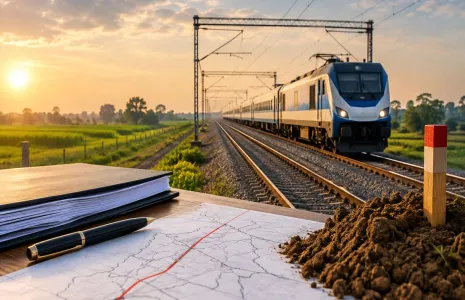
The Centre has approved a fourth railway line through the strategically important Chicken's Neck corridor, the Northeast Frontier Railway (NFR) general manager Chetan Kumar Shrivastava said at a press conference in Katihar. He described the Malda–New Jalpaiguri section as a crucial rail corridor that connects the northeastern states with other parts of the country and underscored its significance for security and logistics. He said completion of the projects would lead to a major transformation of the rail corridor and more organised development of the area.

Shrivastava said a third line had earlier been proposed for the section but approval has now been granted for a fourth line. He added that a nearly 29 km double-line underground project between Tinmai Ghat and Bagdogra is another important infrastructure initiative and that the railways is placing special emphasis on enhancing the corridor's capacity. The railway authority has emphasised capacity enhancement as a priority given the corridor's strategic role.

He reported that work to double the line in the Barsoi section is under way and that infrastructure expansion across the Katihar division is proceeding to cater to growing passenger and freight traffic. During the previous year NFR introduced 42 new trains on different routes and provided around 250 new stoppages to improve passenger convenience. Shrivastava said redevelopment of New Jalpaiguri station is progressing rapidly and is scheduled for completion by April 2027.

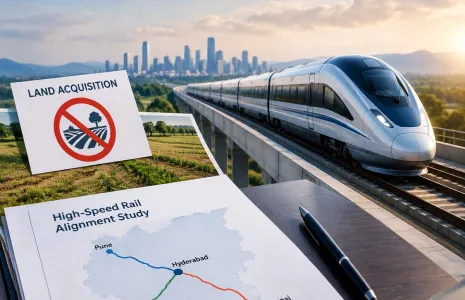
He indicated efforts to introduce new local services from Jogbani, Radhikapur and Balurghat soon and said these services are expected to improve connectivity for passengers in border and remote areas. He noted that 100 per cent electrification of the NFR network has been completed and that plans exist to extend Vande Bharat train services beyond Guwahati to Tinsukia and Agartala, which would offer faster and more comfortable travel for passengers in the region. Expansion of electric traction is intended to support higher frequency services and reduce travel times for both passengers and freight.

The Centre has approved a fourth railway line through the strategically important Chicken's Neck corridor, the Northeast Frontier Railway (NFR) general manager Chetan Kumar Shrivastava said at a press conference in Katihar. He described the Malda–New Jalpaiguri section as a crucial rail corridor that connects the northeastern states with other parts of the country and underscored its significance for security and logistics. He said completion of the projects would lead to a major transformation of the rail corridor and more organised development of the area. Shrivastava said a third line had earlier been proposed for the section but approval has now been granted for a fourth line. He added that a nearly 29 km double-line underground project between Tinmai Ghat and Bagdogra is another important infrastructure initiative and that the railways is placing special emphasis on enhancing the corridor's capacity. The railway authority has emphasised capacity enhancement as a priority given the corridor's strategic role. He reported that work to double the line in the Barsoi section is under way and that infrastructure expansion across the Katihar division is proceeding to cater to growing passenger and freight traffic. During the previous year NFR introduced 42 new trains on different routes and provided around 250 new stoppages to improve passenger convenience. Shrivastava said redevelopment of New Jalpaiguri station is progressing rapidly and is scheduled for completion by April 2027. He indicated efforts to introduce new local services from Jogbani, Radhikapur and Balurghat soon and said these services are expected to improve connectivity for passengers in border and remote areas. He noted that 100 per cent electrification of the NFR network has been completed and that plans exist to extend Vande Bharat train services beyond Guwahati to Tinsukia and Agartala, which would offer faster and more comfortable travel for passengers in the region. Expansion of electric traction is intended to support higher frequency services and reduce travel times for both passengers and freight.

Related Stories

Gold Stories

Next Story
Infrastructure Urban

EMO Energy and e-Sprinto to Deploy 8,000 Electric Scooters

EMO Energy has announced a partnership with electric two-wheeler maker e-Sprinto to deploy 8,000 electric scooters across India this financial year. The rollout will include both low-speed and high-speed models and will be phased across several cities. The scooters will be aimed at quick-commerce and last-mile delivery operations where uptime and energy efficiency are prioritised. EMO Energy said the scooters will use its patented ZenPac liquid-cooled battery platform with active thermal management, battery intelligence and energy optimisation to improve reliability and performance. ZenPac con..

Next Story
Infrastructure Energy

Octillion Opens Third EV Battery Plant in India

Octillion Power Systems has opened its third manufacturing facility in Halol, Gujarat, adding production capacity as demand for electric vehicle battery systems grows across passenger, commercial and public transport segments. The facility covers more than 13,000 square metres and was converted from an empty structure into an operational battery manufacturing plant in less than eight months. At full capacity the Gujarat plant will manufacture more than 48,000 battery systems annually, representing over three GWh of energy storage capacity. With the addition of the Halol facility Octillion's co..

Next Story
Real Estate

Land Reforms Could Unlock Urban Affordable Housing

Former cabinet secretary and NITI Aayog member Rajeev Gauba said India’s urban housing shortage could be tackled by unlocking 10 million (mn) vacant homes and using excess unutilised land held by public sector undertakings (PSUs). He said land availability lay at the heart of the problem and estimated that land accounted for as much as 50 to 70 per cent of total project cost. He urged states to waive land?use change fees and exempt stamp duty on land and transactions linked to affordable housing. He noted that urban population was projected to rise from 500 million to nearly 900 million by 2..

Advertisement

Subscribe to Our Newsletter

Get daily newsletters around different themes from Construction world.

STAY CONNECTED

Advertisement