


CAQM Invokes Stage One Of GRAP Across Delhi NCR
ECONOMY & POLICY

CAQM Invokes Stage One Of GRAP Across Delhi NCR

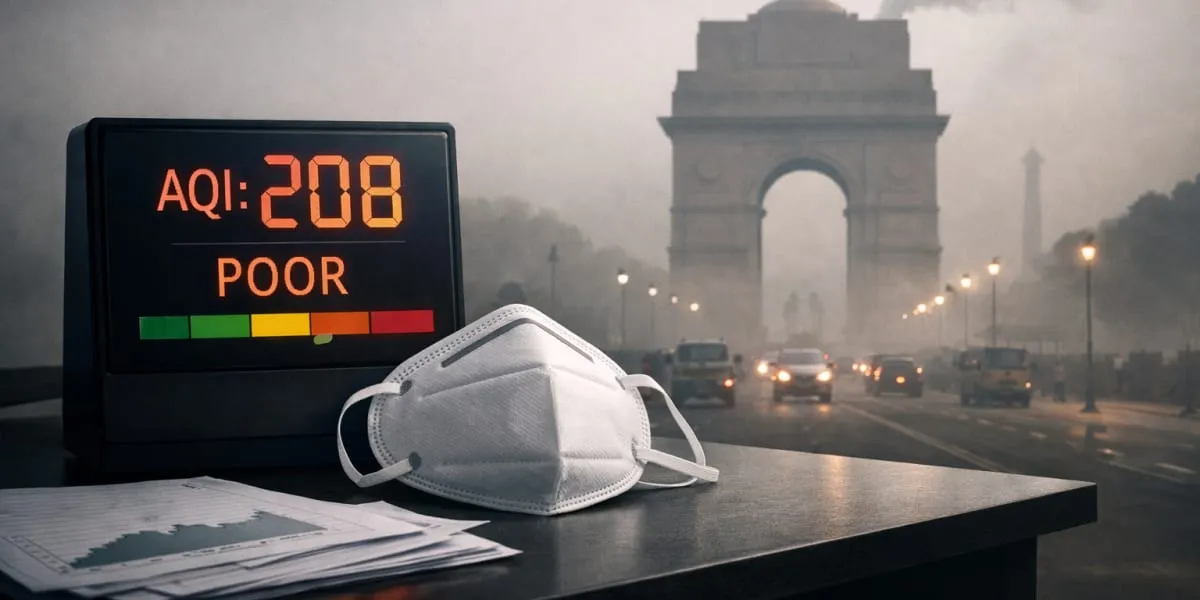
The Commission for Air Quality Management (CAQM) invoked Stage One of the Graded Response Action Plan (GRAP) across the National Capital Region (NCR) with immediate effect after Delhi's daily average Air Quality Index (AQI) rose to 208, classified as Poor, according to the Central Pollution Control Board (CPCB) daily bulletin. The CAQM sub-committee acted following a review and forecasts by the India Meteorological Department (IMD) and the Indian Institute of Tropical Meteorology (IITM) indicating air quality is likely to remain in the Poor category.

The Sub-Committee decided to invoke all actions under Stage One of the extant GRAP across the entire NCR and directed implementing agencies to begin the 31-point action plan immediately. Implementation responsibility lies with Pollution Control Boards of NCR states and the Delhi Pollution Control Committee (DPCC), which were instructed to ensure prompt monitoring and enforcement.

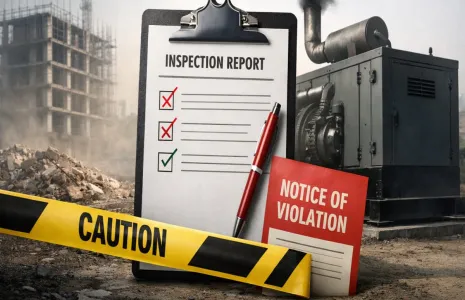
Key measures include strict dust mitigation at construction and demolition (C&D) sites with proper storage, covering and transport of materials, mechanised sweeping and water sprinkling on roads, and regular lifting of municipal solid waste and C&D debris. The plan also calls for intensified deployment of anti-smog guns in proportion to built-up area and scientific disposal of dust at designated sites.

Authorities were ordered to enforce a ban on open burning of biomass and municipal solid waste and to maintain strict vigil at landfill and dumpsite locations to prevent burning incidents. Traffic management steps include deployment of police at congestion points, enforcement of pollution under control (PUC) norms, impounding or penalising visibly polluting vehicles, and diversion of non-destined heavy trucks to peripheral expressways.

Industrial compliance was emphasised with directives to enforce emission standards at brick kilns, hot mix plants and thermal power stations and to ensure use of approved fuels, failing which closures or penalties may be imposed. Electricity distribution companies were urged to minimise supply interruptions to discourage use of diesel generator sets, while eateries and hotels were directed to use only electricity, gas or other clean fuels.

Information dissemination through mobile apps, bulk SMS, newspapers, television and radio was prescribed to alert citizens and enable reporting of polluting activities, with agencies instructed to respond to complaints on 311 App, Green Delhi App and SAMEER App. The Sub-Committee requested public cooperation with the GRAP citizen charter on vehicle maintenance, avoiding idling and open disposal of waste, and said it would continue to review air quality and take further measures as required.

The Commission for Air Quality Management (CAQM) invoked Stage One of the Graded Response Action Plan (GRAP) across the National Capital Region (NCR) with immediate effect after Delhi's daily average Air Quality Index (AQI) rose to 208, classified as Poor, according to the Central Pollution Control Board (CPCB) daily bulletin. The CAQM sub-committee acted following a review and forecasts by the India Meteorological Department (IMD) and the Indian Institute of Tropical Meteorology (IITM) indicating air quality is likely to remain in the Poor category. The Sub-Committee decided to invoke all actions under Stage One of the extant GRAP across the entire NCR and directed implementing agencies to begin the 31-point action plan immediately. Implementation responsibility lies with Pollution Control Boards of NCR states and the Delhi Pollution Control Committee (DPCC), which were instructed to ensure prompt monitoring and enforcement. Key measures include strict dust mitigation at construction and demolition (C&D) sites with proper storage, covering and transport of materials, mechanised sweeping and water sprinkling on roads, and regular lifting of municipal solid waste and C&D debris. The plan also calls for intensified deployment of anti-smog guns in proportion to built-up area and scientific disposal of dust at designated sites. Authorities were ordered to enforce a ban on open burning of biomass and municipal solid waste and to maintain strict vigil at landfill and dumpsite locations to prevent burning incidents. Traffic management steps include deployment of police at congestion points, enforcement of pollution under control (PUC) norms, impounding or penalising visibly polluting vehicles, and diversion of non-destined heavy trucks to peripheral expressways. Industrial compliance was emphasised with directives to enforce emission standards at brick kilns, hot mix plants and thermal power stations and to ensure use of approved fuels, failing which closures or penalties may be imposed. Electricity distribution companies were urged to minimise supply interruptions to discourage use of diesel generator sets, while eateries and hotels were directed to use only electricity, gas or other clean fuels. Information dissemination through mobile apps, bulk SMS, newspapers, television and radio was prescribed to alert citizens and enable reporting of polluting activities, with agencies instructed to respond to complaints on 311 App, Green Delhi App and SAMEER App. The Sub-Committee requested public cooperation with the GRAP citizen charter on vehicle maintenance, avoiding idling and open disposal of waste, and said it would continue to review air quality and take further measures as required.

Next Story
Infrastructure Transport

Afcons Secures Rs 53.01 Billion Vadhvan Breakwater Contract

Afcons Infrastructure has received the Letter of Award from Vadhvan Port Project for the construction of a 10.14-km-long breakwater at the upcoming Vadhvan Port in Maharashtra. Valued at Rs 53.01 billion, the project will create what is set to become the second longest breakwater in the world upon completion.The contract marks a significant milestone for the marine infrastructure specialist and is expected to play a crucial role in the development of Vadhvan Port, envisaged as India's largest public port and one of the world's biggest container ports.Krishnamurthy Subramanian, Executive Chairm..

Next Story
Infrastructure Energy

India Clean Industry Pipeline Grows 30%

India’s clean industry project pipeline has grown by 30 per cent over a six-month period, reflecting rising interest in low-carbon industrial growth amid geopolitical and supply-chain uncertainty.Mission Possible Partnership’s latest Global Project Tracker shows that India now has the world’s third-largest clean industrial project pipeline by project count, after China and the United States. The country has 65 projects across four sectors and 11 states, representing an estimated $433.07 billion investment opportunity in clean fuels, chemicals and low-carbon manufacturing.The pipeline inc..

Next Story
Infrastructure Urban

Kärcher Showcases Professional Cleaning Solutions

Kärcher India recently showcased its professional cleaning solutions portfolio for commercial, industrial, hospitality, healthcare, retail, automotive and institutional applications. The range includes cleaning agents and detergents designed to support efficiency, material safety, operational reliability and hygiene across multiple environments.Under floor cleaning, Kärcher offers solutions such as FloorPro Deep Cleaner RM 751, FloorPro Shine Cleaner RM 755, FloorPro Fine Stoneware Cleaner RM 753, FloorPro Crystallising Agent RM 749 and High Gloss Crystallising Powder RM 775. These products ..

Advertisement

Subscribe to Our Newsletter

Get daily newsletters around different themes from Construction world.

STAY CONNECTED

Advertisement

Advertisement

Advertisement