Centre Notifies Rs 447bn Shipbuilding Boost Schemes
PORTS & SHIPPING

Centre Notifies Rs 447bn Shipbuilding Boost Schemes

The government on Saturday notified operational guidelines for two major shipbuilding initiatives with a combined outlay of Rs 447 billion, aimed at strengthening India’s domestic shipbuilding capacity and improving global competitiveness.

Under the Shipbuilding Financial Assistance Scheme (SBFAS), which has a total corpus of Rs 247.36 billion, the government will provide financial assistance ranging from 15 per cent to 25 per cent per vessel, depending on the category. The scheme offers graded support for small normal, large normal and specialised vessels, with stage-wise disbursement linked to defined milestones and backed by security instruments. Incentives for series orders have also been included.

Over the next decade, SBFAS is expected to support shipbuilding projects worth around Rs 960 billion, stimulate domestic manufacturing and generate employment across the maritime value chain.

The Shipbuilding Development Scheme (SbDS), with a budgetary outlay of Rs 199.89 billion, focuses on long-term capacity and capability creation. It provides for the development of greenfield shipbuilding clusters, expansion and modernisation of existing brownfield shipyards, and the establishment of an India Ship Technology Centre under the Indian Maritime University to support research, design, innovation and skills development. The approved guidelines lay down a transparent and accountable framework for implementation.

Union Minister of Ports, Shipping and Waterways Sarbananda Sonowal said the initiatives mark a decisive policy reset for India’s shipbuilding sector under Prime Minister Narendra Modi’s leadership. He said the guidelines create a stable and transparent framework to revive domestic shipbuilding, strengthen forward and backward linkages under the ‘Make in India’ initiative, enable large-scale investment and build world-class capacity, positioning India as a major maritime nation on the path to Viksit Bharat and Aatmanirbhar Bharat.

Under SbDS, greenfield shipbuilding clusters will receive 100 per cent capital support for common maritime and internal infrastructure through a 50:50 Centre–State special purpose vehicle. Existing shipyards will be eligible for 25 per cent capital assistance for brownfield expansion of critical infrastructure such as dry docks, shiplifts, fabrication facilities and automation systems. Disbursements will be milestone-based and monitored by independent evaluation agencies.

The scheme also includes a Credit Risk Coverage Framework, offering government-backed insurance for pre-shipment, post-shipment and vendor-default risks to improve project bankability and financial resilience.

With the creation of modern infrastructure and a skilled workforce, India’s commercial shipbuilding capacity is projected to rise to about 4.5 million gross tonnage per annum by 2047, the ministry said. Both SBFAS and SbDS will remain valid until March 31, 2036, with an in-principle extension envisaged up to 2047.

The government on Saturday notified operational guidelines for two major shipbuilding initiatives with a combined outlay of Rs 447 billion, aimed at strengthening India’s domestic shipbuilding capacity and improving global competitiveness. Under the Shipbuilding Financial Assistance Scheme (SBFAS), which has a total corpus of Rs 247.36 billion, the government will provide financial assistance ranging from 15 per cent to 25 per cent per vessel, depending on the category. The scheme offers graded support for small normal, large normal and specialised vessels, with stage-wise disbursement linked to defined milestones and backed by security instruments. Incentives for series orders have also been included. Over the next decade, SBFAS is expected to support shipbuilding projects worth around Rs 960 billion, stimulate domestic manufacturing and generate employment across the maritime value chain. The Shipbuilding Development Scheme (SbDS), with a budgetary outlay of Rs 199.89 billion, focuses on long-term capacity and capability creation. It provides for the development of greenfield shipbuilding clusters, expansion and modernisation of existing brownfield shipyards, and the establishment of an India Ship Technology Centre under the Indian Maritime University to support research, design, innovation and skills development. The approved guidelines lay down a transparent and accountable framework for implementation. Union Minister of Ports, Shipping and Waterways Sarbananda Sonowal said the initiatives mark a decisive policy reset for India’s shipbuilding sector under Prime Minister Narendra Modi’s leadership. He said the guidelines create a stable and transparent framework to revive domestic shipbuilding, strengthen forward and backward linkages under the ‘Make in India’ initiative, enable large-scale investment and build world-class capacity, positioning India as a major maritime nation on the path to Viksit Bharat and Aatmanirbhar Bharat. Under SbDS, greenfield shipbuilding clusters will receive 100 per cent capital support for common maritime and internal infrastructure through a 50:50 Centre–State special purpose vehicle. Existing shipyards will be eligible for 25 per cent capital assistance for brownfield expansion of critical infrastructure such as dry docks, shiplifts, fabrication facilities and automation systems. Disbursements will be milestone-based and monitored by independent evaluation agencies. The scheme also includes a Credit Risk Coverage Framework, offering government-backed insurance for pre-shipment, post-shipment and vendor-default risks to improve project bankability and financial resilience. With the creation of modern infrastructure and a skilled workforce, India’s commercial shipbuilding capacity is projected to rise to about 4.5 million gross tonnage per annum by 2047, the ministry said. Both SBFAS and SbDS will remain valid until March 31, 2036, with an in-principle extension envisaged up to 2047.

Next Story
Infrastructure Urban

Patil Reviews JSJB 2.0 Progress In Water-Stressed Districts

Union Minister of Jal Shakti C R Patil on Tuesday interacted with District Collectors and District Development Officers from 124 over-exploited and critical districts, as identified in the 2024 national groundwater assessment, to review progress on water conservation initiatives. Ministers of State V. Somanna and Dr Raj Bhushan Choudhary also attended the meeting, along with Secretary, Department of Water Resources, River Development and Ganga Rejuvenation, V L Kantha Rao, and senior officials from the Ministries of Jal Shakti and Rural Development. The review centred on Jal Sanchay Jan Bhagi..
Next Story
Infrastructure Urban

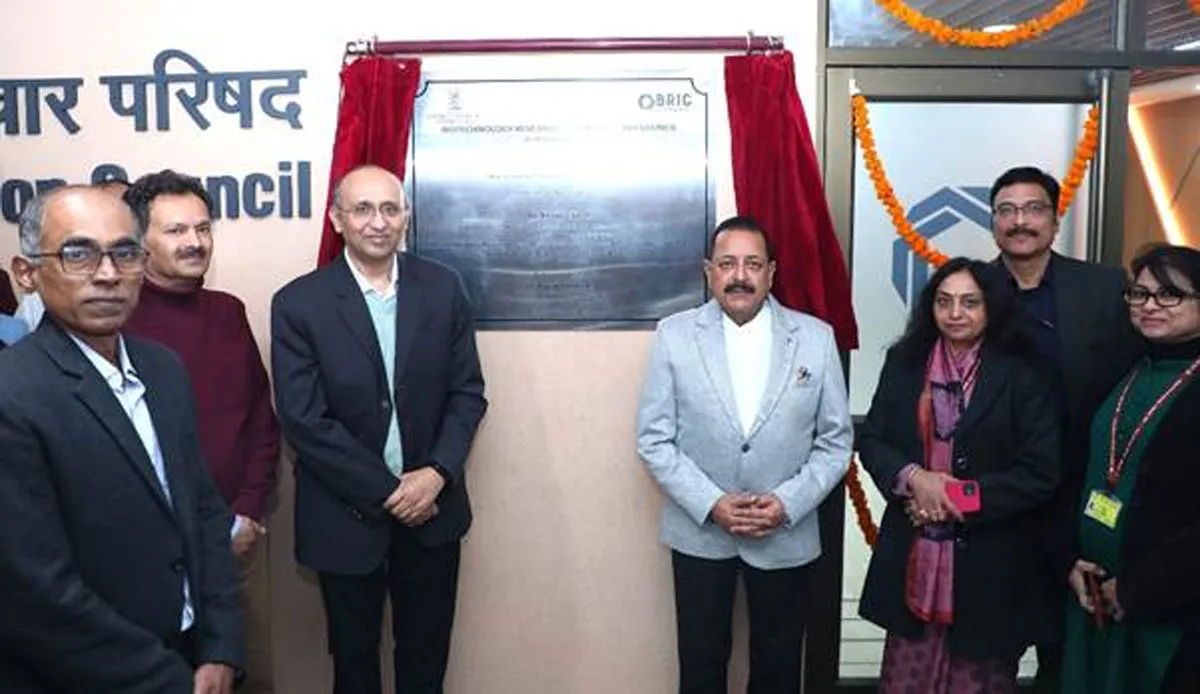
Jitendra Singh Inaugurates BRIC Secretariat In New Delhi

Ahead of the New Year, Union Minister of State (Independent Charge) for Science and Technology and Earth Sciences, and Minister of State in the PMO, Personnel, Public Grievances, Pensions, Atomic Energy and Space, Dr Jitendra Singh inaugurated the new Secretariat complex of the Biotechnology Research and Innovation Council (BRIC), calling it a key milestone for strengthening India’s future bioeconomy. The BRIC Secretariat office complex is located on the fourth floor of the NSIC Business Park in New Delhi. It will function as a lean coordinating mechanism to enhance collaboration among BRIC..

Next Story
Infrastructure Energy

PMO Pushes Listing Of Coal India Subsidiaries By 2030

The Prime Minister’s Office (PMO) has directed the Ministry of Coal to map and list all subsidiaries of state-run Coal India Limited (CIL) by 2030, according to sources. The move is aimed at streamlining governance, improving accountability and unlocking value through asset monetisation within the coal public sector undertaking. Coal India Limited accounts for more than 80 per cent of India’s domestic coal production and operates through eight subsidiaries: Eastern Coalfields Limited, Bharat Coking Coal Limited (BCCL), Central Coalfields Limited, Western Coalfields Limited, South Eastern ..

Advertisement

Subscribe to Our Newsletter

Get daily newsletters around different themes from Construction world.

STAY CONNECTED

Advertisement

Advertisement

Advertisement

Advertisement

Open In App