



Cortec MCI Technology Restores Croatia Monuments
ECONOMY & POLICY

Cortec MCI Technology Restores Croatia Monuments

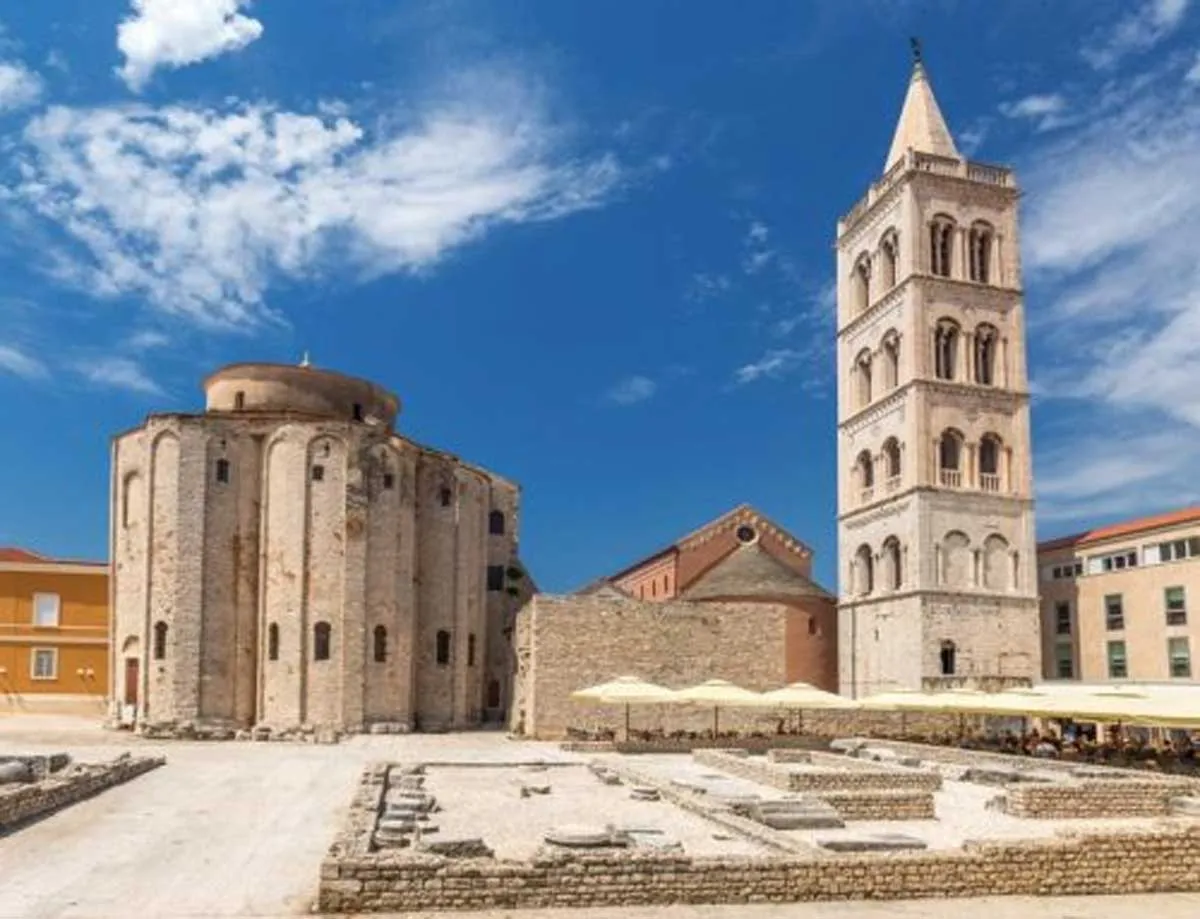
Cortec’s Migrating Corrosion Inhibitor technology has been used in restoration works for historic monuments in Croatia, including the Church of St Donatus in Zadar and the medieval city walls of Ilok.

The Church of St Donatus, one of the most significant pre-Romanesque churches in Europe, is listed in the Register of Cultural Goods of the Republic of Croatia and is under UNESCO protection. The monument required urgent rehabilitation after 3D scanning analysis identified critical issues in the church walls, main structure and roof.

The reinforced concrete support structure beneath the roof, installed between 1927 and 1930 to improve stability, had been affected by moisture penetration and corrosive sea spray. Cortec’s MCI 2020 surface-applied corrosion inhibitor was specified as a coating to protect the structure against further corrosion.

MCI 2020 is designed to migrate through dense concrete structures and protect embedded steel reinforcement. According to the company, the environmentally safe inhibitor helps stop further corrosion of reinforcing metals and extends the service life of the structure.

Cortec technology was also used in the renovation of the medieval city walls of Ilok. The town’s fortress walls and royal castle are protected heritage assets. Over time, atmospheric exposure had caused the mortar between bricks to deteriorate, affecting the masonry.

Restoration work on Tower Three included strengthening foundations, rebuilding collapsed sections and injecting cracks to restore structural integrity. MCI-2005 was added to the new concrete foundation supporting the old foundation, while MCI-2018 was applied to the brick walls.

As a Migrating Corrosion Inhibitor admixture, MCI-2005 protects embedded metal reinforcement in concrete, particularly where the new foundation comes into contact with soil. The project used black steel reinforcement with MCI-2005 instead of stainless steel reinforcement.

MCI-2018 acts as a water repellent, helping protect brick and mortar from outdoor weathering without changing the appearance of the historic structure. MCI-2005 is also a USDA Certified Biobased Product.

Cortec said the integration of MCI technology in these restoration projects supports the sustainable preservation of Europe’s cultural heritage assets while improving the durability and service life of repaired structures.

"Join industry leaders at RAHSTA Expo, India's premier platform for roads, highways and traffic infrastructure. Register now to explore innovations, network with experts and shape the future of mobility."

Cortec’s Migrating Corrosion Inhibitor technology has been used in restoration works for historic monuments in Croatia, including the Church of St Donatus in Zadar and the medieval city walls of Ilok.The Church of St Donatus, one of the most significant pre-Romanesque churches in Europe, is listed in the Register of Cultural Goods of the Republic of Croatia and is under UNESCO protection. The monument required urgent rehabilitation after 3D scanning analysis identified critical issues in the church walls, main structure and roof.The reinforced concrete support structure beneath the roof, installed between 1927 and 1930 to improve stability, had been affected by moisture penetration and corrosive sea spray. Cortec’s MCI 2020 surface-applied corrosion inhibitor was specified as a coating to protect the structure against further corrosion.MCI 2020 is designed to migrate through dense concrete structures and protect embedded steel reinforcement. According to the company, the environmentally safe inhibitor helps stop further corrosion of reinforcing metals and extends the service life of the structure.Cortec technology was also used in the renovation of the medieval city walls of Ilok. The town’s fortress walls and royal castle are protected heritage assets. Over time, atmospheric exposure had caused the mortar between bricks to deteriorate, affecting the masonry.Restoration work on Tower Three included strengthening foundations, rebuilding collapsed sections and injecting cracks to restore structural integrity. MCI-2005 was added to the new concrete foundation supporting the old foundation, while MCI-2018 was applied to the brick walls.As a Migrating Corrosion Inhibitor admixture, MCI-2005 protects embedded metal reinforcement in concrete, particularly where the new foundation comes into contact with soil. The project used black steel reinforcement with MCI-2005 instead of stainless steel reinforcement.MCI-2018 acts as a water repellent, helping protect brick and mortar from outdoor weathering without changing the appearance of the historic structure. MCI-2005 is also a USDA Certified Biobased Product.Cortec said the integration of MCI technology in these restoration projects supports the sustainable preservation of Europe’s cultural heritage assets while improving the durability and service life of repaired structures.

Next Story
Infrastructure Transport

RITES Expands NUPPL Railway Siding Contract To Rs1,489.3 mn

RITES Limited has expanded the scope of its railway siding contract with Neyveli Uttar Pradesh Power Limited (NUPPL), increasing the contract value to Rs1,489.3 million (mn) from Rs1,201.3 million (mn). The revision covers comprehensive operation and maintenance of the NUPPL/GTPP railway siding and includes hiring of locomotives on a wet-lease basis. The locomotive hire is for a period of 48 months and forms part of the extended operational scope under the agreement. The overall execution period remains five years from the original Memorandum of Understanding dated 13 February 2025, with the e..

Next Story
Infrastructure Urban

India Office Leasing Rises Six Per Cent In H1 2026

A Colliers India report said India's Grade A office market recorded gross leasing of 35.7 million (mn) square feet in the first half of 2026, up six per cent year-on-year despite a softer second quarter amid global trade disruptions. Leasing in April–June totalled 17.4 mn square feet, down two per cent from a year earlier, while Grade A absorption exceeded 15 mn square feet for the ninth consecutive quarter across seven markets. Demand was supported by Global Capability Centres (GCCs), technology firms and flexible workspace operators. Bengaluru led leasing with 10.5 mn square feet in H1 and..

Next Story
Real Estate

PE Investments Fall 23 per cent To Rs 1.13 bn In H1 2026

Private equity investments in the Indian real estate sector fell 23 per cent year-on-year to Rs 1.13 billion (bn) in the first half of 2026, down from Rs 1.47 bn in H1 of 2025, as investors adopted a more selective approach amid elevated global interest rates, tighter financial conditions and heightened geopolitical uncertainty. The finding appears in Knight Frank's Trends in Private Equity Investment in India: H1 2026 report. Despite the overall decline, the office segment remained the preferred asset class, accounting for 89 per cent of private equity allocations in H1 2026, with the residen..

Advertisement

Subscribe to Our Newsletter

Get daily newsletters around different themes from Construction world.

STAY CONNECTED

Advertisement

Advertisement

Advertisement














