Critical Minerals Reshape Supply Chains And Offer New Opportunity
ECONOMY & POLICY

Critical Minerals Reshape Supply Chains And Offer New Opportunity

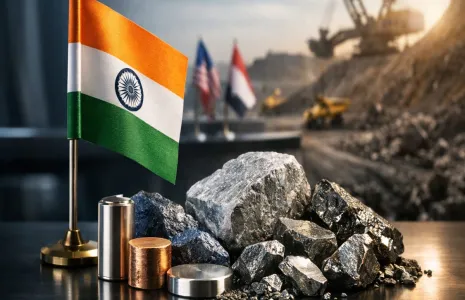
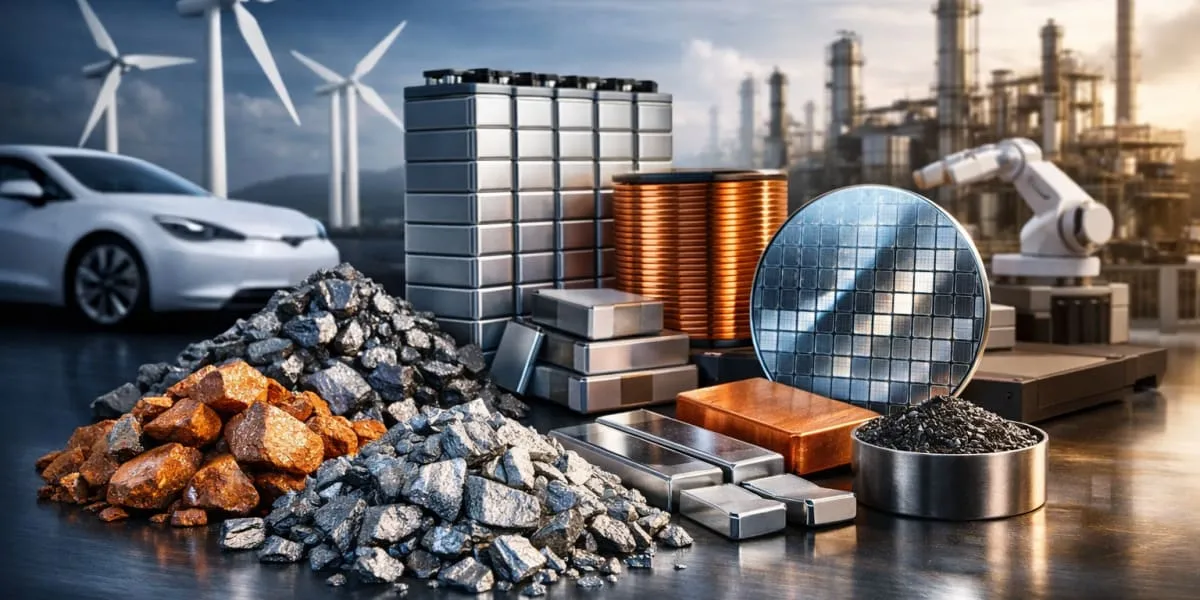
Moody's has said the global race to secure critical minerals is reshaping supply chains and creating an opportunity for resource rich emerging markets to move beyond raw material exports into higher value processing and refining. The agency noted that demand is being driven by the energy transition, rapid growth in electric vehicles, renewable energy, artificial intelligence infrastructure and advanced manufacturing. It said these trends are making critical minerals central to economic security and industrial policy.

As countries seek to diversify supply chains and reduce dependence on a handful of suppliers, Moody's observed that emerging markets with abundant mineral reserves stand to benefit if they develop downstream industries. The report argued that investment in refining, manufacturing and related infrastructure could allow producing nations to capture a larger share of value and to strengthen resilience against geopolitical disruptions. It suggested that the restructuring of global supply chains now focuses not only on mining output but increasingly on processing capacity and value addition.

Moody's added that demand for critical minerals is set to grow strongly as long term structural demand from clean energy technologies, semiconductors and digital infrastructure continues to reshape global trade and investment flows. The agency warned that these shifts are likely to influence sovereign credit profiles and industrial strategies as governments and companies seek more resilient, diversified and secure supply chains. It emphasised that countries which expand their industrial base and move into higher value activities may gain economically compared with those that remain exporters of raw ores.

Moody's therefore recommended policymakers consider targeted policies to support downstream capacity, including incentives for local processing, investment in skills and infrastructure and partnerships with private investors. The report noted that successful transitions will require careful industrial planning, environmental safeguards and financing arrangements to attract long term capital. It concluded that the evolving critical minerals landscape presents a policy window for emerging markets to capture more value from their natural resources.

Moody's has said the global race to secure critical minerals is reshaping supply chains and creating an opportunity for resource rich emerging markets to move beyond raw material exports into higher value processing and refining. The agency noted that demand is being driven by the energy transition, rapid growth in electric vehicles, renewable energy, artificial intelligence infrastructure and advanced manufacturing. It said these trends are making critical minerals central to economic security and industrial policy. As countries seek to diversify supply chains and reduce dependence on a handful of suppliers, Moody's observed that emerging markets with abundant mineral reserves stand to benefit if they develop downstream industries. The report argued that investment in refining, manufacturing and related infrastructure could allow producing nations to capture a larger share of value and to strengthen resilience against geopolitical disruptions. It suggested that the restructuring of global supply chains now focuses not only on mining output but increasingly on processing capacity and value addition. Moody's added that demand for critical minerals is set to grow strongly as long term structural demand from clean energy technologies, semiconductors and digital infrastructure continues to reshape global trade and investment flows. The agency warned that these shifts are likely to influence sovereign credit profiles and industrial strategies as governments and companies seek more resilient, diversified and secure supply chains. It emphasised that countries which expand their industrial base and move into higher value activities may gain economically compared with those that remain exporters of raw ores. Moody's therefore recommended policymakers consider targeted policies to support downstream capacity, including incentives for local processing, investment in skills and infrastructure and partnerships with private investors. The report noted that successful transitions will require careful industrial planning, environmental safeguards and financing arrangements to attract long term capital. It concluded that the evolving critical minerals landscape presents a policy window for emerging markets to capture more value from their natural resources.

Related Stories

Gold Stories

Next Story
Infrastructure Urban

KONE Opens India's First Digital Experience Centre in Pune

KONE, a global elevator and escalator manufacturer, has inaugurated its first Digital Experience Centre (DEC) in India, located in Pune. The facility aims to showcase how artificial intelligence (AI), connectivity and data-driven technologies can enhance customer experiences and improve building operations.The centre was inaugurated by Jussi Herlin, Executive Vice Chair, KONE Corporation; Philippe Delorme, President and CEO, KONE; and Nandan Nilekani, Co-founder and Chairman of the Board, Infosys.Designed as an interactive customer environment, the facility demonstrates digital solutions cover..

Next Story
Infrastructure Urban

CII GreenCo Launches Circularity Guidelines for Indian Industry

The Confederation of Indian Industry (CII) GreenCo Council has launched the CII GreenCo Circularity Guidelines – Pilot Version at the 17th CII GreenCo Waste & Resource Management Summit 2026 in Chennai. The initiative aims to strengthen resource efficiency, waste reduction and circular economy practices across Indian manufacturing and process industries.The guidelines introduce a structured framework with circularity indices covering raw materials, consumables, packaging and other resource inputs. These indicators will help industries assess existing practices, identify opportunities to ..

Next Story
Infrastructure Energy

Global Electronics Association Launches IPC-1783-CO2E Standard

The Global Electronics Association has introduced IPC-1783-CO2E, a new international standard aimed at improving consistency, transparency and comparability in product carbon footprint reporting across the electronics manufacturing industry.The standard, titled International Standard for Data Collection and Reporting of CO2 Equivalent (CO2e) Emissions for the Electronics Manufacturing Supply Chain, provides industry-specific guidance for collecting, estimating and reporting carbon emissions data.With increasing regulatory requirements and customer expectations, electronics manufacturers face c..

Advertisement

Subscribe to Our Newsletter

Get daily newsletters around different themes from Construction world.

STAY CONNECTED

Advertisement

SPECIAL OFFER
QR Code