DRDO and IAF Complete Maiden Flight Trial of TARA Weapon
ECONOMY & POLICY

DRDO and IAF Complete Maiden Flight Trial of TARA Weapon

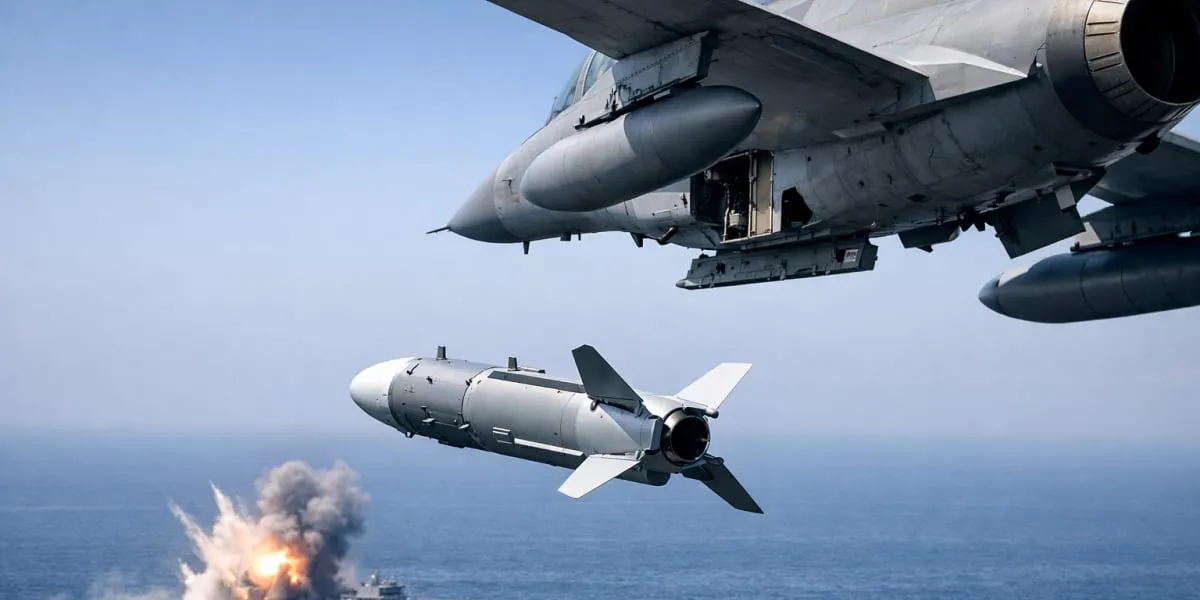
The Defence Research and Development Organisation (DRDO) and the Indian Air Force (IAF) successfully conducted the maiden flight trial of the Tactical Advanced Range Augmentation (TARA) weapon off the coast of Odisha on seven May 2026. The trial validated the basic flight characteristics and release dynamics of the glide kit and demonstrated conversion of an unguided warhead into a precision-guided munition. The operation was carried out in an operationally representative maritime range environment.

TARA is a modular range extension kit that represents India’s first indigenous glide weapon system designed to convert existing unguided warheads into precision-guided weapons. The system has been designed and developed by Research Centre Imarat (RCI), Hyderabad, in collaboration with other DRDO laboratories and integrates low-cost navigational and guidance technologies. The kit aims to provide enhanced stand-off capability to combat aircraft without major airframe modification.

The development emphasises affordability and production readiness, with Development cum Production Partners (DcPP) and the Indian industry engaged in production activities already. The glide configuration and navigation suite are intended to improve lethality and accuracy against ground based targets while keeping procurement and lifecycle costs low. Use of modular interfaces allows integration with a range of existing munitions and delivery platforms.

The Raksha Mantri congratulated the DRDO, the IAF, the DcPP and participating industry partners, noting the flight trial as a significant step in advancing India’s indigenous defence capabilities. The Secretary, Department of Defence R and D, and Chairman DRDO conveyed his appreciation for the teams associated with the successful trial. Official comment emphasised continuation of validation tests and transition towards production and induction planning.

The successful demonstration is expected to accelerate certification activities and inform further trials to qualify the kit for operational deployment, while sustaining collaboration between research establishments and industry. Continued development and serial production are envisaged to enhance operational flexibility and deterrence at a manageable cost. The trial off the Odisha coast marks a milestone in domestic weapons modernisation and optimisation of existing inventories.

The Defence Research and Development Organisation (DRDO) and the Indian Air Force (IAF) successfully conducted the maiden flight trial of the Tactical Advanced Range Augmentation (TARA) weapon off the coast of Odisha on seven May 2026. The trial validated the basic flight characteristics and release dynamics of the glide kit and demonstrated conversion of an unguided warhead into a precision-guided munition. The operation was carried out in an operationally representative maritime range environment. TARA is a modular range extension kit that represents India’s first indigenous glide weapon system designed to convert existing unguided warheads into precision-guided weapons. The system has been designed and developed by Research Centre Imarat (RCI), Hyderabad, in collaboration with other DRDO laboratories and integrates low-cost navigational and guidance technologies. The kit aims to provide enhanced stand-off capability to combat aircraft without major airframe modification. The development emphasises affordability and production readiness, with Development cum Production Partners (DcPP) and the Indian industry engaged in production activities already. The glide configuration and navigation suite are intended to improve lethality and accuracy against ground based targets while keeping procurement and lifecycle costs low. Use of modular interfaces allows integration with a range of existing munitions and delivery platforms. The Raksha Mantri congratulated the DRDO, the IAF, the DcPP and participating industry partners, noting the flight trial as a significant step in advancing India’s indigenous defence capabilities. The Secretary, Department of Defence R and D, and Chairman DRDO conveyed his appreciation for the teams associated with the successful trial. Official comment emphasised continuation of validation tests and transition towards production and induction planning. The successful demonstration is expected to accelerate certification activities and inform further trials to qualify the kit for operational deployment, while sustaining collaboration between research establishments and industry. Continued development and serial production are envisaged to enhance operational flexibility and deterrence at a manageable cost. The trial off the Odisha coast marks a milestone in domestic weapons modernisation and optimisation of existing inventories.

Next Story
Technology

AI-Enabled Workflows Lift Profitability and Productivity

Organisations modernising frontline workflows with artificial intelligence, automation and real-time data are reporting stronger financial performance, higher productivity and improved employee engagement, according to a global study by Zebra Technologies and Oxford Economics.The research covered 1,000 senior leaders across retail, manufacturing, transportation and logistics in the US, Mexico, the UK, Germany, India, Japan, Australia and New Zealand.In transportation and logistics, 54 per cent of companies that improved picking and packing operations reported faster operational performance, wh..

Next Story
Real Estate

India Leads Global AI Readiness but Implementation Lags

Indian companies lead global averages across all eight artificial intelligence readiness indicators tracked by JLL, but only 19 per cent have started making changes to their workplaces, according to the JLL 2026 Future of Work Survey.The study found that 77 per cent of Indian business leaders expect AI to change their office requirements, creating a 58-percentage-point gap between awareness and implementation. The survey covered more than 2,200 CEOs, CFOs and real estate leaders across 21 countries during the first quarter of 2026.Despite concerns over automation, 58 per cent of Indian leaders..

Next Story
Equipment

Three WOLFF Cranes Build Riyadh Cable-Stayed Bridges

Three WOLFF 180 B luffing jib cranes are supporting the construction of two cable-stayed bridges alongside the existing Wadi Laban Bridge in Riyadh, Saudi Arabia. The project is being developed for the Royal Commission for Riyadh City and executed by the ICRC joint venture comprising IC Ictas and Al Rashid Trading & Contracting Company.The cranes are handling lifting operations including formwork, reinforcement, concrete placement, work platforms, surveying equipment and other construction materials. Each crane is fitted with a 40 m jib, reaches a hook height of 157 m and offers a maximum ..

Advertisement

Subscribe to Our Newsletter

Get daily newsletters around different themes from Construction world.

STAY CONNECTED

Advertisement

Advertisement

Advertisement