DSIR Achieves 100 per cent Targets Under Special Cleanliness Drive 5.0
ECONOMY & POLICY

DSIR Achieves 100 per cent Targets Under Special Cleanliness Drive 5.0

The Department of Scientific and Industrial Research (DSIR), along with its autonomous body Council of Scientific and Industrial Research (CSIR) and public sector undertakings National Research Development Corporation (NRDC) and Central Electronics Limited (CEL), successfully completed Special Campaign 5.0 between 2 October and 31 October 2025. The campaign was conducted under the active guidance of Dr (Mrs) N. Kalaiselvi, Secretary, DSIR and Director General, CSIR, beginning with the Swachhata Pledge across all DSIR organisations.

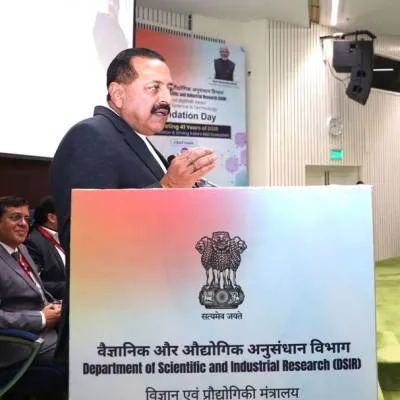
The campaign, reviewed periodically by Dr Jitendra Singh, Minister of State (Independent Charge) for Science and Technology, witnessed 146 cleanliness drives at DSIR offices, CSIR laboratories, CEL and NRDC facilities nationwide. Extensive plantation drives were also carried out to promote the vision of a clean and green India.

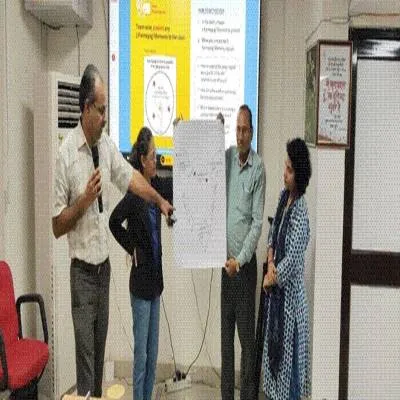
To encourage awareness of cleanliness among schoolchildren, DSIR organised a Swachhata Awareness Programme at Sarvodaya Vidyalaya, Begumpur, New Delhi, featuring speech and drawing competitions. The top three performers in each category received awards, and hygiene kits were distributed to participants. Senior DSIR officials delivered motivational talks, while students showcased their enthusiasm through stage performances.

Under the close monitoring of the Joint Secretary, DSIR, who served as the Nodal Officer for the campaign, the department achieved 100 per cent of its targets in scrap disposal, public grievance redressal, appeals clearance, and records management.

During the campaign period, DSIR reviewed 9,400 physical files, weeded out 6,180, and conducted 146 cleanliness campaigns, freeing 30,580 sq. ft. of office space. Additionally, Rs 1.51 million in revenue was generated through the disposal of scrap materials.

Best Practices Introduced

Special Campaign 5.0 also featured several innovative initiatives developed by CSIR laboratories under DSIR:

Steel Slag Road: Developed by CSIR–CRRI, New Delhi, this green infrastructure technology uses steel scrap for sustainable road construction, transforming waste into wealth.

Biomedical Waste Conversion: A process created by CSIR–NIIST, Thiruvananthapuram, converts pathogenic biomedical waste into value-added soil additives.

Anaerobic Gas Lift Reactor: A high-rate bio-methanation system patented and commercialised by CSIR–IICT, Hyderabad, has been installed at a vegetable market in Hyderabad for renewable gas generation.

Cyber Hygiene Initiative: DSIR’s cybersecurity team inspected 70 desktop computers, removing temporary and cache files to free 43.5 GB of storage and enhance digital system performance.

Commitment Ahead

DSIR reaffirmed its commitment to maintaining zero pendency, expanding digitisation, and improving service delivery across its departments. The impact of Special Campaign 5.0 will continue through sustained cleanliness, digitisation, and operational efficiency in the months ahead.

The Department of Scientific and Industrial Research (DSIR), along with its autonomous body Council of Scientific and Industrial Research (CSIR) and public sector undertakings National Research Development Corporation (NRDC) and Central Electronics Limited (CEL), successfully completed Special Campaign 5.0 between 2 October and 31 October 2025. The campaign was conducted under the active guidance of Dr (Mrs) N. Kalaiselvi, Secretary, DSIR and Director General, CSIR, beginning with the Swachhata Pledge across all DSIR organisations. The campaign, reviewed periodically by Dr Jitendra Singh, Minister of State (Independent Charge) for Science and Technology, witnessed 146 cleanliness drives at DSIR offices, CSIR laboratories, CEL and NRDC facilities nationwide. Extensive plantation drives were also carried out to promote the vision of a clean and green India. To encourage awareness of cleanliness among schoolchildren, DSIR organised a Swachhata Awareness Programme at Sarvodaya Vidyalaya, Begumpur, New Delhi, featuring speech and drawing competitions. The top three performers in each category received awards, and hygiene kits were distributed to participants. Senior DSIR officials delivered motivational talks, while students showcased their enthusiasm through stage performances. Under the close monitoring of the Joint Secretary, DSIR, who served as the Nodal Officer for the campaign, the department achieved 100 per cent of its targets in scrap disposal, public grievance redressal, appeals clearance, and records management. During the campaign period, DSIR reviewed 9,400 physical files, weeded out 6,180, and conducted 146 cleanliness campaigns, freeing 30,580 sq. ft. of office space. Additionally, Rs 1.51 million in revenue was generated through the disposal of scrap materials. Best Practices Introduced Special Campaign 5.0 also featured several innovative initiatives developed by CSIR laboratories under DSIR: Steel Slag Road: Developed by CSIR–CRRI, New Delhi, this green infrastructure technology uses steel scrap for sustainable road construction, transforming waste into wealth. Biomedical Waste Conversion: A process created by CSIR–NIIST, Thiruvananthapuram, converts pathogenic biomedical waste into value-added soil additives. Anaerobic Gas Lift Reactor: A high-rate bio-methanation system patented and commercialised by CSIR–IICT, Hyderabad, has been installed at a vegetable market in Hyderabad for renewable gas generation. Cyber Hygiene Initiative: DSIR’s cybersecurity team inspected 70 desktop computers, removing temporary and cache files to free 43.5 GB of storage and enhance digital system performance. Commitment Ahead DSIR reaffirmed its commitment to maintaining zero pendency, expanding digitisation, and improving service delivery across its departments. The impact of Special Campaign 5.0 will continue through sustained cleanliness, digitisation, and operational efficiency in the months ahead.

Related Stories

Gold Stories

Next Story
Resources

Schindler named among Forbes’ World’s Best Employers 2026

Schindler has been named among Forbes’ World’s Best Employers 2026, a global ranking recognising companies for their workplace environments.Compiled by Forbes in partnership with Statista, the ranking is based on independent employee feedback, including whether employees would recommend their organisation to friends and family.The company said the recognition reflected its focus on creating a workplace where employees can develop their expertise and build careers. ..
Next Story
Infrastructure Urban

India needs an export-execution mindset: Vishesh Jain

Interview with Vishesh Jain, Founder & CEO, EximpleWhat gaps in India’s global trade ecosystem led you to build Eximple, and what problem did you see businesses struggling with most?Eximple came out of a problem that all three founders had seen from different choke points in the trade ecosystem. India has millions of MSMEs and manufacturers, and many of them can make products that are genuinely competitive on quality. Yet only a small fraction is able to build meaningful international businesses. In our experience, the gap is usually not manufacturing capability; it is the ability to exe..

Next Story
Building Material

Nuvoco reports 13.5% revenue growth in Q2 FY27

Nuvoco Vistas Corp. Ltd. reported consolidated revenue of Rs 27.9 billion for Q2 FY27, up 13.5% year on year. Cement sales volume rose 9% to 4.7 million tonnes (MMT), while EBITDA increased 11% to Rs 4.11 billion.The company said it began its cement operations in 2014 with a 2.3 MMT per annum (MMTPA) operation at Nimbol. It now aims to reach 35 MMTPA of cement capacity by FY28, nearly 15 times its initial capacity. Its portfolio spans cement, ready-mix concrete and modern building materials.On sustainability and cost efficiency, Nuvoco partnered with CleanMax for a 46.4 MW wind-solar hybrid re..

Advertisement

Subscribe to Our Newsletter

Get daily newsletters around different themes from Construction world.

STAY CONNECTED

Advertisement

SPECIAL OFFER
QR Code