

+
Government Mulls Higher Offshore Wind Subsidy
ECONOMY & POLICY

Government Mulls Higher Offshore Wind Subsidy

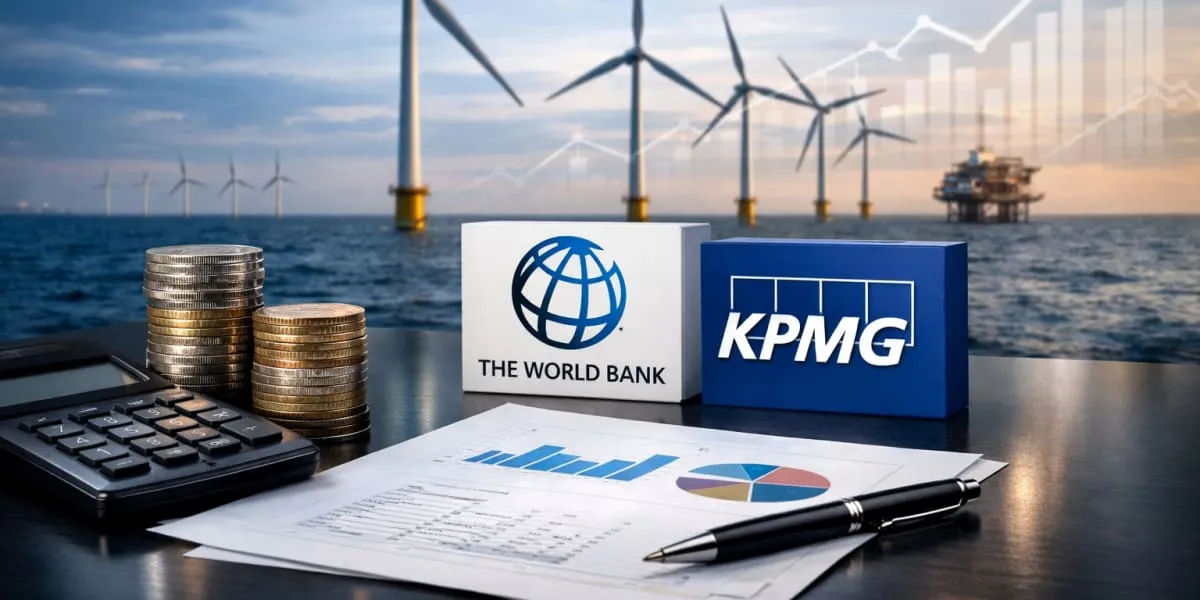
The government is considering higher incentives for offshore wind and has asked the World Bank (WB) and KPMG (KPMG) to review options for increasing viability gap funding. Officials view the review as a step to accelerate deployment of large offshore wind projects and to make them more bankable for domestic and international investors. The exercise will examine financial structures, tariff support mechanisms and enhancements to existing subsidy frameworks to lower upfront capital costs and improve project viability.

Raising incentives is intended to bridge the cost differential between offshore and onshore generation and to attract long term capital into the sector. The review will consider how viability funding might be structured to reduce revenue risk for developers while protecting taxpayer value. Analysts expect that alignment with national net zero and renewable energy targets will guide recommendations and that careful calibration will be necessary to avoid market distortions.

Industry participants are likely to engage with the WB and KPMG to provide data on cost curves, supply chain constraints and grid integration challenges. Developers will outline financing needs and timelines while financiers may present views on credit enhancement and long term offtake arrangements. Officials may also assess the role of domestic manufacturing incentives, port infrastructure upgrades and workforce development in lowering costs over time.

Final recommendations are expected to inform policy decisions and budgetary allocations and to set out a roadmap for scaling up offshore wind capacity in alignment with national energy goals. The timeline for completion of the review was not specified but officials indicated that findings will be used to shape forthcoming tender rounds and viability funding windows. Stakeholders will monitor the process for signals on how the government intends to balance fiscal prudence with the need to mobilise investment in clean energy. The outcome may influence investor sentiment and the pace of project execution across coastal regions.

The government is considering higher incentives for offshore wind and has asked the World Bank (WB) and KPMG (KPMG) to review options for increasing viability gap funding. Officials view the review as a step to accelerate deployment of large offshore wind projects and to make them more bankable for domestic and international investors. The exercise will examine financial structures, tariff support mechanisms and enhancements to existing subsidy frameworks to lower upfront capital costs and improve project viability. Raising incentives is intended to bridge the cost differential between offshore and onshore generation and to attract long term capital into the sector. The review will consider how viability funding might be structured to reduce revenue risk for developers while protecting taxpayer value. Analysts expect that alignment with national net zero and renewable energy targets will guide recommendations and that careful calibration will be necessary to avoid market distortions. Industry participants are likely to engage with the WB and KPMG to provide data on cost curves, supply chain constraints and grid integration challenges. Developers will outline financing needs and timelines while financiers may present views on credit enhancement and long term offtake arrangements. Officials may also assess the role of domestic manufacturing incentives, port infrastructure upgrades and workforce development in lowering costs over time. Final recommendations are expected to inform policy decisions and budgetary allocations and to set out a roadmap for scaling up offshore wind capacity in alignment with national energy goals. The timeline for completion of the review was not specified but officials indicated that findings will be used to shape forthcoming tender rounds and viability funding windows. Stakeholders will monitor the process for signals on how the government intends to balance fiscal prudence with the need to mobilise investment in clean energy. The outcome may influence investor sentiment and the pace of project execution across coastal regions.

Next Story
Infrastructure Transport

Guwahati Airport New Terminal Set To Begin Operations

The new terminal at Lokpriya Gopinath Bardoloi International Airport in Guwahati is scheduled to begin operations on February 22, state officials said. The announcement was made by the Chief Minister of Assam, who indicated that the facility will open to passengers on that date. The terminal forms part of a broader effort to upgrade aviation infrastructure in the region. The facility is expected to offer enhanced passenger amenities and streamlined movement across terminals. The integrated Terminal-2 building was inaugurated by the Prime Minister on 20 December last year and was constructed at..

Next Story
Infrastructure Urban

India–France Centre of Excellence in Aeronautics Announced for Kanpur

The Prime Minister announced the establishment of a National Centre of Excellence (NCoE) for skilling in aeronautics and defence at the National Skill Training Institute (NSTI), Kanpur, in collaboration with the Government of the French Republic under the Pradhan Mantri Skilling and Employability Transformation through Upgraded ITIs (PM-SETU) scheme of the Ministry of Skill Development and Entrepreneurship (MSDE). The announcement was made during a joint press statement with the President of France at the inauguration of the India–France Year of Innovation. The centre will focus on advanced ..

Next Story
Infrastructure Urban

Embraer And Mahindra Deepen Partnership For C-390 MRO In India

Brazilian aerospace manufacturer Embraer and Indian conglomerate Mahindra Group have agreed to deepen cooperation to develop Maintenance, Repair and Overhaul capabilities for the C-390 Millennium aircraft in India, contingent on the Indian Air Force selecting the type for its Medium Transport Aircraft programme. The initiative is intended to align with the government’s Make in India drive and to strengthen indigenous defence manufacturing capacities. The partners envisage the proposed facility supporting both military and civil operators and creating significant employment across manufacturi..

Advertisement

Subscribe to Our Newsletter

Get daily newsletters around different themes from Construction world.

STAY CONNECTED

Advertisement

Advertisement

Advertisement

Open In App